
Fish Chowder Soup Recipe
There’s something deeply comforting about a bowl of fish chowder that goes beyond just filling your stomach. When I serve this at my table, I pair it with something bright and fresh—like Fresh Pineapple Salsa Fed And Fit Calories on the side if I’m feeling adventurous, or simply crusty bread for dunking. This creamy, soul-warming soup has been a staple in my kitchen for years, and I’m excited to share exactly how I make it.
A Memory Wrapped in Seafood and Cream
I grew up in a household where dinner was sacred. My grandmother made this fish chowder every Friday night—a ritual that meant the whole family gathered around our worn wooden table. She’d spend hours building layers of flavor, and I remember standing on a stool beside her, watching as she’d test the broth with a tiny wooden spoon, nodding with satisfaction when it tasted just right.
Years later, when I attended culinary school, I realized what she’d been doing instinctively—she understood the why behind each step. The roux needed time to cook without browning because she wanted smoothness, not depth. The fish went in last because she knew it cooked in minutes. The wine evaporated to concentrate its flavors while mellowing its sharpness.
This recipe is my modern take on those Friday nights, refined through thousands of hours in professional kitchens, but still carrying that warmth I felt as a kid.
What is Fish Chowder Soup?
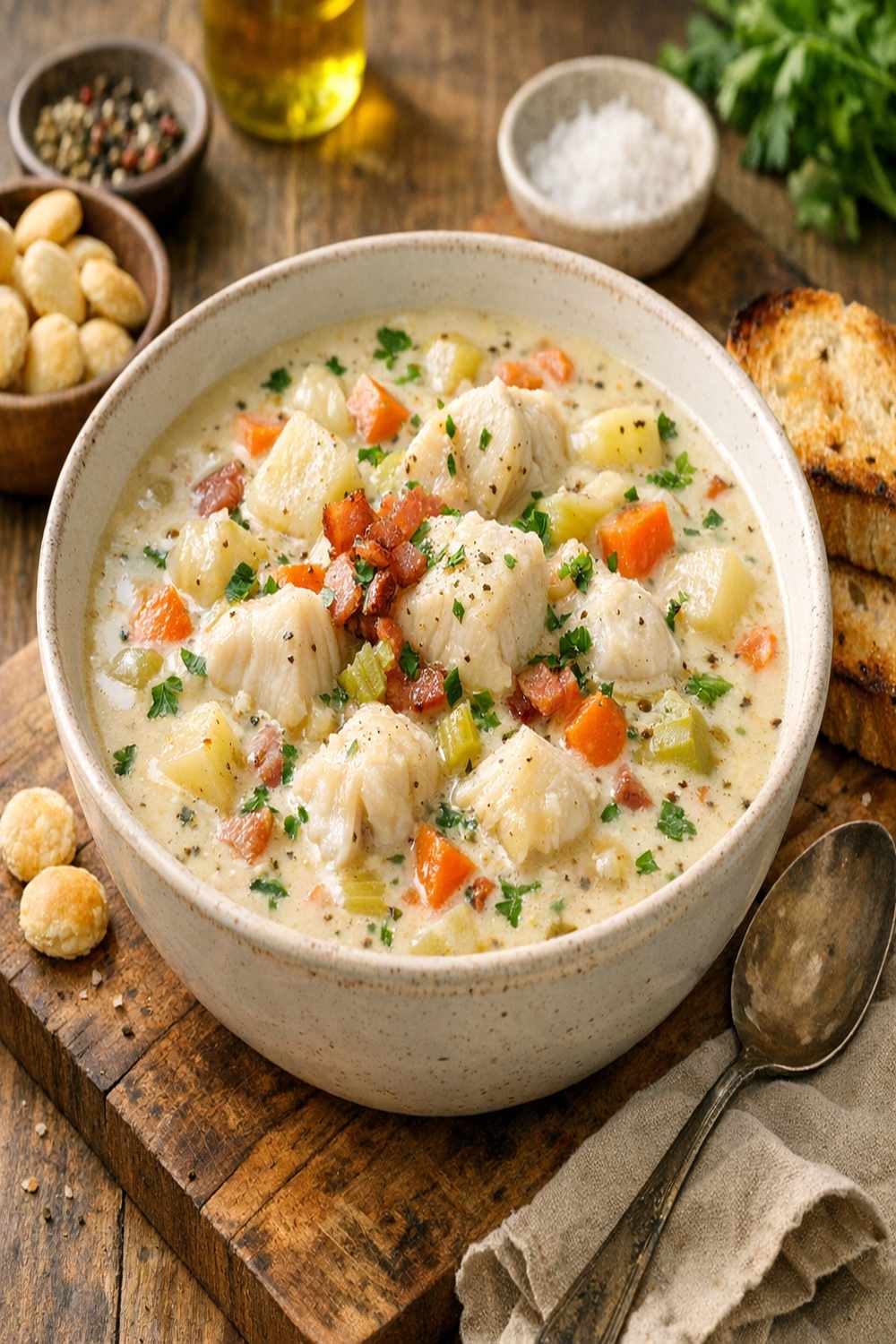
Fish chowder is a traditional soup that originated in coastal regions—particularly New England and Atlantic Canada—where fishing communities needed hearty, nourishing meals. The soup combines fresh white fish with aromatic vegetables, potatoes, and a creamy base, creating something that’s equal parts comfort food and sophisticated dish.
What makes fish chowder special compared to other soups is its balance of texture and flavor. You’ve got the silky broth from the roux-thickened base, the tender chunks of white fish that flake delicately, the earthiness of potatoes, and the bright sweetness of corn and peas. It’s not just a one-note experience—every spoonful brings something different.
The technique matters enormously here. Unlike a thin broth-based soup, chowder relies on a proper roux to create body and richness without heavy cream being the only ingredient. This is why culinary training in classical French techniques is so valuable—those foundational skills apply everywhere, even in American comfort food.
Why You’ll Love This Fish Chowder Soup Recipe
- Ready in under 45 minutes – This isn’t a six-hour braise. From pantry to bowl, you’re looking at genuine weeknight timing, though the flavor is anything but rushed.
- Versatile enough for any season – Swap vegetables based on what’s available. I use frozen peas and corn in winter, fresh versions in summer, and it works beautifully either way.
- Builds flavor strategically – Each step has a purpose. The aromatics get time to soften and release their essence. The wine evaporates to concentrate flavor. The roux thickens and creates a silky mouthfeel. Nothing is wasted.
- Restaurant-quality at home – My culinary training taught me that fancy restaurants don’t do anything magical—they just execute fundamentals properly. This recipe proves that.
- Naturally elegant but completely unpretentious – Serve this at a dinner party or have it in your pajamas on a Tuesday. It doesn’t care. It’s equally at home either way.
- Freezes beautifully for meal prep – Make a double batch and you’ve got weeknight dinners sorted for weeks.
The Ingredients
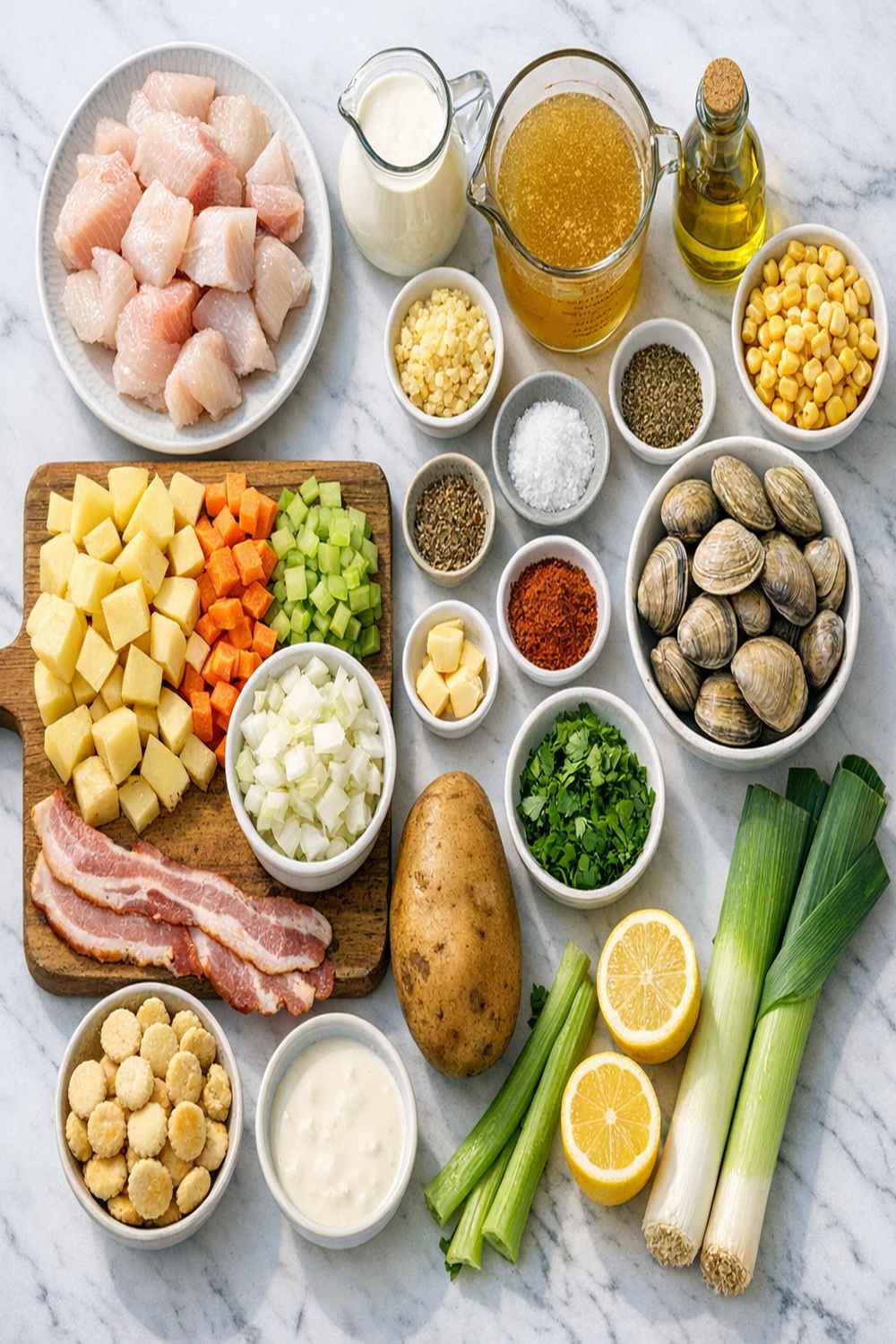
I’ve organized these ingredients by their role in the soup because understanding the function of each element helps you understand the technique. You’ll notice there’s no heavy cream—that’s intentional. The roux creates richness and body on its own, and the milk adds creaminess without masking the delicate fish flavor.
For the Base and Aromatics
- 2 small carrots (halved lengthwise, then sliced into half-inch pieces for even cooking)
- 3 tablespoons unsalted butter (this creates the foundation for your roux)
- 1 small onion (finely chopped—about the size of your fist when whole)
- 2 garlic cloves (minced very fine so they distribute evenly)
For the Broth and Thickening
- ½ cup dry white wine (skip this if you prefer, but it adds complexity—a crisp Sauvignon Blanc or Pinot Grigio works beautifully)
- ¼ cup all-purpose flour (plain flour, spooned and leveled, never scooped directly from the bag)
- 2 cups fish stock, clam juice, or chicken stock (preferably low sodium—you control the salt level)
- 3 cups whole milk (any fat percentage works, but whole milk creates the silkiest texture)
For the Vegetables and Protein
- 1 cup frozen peas (frozen peas are actually fresher-tasting than most fresh peas in supermarkets)
- 2 cups potatoes (cut into ½-inch cubes from roughly one large russet or Yukon gold potato)
- 1 cup frozen or canned corn (drained if using canned)
- 600 grams white fish fillets (skinless, cut into roughly ¾-inch pieces—cod, halibut, or haddock all work beautifully)
For Seasoning and Garnish
- Crusty bread (for dunking—this is not optional in my kitchen)
- ¼ cup green onions (halved lengthwise, then finely sliced crosswise for garnish)
- ½ teaspoon salt (plus more to taste—taste as you go)
- Finely ground black pepper (freshly ground makes a genuine difference in brightness)
Yield: This recipe makes 4 generous servings as a main course, or 6 servings if served with bread and a salad.
How to Make Fish Chowder Soup?
The magic of this chowder is in the order and timing. Each step builds on the previous one. Don’t skip ahead or rush—your patience will be rewarded with a soup that tastes like you’ve been simmering it all day, even though you haven’t.
Step 1: Create Your Aromatic Base
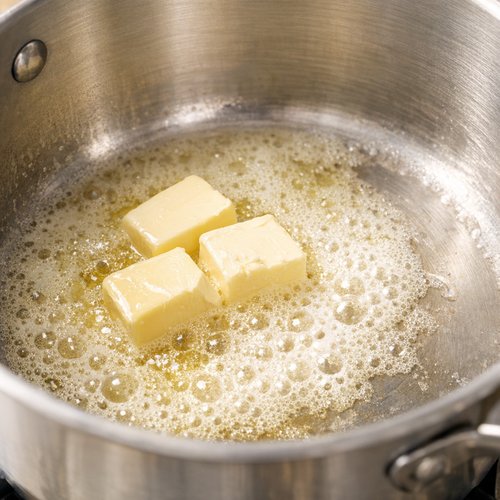
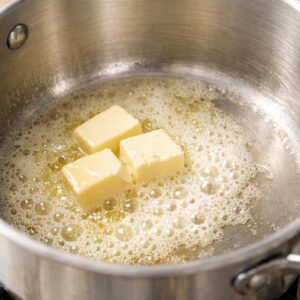
Place your large heavy-bottomed pot over medium heat. Add the three tablespoons of butter and let it melt until it’s foaming slightly—you’ll see it sizzle gently when it hits the pan. This takes about one minute.
Once the butter is foaming, add your minced garlic and chopped onion. Stir them together so they’re evenly coated in the butter. Now here’s the important part: let them cook undisturbed for about 5 minutes. You want them to soften and become translucent, but you’re not looking for color. If they start to turn golden, your heat is too high—turn it down slightly.
Why this matters: You’re building the foundation of your flavor. When garlic and onion soften gently, their sulfurous compounds transform into something sweet and mellow. Rush this step and you’ll taste raw onion. Take your time and you’ll taste depth.
Step 2: Add the Carrots and Build Texture
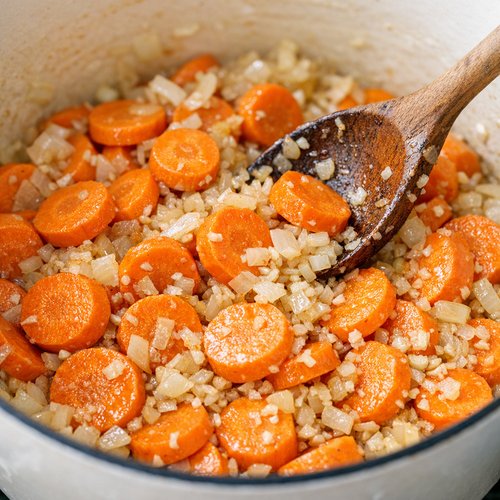
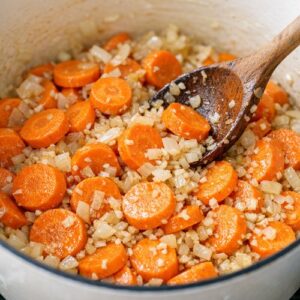
After your aromatics have had their time, add your sliced carrots and stir everything together. These will cook alongside your onion and garlic, soaking up all those released flavors. Cook for another 2 minutes while stirring occasionally, just to coat them in butter and let them start releasing their natural sugars.
Carrots bring sweetness and color to this soup, but they also need enough time to soften properly so they don’t crunch in your finished dish. We’ll give them more time later when we simmer everything together.
Step 3: Deglaze With Wine (Optional but Highly Recommended)
Turn your heat up to high. Pour in that ½ cup of dry white wine and stir everything together, scraping the bottom of the pot with a wooden spoon. You’ll see the mixture bubble more aggressively—this is deglazing, and it’s releasing all those caramelized bits of flavor stuck to the pan.
Let the wine bubble and reduce. You’re looking for it to mostly evaporate, which takes about 3 to 4 minutes. The liquid will reduce from about ½ cup to just a couple tablespoons. You’ll smell the alcohol beginning to cook off. This concentration of flavor is why wine makes such a difference—you’re not drinking wine, you’re using it as a technique to build complexity.
Step 4: Make Your Roux
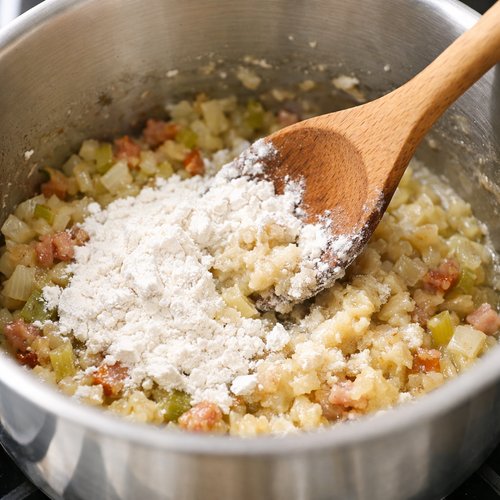
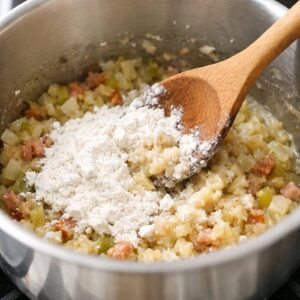
Reduce your heat back to medium. Add the ¼ cup of flour all at once and stir constantly for about 30 seconds to 1 minute. The mixture will go from loose and wet to something that looks almost paste-like or sludgy—this is your roux, and it’s exactly what you want. It’ll feel lumpy and wrong, but trust the process.
This is a true roux, not a slurry. You’re cooking the flour in fat, which prevents it from becoming lumpy when you add liquid. The brief cooking also eliminates that raw flour taste. Professional kitchens use this exact technique hundreds of times a day because it works.
Step 5: Slowly Introduce the Liquid (This Matters More Than You Think)
This is where attention makes a real difference. You’re going to add your liquid slowly while stirring constantly. This prevents lumps from forming. Start with your fish or chicken stock. Pour it in gradually—almost in a thin stream if you can manage it—while whisking or stirring vigorously.
As the stock combines with your roux, you’ll notice the mixture transforming from thick paste to something more liquid and silky. Once you’ve added about half the stock and it’s looking smooth, you can pour a bit faster, but keep stirring.
Once all the stock is incorporated (this should take about 2 minutes of attentive stirring), slowly pour in the three cups of milk while continuing to stir. The mixture will go from thick to creamy. You should end up with something that’s smooth as silk with no lumps whatsoever.
Step 6: Build Your Soup With Vegetables
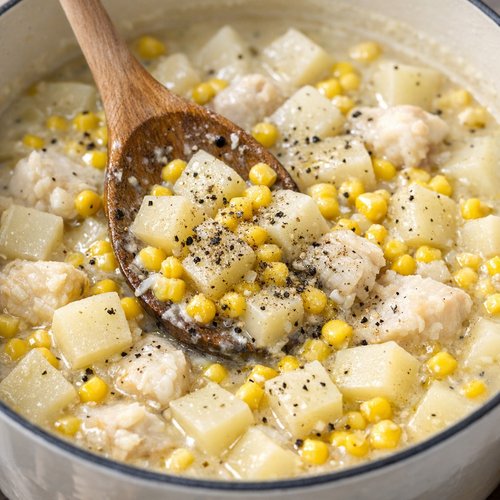
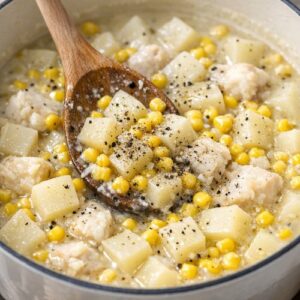
Add your cubed potatoes, the corn, the ½ teaspoon of salt, and a generous grinding of fresh black pepper. Stir everything together. Bring the whole pot to a simmer—you’ll see steam rising and gentle bubbles breaking the surface—then turn your heat down to low.
You want a gentle simmer, not an aggressive boil. Aggressive boiling breaks down the potatoes too much and can make your broth cloudy. A gentle simmer softens everything gradually and keeps your liquid clear and elegant.
Cook, stirring every couple of minutes or so, for about 8 minutes. You’re waiting for the potatoes to become almost tender. They should resist slightly when you pierce them with a fork, but be mostly softened.
Step 7: Add the Delicate Fish
Once your potatoes are nearly cooked, add your white fish pieces and the frozen peas. Stir gently to distribute everything evenly. The peas will thaw quickly, and the fish will cook rapidly—this is exactly what you want.
Simmer for 3 to 4 minutes. That’s all the time your fish needs. To check for doneness, look for the fish to flake easily when pushed with a fork. The pieces should go from translucent to completely opaque. Fish is one of the few proteins where overcooked is genuinely worse than undercooked, so don’t leave the pot.
Overcooking fish makes it tough and stringy. You want it delicate and tender, and that only takes a few minutes in this simmering liquid.
Step 8: Taste and Adjust
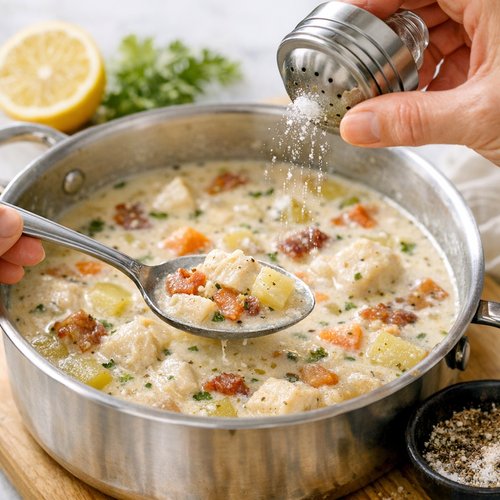
Remove the pot from heat. Taste your chowder. This is crucial. Adjust your salt and pepper to your preference. Remember that salt enhances all the other flavors, so a proper amount of salt will make everything taste more like itself.
If your chowder is thicker than you’d like, add a splash of water or milk to reach your preferred consistency. If it’s too thin, you can let it simmer for another minute or two—though honestly, it should be beautifully thick already.
Step 9: Serve With Pride
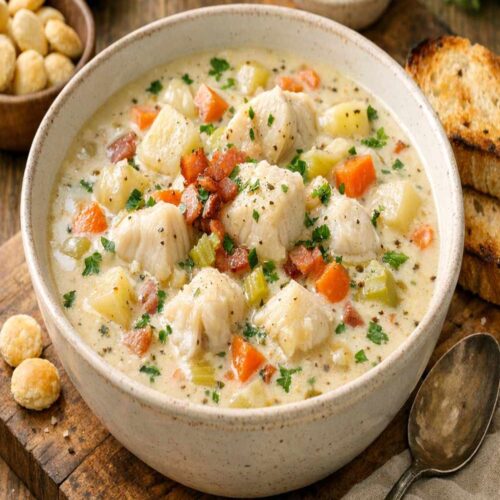
Ladle your chowder into bowls and garnish with that sliced green onion. Serve immediately with crusty bread on the side for dunking. The bread picks up all that silky broth and creates something even better when you bite into it.
Expert’s Nutritional Tip
From my training in both culinary arts and nutrition, I’ve learned that white fish is one of the most nutrient-dense proteins you can use. It’s high in complete protein, low in saturated fat, and rich in omega-3 fatty acids—particularly if you use varieties like halibut or cod. The milk and butter add fat-soluble vitamins (A, D, and E) that help your body absorb those nutrients.
What surprised me most was learning that the potato in this soup isn’t just filler—it’s actually quite nutritious. Potatoes contain resistant starch, especially when they’re cooked and cooled (which is why leftover chowder is even better for you). The vegetables contribute fiber and micronutrients. This soup, when made with quality ingredients, is genuinely nutritious comfort food, not an indulgence you need to feel guilty about.
Make-Ahead Guide
I prepare this chowder frequently for meal prep because it reheats beautifully and actually tastes better after a day or two as flavors meld.
Preparing the Day Before
You can prepare everything up to Step 6 the night before. Make your roux-based broth, add all your vegetables except the fish and peas, and simmer for those 8 minutes until potatoes are almost cooked. Let it cool completely, then refrigerate in an airtight container for up to 24 hours.
The next day, reheat gently over medium-low heat until it reaches a simmer, then add your fish and peas and cook for 3-4 minutes as directed. Everything will taste just as fresh.
Freezing for Later
I always freeze my chowder before adding the fish and peas. The frozen-then-thawed fish tends to get mushy, so it’s better to freeze the base only. Portion your finished base (through Step 6) into freezer bags or containers and label with the date. It keeps beautifully for up to 3 months.
To use: Thaw in the refrigerator overnight, then reheat gently and add fresh fish and peas. It tastes just as good as freshly made.
Weekly Prep Strategy
On a Sunday, I often prepare the aromatic base and broth (Steps 1-5) and portion it into containers. Throughout the week, I can heat individual portions, add fresh fish and peas, and have a homemade chowder dinner ready in 15 minutes. This is my favorite approach because you get that fresh-cooked fish texture while still doing efficient meal prep.
Tips and Tricks
- Use quality fish stock if you can find it – Homemade is best, but a good-quality store-bought fish or seafood stock makes a perceptible difference. If you can’t find it, clam juice is an excellent alternative, and chicken stock works in a pinch.
- Cut your potatoes all the same size – This ensures even cooking. Smaller pieces cook faster than larger ones, leaving you with a inconsistent texture. Aim for ½-inch cubes and you’ll have tender pieces throughout.
- Keep your fish cold until the last moment – Remove it from the refrigerator just before you’re ready to add it. Cold fish added to hot broth maintains its texture better than fish that’s been sitting out.
- Don’t skip the wine – Yes, you can make chowder without it, but that extra layer of subtle flavor is worth the few minutes of reduction. If you’re avoiding alcohol entirely, a splash of lemon juice at the end creates a different but equally valid brightness.
- Taste before serving – This seems obvious, but I’m shocked how many home cooks don’t do this. Your salt and pepper preferences might differ from mine, and that’s perfectly fine. Adjust to your taste.
- Use frozen vegetables without guilt – Frozen peas and corn are often fresher than what you’ll find in the grocery store produce section. They’re picked at peak ripeness and frozen immediately, which locks in nutrients and flavor.
Common Mistakes to Avoid
I’ve made (and seen) plenty of chowder mistakes over the years. Learning from them makes you a better cook.
Adding Fish Too Early
This is the most common mistake. Home cooks often add their fish when they add the potatoes, thinking more cooking time means more flavor. Actually, fish is delicate and cooks in minutes. Adding it too early results in mushy, stringy, overcooked fish. Add it in the last 3-4 minutes only.
Skipping the Slow Liquid Addition
When you add your stock and milk, doing it slowly while stirring prevents lumps from forming. Some cooks dump it all in at once, then wonder why their chowder has a gritty texture. Patience here saves you from having to strain the whole soup.
Using Hot Milk
This seems counterintuitive, but cold milk actually helps prevent curdling. If your milk is hot and you add it to a very hot broth, sometimes it can separate slightly. Room-temperature or cold milk blends more smoothly. It’s a minor thing, but it matters.
Not Tasting Before Serving
Salt is not optional—it’s essential for proper flavor. A properly salted chowder tastes like all its ingredients singing together. An undersalted chowder tastes flat and one-dimensional. Taste and adjust. Your guests will notice the difference.
Seasonal Variations
One of my favorite things about this recipe is how beautifully it adapts to seasons. The foundational technique stays the same, but ingredients shift.
Spring Version
In spring, I add fresh peas, tender leeks instead of onion, and sometimes young baby potatoes (cut in half rather than cubed) for a lighter feel. The combination of spring vegetables makes it feel less heavy while maintaining all that creamy comfort.
Summer Version
Summer gets fresh corn, zucchini instead of some of the carrots, and maybe a touch of fresh dill for herbaceousness. The fresher vegetables mean I can reduce the cooking time slightly. I sometimes switch to a lighter fish like flounder or sole.
Fall Version
Fall is when I make this soup most frequently. Sweet corn is at its peak, and I sometimes add a touch of roasted red pepper for sweetness and color. Staying with hearty white fish like cod or halibut works beautifully with the earthier vegetables.
Winter Version
Winter is all frozen vegetables, which I genuinely prefer because they’re consistent. I sometimes add a splash more wine and use fish like haddock which has a slightly heartier flavor profile. This is when I most appreciate the richness of the cream-based broth.
Can I Store Fish Chowder Soup?
Yes, and quite successfully if you know the right approach. I always store the base separately from any leftover fish.
Refrigerator Storage: Stored in an airtight container, fish chowder keeps for up to 3 days. The texture remains silky and the flavors continue to meld. When reheating, do it gently over medium-low heat, stirring occasionally and adding a splash of milk if it’s thickened more than you’d like.
Freezer Storage: I recommend freezing only the base (without fish and peas), where it keeps for up to 3 months. Frozen fish tends to become mushy when thawed, so I add fresh fish when reheating. If you do freeze the complete soup, it’ll keep for about a month, but the fish texture will suffer.
Thawing: Thaw overnight in the refrigerator rather than at room temperature. This keeps everything at a safe temperature and prevents any potential foodborne illness concerns.
Nutrition Information
Based on USDA nutritional data, one serving of this chowder (roughly 1.5 cups) contains approximately 420 calories, with 28 grams of protein from the fish and milk. The fat content is approximately 18 grams, mostly from the butter and milk, and includes heart-healthy unsaturated fats if you use quality ingredients.
Carbohydrates come in at around 32 grams, primarily from the potatoes and milk. The soup provides significant amounts of vitamin D and B vitamins from the fish, plus vitamin A from the carrots. One serving covers a meaningful portion of your daily needs for selenium and phosphorus.
This is genuinely nutrient-dense comfort food. The protein-to-calorie ratio is excellent, making it satisfying without being excessive. The vegetables contribute fiber, and the fish provides omega-3 fatty acids that support heart and brain health. You’re not sacrificing nutrition for comfort here.
What Can I Serve With Fish Chowder Soup?
Fish chowder is hearty enough to be a complete meal on its own, but pairing it with complementary dishes elevates the experience. In my dining experiences across different cuisines, I’ve learned that the best meals have contrasting elements—and that philosophy applies here.
Crusty bread is non-negotiable. I prefer sourdough or a hearty artisan loaf that can handle dunking without falling apart. The bread acts as a vehicle for all that silky broth.
Beyond bread, I often serve a bright, acidic element like a simple green salad with lemon vinaigrette or French Fried Parsnips for textural contrast. The brightness cuts through the richness beautifully.
- Simple green salad with lemon vinaigrette – The acidity and fresh greens provide contrast to the cream-based soup. A basic salad of mixed greens, shallot vinaigrette, and crispy croutons works beautifully.
- Steamed asparagus or roasted vegetables – If you want something warm alongside, tender asparagus or roasted root vegetables add another element of texture and nutrition.
- Garlic bread or herb-buttered toast – For a more indulgent pairing, garlic bread or toast brushed with herb butter complements the soup perfectly.
- A crisp white wine – Sauvignon Blanc, Pinot Grigio, or a dry Riesling all pair beautifully with the delicate fish and cream.
- Simple pickled vegetables – A small serving of quick pickles (cucumbers, onions, or carrots) adds a welcome tangy note that balances the richness.
Substitutes
- Different white fish – Any mild white fish works beautifully. Cod, halibut, haddock, flounder, and sole are all excellent choices. Avoid strong-flavored fish like mackerel or salmon—they’ll overpower the delicate balance. Each has slightly different texture and flavor, so feel free to experiment.
- Seafood combination – You can use half fish and half shrimp, or add scallops. Just remember that shrimp and scallops cook even faster than fish, so add them in the last minute or two only.
- Different vegetables – Celery, parsnips, fennel, or leeks can replace or supplement the carrots and onion. Zucchini, bell peppers, or mushrooms work seasonally. The potato is the only vegetable I wouldn’t substitute because its starch helps create the right texture.
- Half and half or cream – If you want something richer, substitute half the milk with half-and-half or heavy cream. This creates a more luxurious texture, but it’s genuinely not necessary. The roux-based broth is already rich enough.
- Homemade fish stock – If you have access to it, homemade fish stock made from bones and heads creates the most authentic flavor. Most fish mongers will give you bones and heads free or very cheaply if you ask.
- Butter substitute – For dairy-free cooking, use olive oil instead of butter for the roux. The flavor will be slightly different but still delicious. Use a cornstarch slurry (equal parts cornstarch and cold water) instead of a roux if you prefer, though the texture will be slightly different.
Fish Chowder Soup Recipe

Ingredients
For the Base and Aromatics
- 2 small carrots halved lengthwise, then sliced into half-inch pieces for even cooking
- 3 tablespoon unsalted butter this creates the foundation for your roux
- 1 small onion (finely chopped
- 2 garlic cloves minced very fine so they distribute evenly
For the Broth and Thickening
- ½ cup dry white wine (skip this if you prefer, but it adds complexity
- ¼ cup all-purpose flour plain flour, spooned and leveled, never scooped directly from the bag
- 2 cup fish stock, clam juice, or chicken stock (preferably low sodium
- 3 cup whole milk any fat percentage works, but whole milk creates the silkiest texture
For the Vegetables and Protein
- 1 cup frozen peas frozen peas are actually fresher-tasting than most fresh peas in supermarkets
- 2 cup potatoes cut into ½-inch cubes from roughly one large russet or Yukon gold potato
- 1 cup frozen or canned corn drained if using canned
- 600 gram white fish fillets (skinless, cut into roughly ¾-inch pieces
For Seasoning and Garnish
- Crusty bread (for dunking
- ¼ cup green onions halved lengthwise, then finely sliced crosswise for garnish
- ½ teaspoon salt (plus more to taste
- Finely ground black pepper freshly ground makes a genuine difference in brightness
Instructions
Step 1: Create Your Aromatic Base
- Place your large heavy-bottomed pot over medium heat. Add the three tablespoons of butter and let it melt until it's foaming slightly—you'll see it sizzle gently when it hits the pan. This takes about one minute. Once the butter is foaming, add your minced garlic and chopped onion. Stir them together so they're evenly coated in the butter. Now here's the important part: let them cook undisturbed for about 5 minutes. You want them to soften and become translucent, but you're not looking for color. If they start to turn golden, your heat is too high—turn it down slightly. Why this matters: You're building the foundation of your flavor. When garlic and onion soften gently, their sulfurous compounds transform into something sweet and mellow. Rush this step and you'll taste raw onion. Take your time and you'll taste depth.
Step 2: Add the Carrots and Build Texture
- After your aromatics have had their time, add your sliced carrots and stir everything together. These will cook alongside your onion and garlic, soaking up all those released flavors. Cook for another 2 minutes while stirring occasionally, just to coat them in butter and let them start releasing their natural sugars. Carrots bring sweetness and color to this soup, but they also need enough time to soften properly so they don't crunch in your finished dish. We'll give them more time later when we simmer everything together.
Step 3: Deglaze With Wine (Optional but Highly Recommended)
- Turn your heat up to high. Pour in that ½ cup of dry white wine and stir everything together, scraping the bottom of the pot with a wooden spoon. You'll see the mixture bubble more aggressively—this is deglazing, and it's releasing all those caramelized bits of flavor stuck to the pan. Let the wine bubble and reduce. You're looking for it to mostly evaporate, which takes about 3 to 4 minutes. The liquid will reduce from about ½ cup to just a couple tablespoons. You'll smell the alcohol beginning to cook off. This concentration of flavor is why wine makes such a difference—you're not drinking wine, you're using it as a technique to build complexity.
Step 4: Make Your Roux
- Reduce your heat back to medium. Add the ¼ cup of flour all at once and stir constantly for about 30 seconds to 1 minute. The mixture will go from loose and wet to something that looks almost paste-like or sludgy—this is your roux, and it's exactly what you want. It'll feel lumpy and wrong, but trust the process. This is a true roux, not a slurry. You're cooking the flour in fat, which prevents it from becoming lumpy when you add liquid. The brief cooking also eliminates that raw flour taste. Professional kitchens use this exact technique hundreds of times a day because it works.
Step 5: Slowly Introduce the Liquid (This Matters More Than You Think)
- This is where attention makes a real difference. You're going to add your liquid slowly while stirring constantly. This prevents lumps from forming. Start with your fish or chicken stock. Pour it in gradually—almost in a thin stream if you can manage it—while whisking or stirring vigorously. As the stock combines with your roux, you'll notice the mixture transforming from thick paste to something more liquid and silky. Once you've added about half the stock and it's looking smooth, you can pour a bit faster, but keep stirring. Once all the stock is incorporated (this should take about 2 minutes of attentive stirring), slowly pour in the three cups of milk while continuing to stir. The mixture will go from thick to creamy. You should end up with something that's smooth as silk with no lumps whatsoever.
Step 6: Build Your Soup With Vegetables
- Add your cubed potatoes, the corn, the ½ teaspoon of salt, and a generous grinding of fresh black pepper. Stir everything together. Bring the whole pot to a simmer—you'll see steam rising and gentle bubbles breaking the surface—then turn your heat down to low. You want a gentle simmer, not an aggressive boil. Aggressive boiling breaks down the potatoes too much and can make your broth cloudy. A gentle simmer softens everything gradually and keeps your liquid clear and elegant. Cook, stirring every couple of minutes or so, for about 8 minutes. You're waiting for the potatoes to become almost tender. They should resist slightly when you pierce them with a fork, but be mostly softened.
Step 7: Add the Delicate Fish
- Once your potatoes are nearly cooked, add your white fish pieces and the frozen peas. Stir gently to distribute everything evenly. The peas will thaw quickly, and the fish will cook rapidly—this is exactly what you want. Simmer for 3 to 4 minutes. That's all the time your fish needs. To check for doneness, look for the fish to flake easily when pushed with a fork. The pieces should go from translucent to completely opaque. Fish is one of the few proteins where overcooked is genuinely worse than undercooked, so don't leave the pot. Overcooking fish makes it tough and stringy. You want it delicate and tender, and that only takes a few minutes in this simmering liquid.
Step 8: Taste and Adjust
- Remove the pot from heat. Taste your chowder. This is crucial. Adjust your salt and pepper to your preference. Remember that salt enhances all the other flavors, so a proper amount of salt will make everything taste more like itself. If your chowder is thicker than you'd like, add a splash of water or milk to reach your preferred consistency. If it's too thin, you can let it simmer for another minute or two—though honestly, it should be beautifully thick already.
Step 9: Serve With Pride
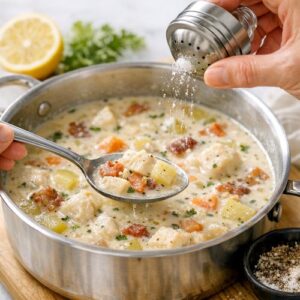
- Ladle your chowder into bowls and garnish with that sliced green onion. Serve immediately with crusty bread on the side for dunking. The bread picks up all that silky broth and creates something even better when you bite into it.
Notes
Nutrition
FAQs
Can I make this chowder in a slow cooker or Instant Pot?
Yes, though with modifications. I’ve actually tested this extensively, and while a Fish Chowder In Crock Pot can work, the texture is compromised. Fish becomes mushy in prolonged gentle heat. If you use a slow cooker, prepare everything through Step 6, let it cook on low for 6-8 hours, then add fish and peas in the last 15 minutes only.
For an Instant Pot, you can sauté your aromatics in the pot using the sauté function, build your base, then pressure cook the vegetables for 4 minutes. Quick release, add fish and peas, and let them cook gently in the residual heat. Honestly, stovetop is still superior for this particular recipe because you have more control.
Why does my chowder sometimes break or separate?
Separation usually happens when the broth gets too hot after the milk has been added, or if the milk was very hot to begin with. Always add cold milk to your roux base, and keep the heat at medium or below once milk is incorporated. If your chowder does separate, it’s usually still fine to eat—just stir it vigorously, which often recombines everything. In professional kitchens, we’d add a small amount of cold milk and whisk aggressively.
Can I use frozen fish instead of fresh?
Yes, but thaw it completely first. Frozen fish that’s been thawed properly works beautifully. Pat it dry before adding it to the chowder. The one exception: don’t use fish that’s been thawed and then re-frozen. That compromises texture regardless of your cooking technique.
What if I don’t have fish stock? Can I use something else?
Absolutely. Clam juice is my favorite substitute—it brings oceanic flavor that complements the fish beautifully. Chicken stock works too, though the result is slightly milder. In a pinch, even vegetable stock works, though you lose some of that seafood essence. If using chicken or vegetable stock, consider adding a splash of soy sauce or a squeeze of lemon to brighten the flavor profile.
How can I make this soup lower in fat or calories?
Use low-fat or skim milk instead of whole milk, and reduce the butter to 2 tablespoons. The soup will be slightly thinner, but still delicious. For even more reduction, use a mixture of milk and fish stock instead of all milk. You’re still creating that silky texture through the roux, which uses less fat than traditional cream-based chowders. The fish itself is lean protein, so the bulk of calories come from the dairy and butter—control those and you control the overall nutrition profile.
More Recipes You’ll Love
- Foiled Baked Potatoes – A rustic side that pairs beautifully with chowder if you want something with textural contrast
- Food Faith Fitness – A comprehensive guide to understanding how comfort food can fit into a balanced approach to nutrition and wellness
- Flowerchild Cauliflower Risotto – If you love creamy, luxurious rice dishes, you’ll understand the appeal of properly executed creamy soups
- Floured Fries – Crispy fried accompaniments that create wonderful textural contrast with a creamy soup
A Final Word on This Beloved Classic
What I love most about this fish chowder is that it represents everything I believe about cooking—technique, quality ingredients, attention to detail, and food that connects us to memory and emotion. My grandmother would recognize this soup immediately. The foundational approach is exactly what she taught me, refined through years of professional experience.
This isn’t a recipe that tries to be fancy or complicated. It’s honest food made properly. It’s the kind of soup that tastes like home, whether you grew up with it or are experiencing it for the first time. It proves that you don’t need expensive equipment or obscure ingredients to create something genuinely restaurant-quality.
Make this chowder for yourself on a weeknight when you need comfort. Make it for friends and family when you want to im