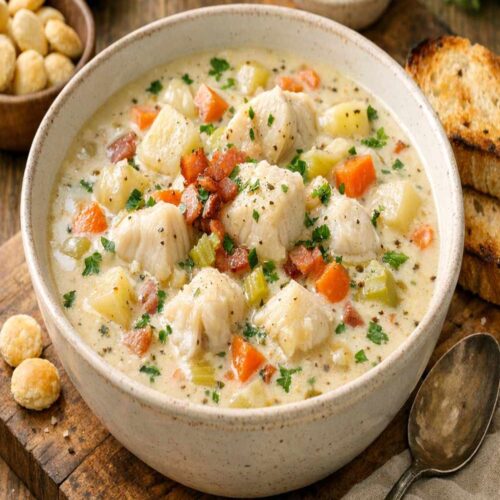
Fish Chowder Soup Recipe

There's something deeply comforting about a bowl of fish chowder that goes beyond just filling your stomach. When I serve this at my table, I pair it with something bright and fresh—like Fresh Pineapple Salsa Fed And Fit Calories on the side if I'm feeling adventurous, or simply crusty bread for dunking. This creamy, soul-warming soup has been a staple in my kitchen for years, and I'm excited to share exactly how I make it.
Ingredients
For the Base and Aromatics
- 2 small carrots halved lengthwise, then sliced into half-inch pieces for even cooking
- 3 tablespoon unsalted butter this creates the foundation for your roux
- 1 small onion (finely chopped
- 2 garlic cloves minced very fine so they distribute evenly
For the Broth and Thickening
- ½ cup dry white wine (skip this if you prefer, but it adds complexity
- ¼ cup all-purpose flour plain flour, spooned and leveled, never scooped directly from the bag
- 2 cup fish stock, clam juice, or chicken stock (preferably low sodium
- 3 cup whole milk any fat percentage works, but whole milk creates the silkiest texture
For the Vegetables and Protein
- 1 cup frozen peas frozen peas are actually fresher-tasting than most fresh peas in supermarkets
- 2 cup potatoes cut into ½-inch cubes from roughly one large russet or Yukon gold potato
- 1 cup frozen or canned corn drained if using canned
- 600 gram white fish fillets (skinless, cut into roughly ¾-inch pieces
For Seasoning and Garnish
- Crusty bread (for dunking
- ¼ cup green onions halved lengthwise, then finely sliced crosswise for garnish
- ½ teaspoon salt (plus more to taste
- Finely ground black pepper freshly ground makes a genuine difference in brightness
Instructions
Step 1: Create Your Aromatic Base
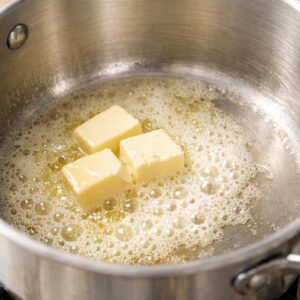
- Place your large heavy-bottomed pot over medium heat. Add the three tablespoons of butter and let it melt until it's foaming slightly—you'll see it sizzle gently when it hits the pan. This takes about one minute. Once the butter is foaming, add your minced garlic and chopped onion. Stir them together so they're evenly coated in the butter. Now here's the important part: let them cook undisturbed for about 5 minutes. You want them to soften and become translucent, but you're not looking for color. If they start to turn golden, your heat is too high—turn it down slightly. Why this matters: You're building the foundation of your flavor. When garlic and onion soften gently, their sulfurous compounds transform into something sweet and mellow. Rush this step and you'll taste raw onion. Take your time and you'll taste depth.
Step 2: Add the Carrots and Build Texture
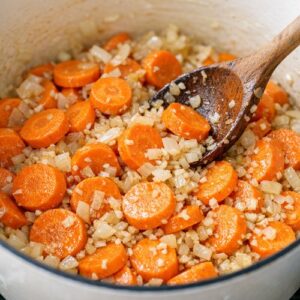
- After your aromatics have had their time, add your sliced carrots and stir everything together. These will cook alongside your onion and garlic, soaking up all those released flavors. Cook for another 2 minutes while stirring occasionally, just to coat them in butter and let them start releasing their natural sugars. Carrots bring sweetness and color to this soup, but they also need enough time to soften properly so they don't crunch in your finished dish. We'll give them more time later when we simmer everything together.
Step 3: Deglaze With Wine (Optional but Highly Recommended)
- Turn your heat up to high. Pour in that ½ cup of dry white wine and stir everything together, scraping the bottom of the pot with a wooden spoon. You'll see the mixture bubble more aggressively—this is deglazing, and it's releasing all those caramelized bits of flavor stuck to the pan. Let the wine bubble and reduce. You're looking for it to mostly evaporate, which takes about 3 to 4 minutes. The liquid will reduce from about ½ cup to just a couple tablespoons. You'll smell the alcohol beginning to cook off. This concentration of flavor is why wine makes such a difference—you're not drinking wine, you're using it as a technique to build complexity.
Step 4: Make Your Roux
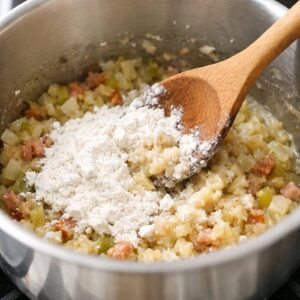
- Reduce your heat back to medium. Add the ¼ cup of flour all at once and stir constantly for about 30 seconds to 1 minute. The mixture will go from loose and wet to something that looks almost paste-like or sludgy—this is your roux, and it's exactly what you want. It'll feel lumpy and wrong, but trust the process. This is a true roux, not a slurry. You're cooking the flour in fat, which prevents it from becoming lumpy when you add liquid. The brief cooking also eliminates that raw flour taste. Professional kitchens use this exact technique hundreds of times a day because it works.
Step 5: Slowly Introduce the Liquid (This Matters More Than You Think)
- This is where attention makes a real difference. You're going to add your liquid slowly while stirring constantly. This prevents lumps from forming. Start with your fish or chicken stock. Pour it in gradually—almost in a thin stream if you can manage it—while whisking or stirring vigorously. As the stock combines with your roux, you'll notice the mixture transforming from thick paste to something more liquid and silky. Once you've added about half the stock and it's looking smooth, you can pour a bit faster, but keep stirring. Once all the stock is incorporated (this should take about 2 minutes of attentive stirring), slowly pour in the three cups of milk while continuing to stir. The mixture will go from thick to creamy. You should end up with something that's smooth as silk with no lumps whatsoever.
Step 6: Build Your Soup With Vegetables
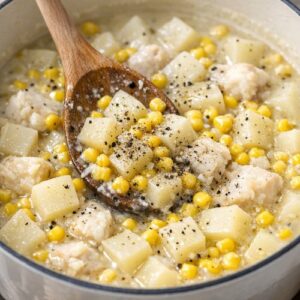
- Add your cubed potatoes, the corn, the ½ teaspoon of salt, and a generous grinding of fresh black pepper. Stir everything together. Bring the whole pot to a simmer—you'll see steam rising and gentle bubbles breaking the surface—then turn your heat down to low. You want a gentle simmer, not an aggressive boil. Aggressive boiling breaks down the potatoes too much and can make your broth cloudy. A gentle simmer softens everything gradually and keeps your liquid clear and elegant. Cook, stirring every couple of minutes or so, for about 8 minutes. You're waiting for the potatoes to become almost tender. They should resist slightly when you pierce them with a fork, but be mostly softened.
Step 7: Add the Delicate Fish
- Once your potatoes are nearly cooked, add your white fish pieces and the frozen peas. Stir gently to distribute everything evenly. The peas will thaw quickly, and the fish will cook rapidly—this is exactly what you want. Simmer for 3 to 4 minutes. That's all the time your fish needs. To check for doneness, look for the fish to flake easily when pushed with a fork. The pieces should go from translucent to completely opaque. Fish is one of the few proteins where overcooked is genuinely worse than undercooked, so don't leave the pot. Overcooking fish makes it tough and stringy. You want it delicate and tender, and that only takes a few minutes in this simmering liquid.
Step 8: Taste and Adjust
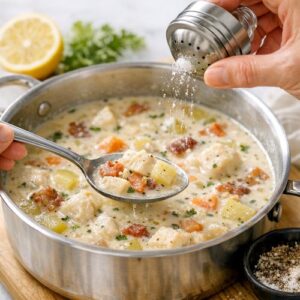
- Remove the pot from heat. Taste your chowder. This is crucial. Adjust your salt and pepper to your preference. Remember that salt enhances all the other flavors, so a proper amount of salt will make everything taste more like itself. If your chowder is thicker than you'd like, add a splash of water or milk to reach your preferred consistency. If it's too thin, you can let it simmer for another minute or two—though honestly, it should be beautifully thick already.
Step 9: Serve With Pride
- Ladle your chowder into bowls and garnish with that sliced green onion. Serve immediately with crusty bread on the side for dunking. The bread picks up all that silky broth and creates something even better when you bite into it.
Notes
- Use quality fish stock if you can find it - Homemade is best, but a good-quality store-bought fish or seafood stock makes a perceptible difference. If you can't find it, clam juice is an excellent alternative, and chicken stock works in a pinch.
- Cut your potatoes all the same size - This ensures even cooking. Smaller pieces cook faster than larger ones, leaving you with a inconsistent texture. Aim for ½-inch cubes and you'll have tender pieces throughout.
- Keep your fish cold until the last moment - Remove it from the refrigerator just before you're ready to add it. Cold fish added to hot broth maintains its texture better than fish that's been sitting out.
- Don't skip the wine - Yes, you can make chowder without it, but that extra layer of subtle flavor is worth the few minutes of reduction. If you're avoiding alcohol entirely, a splash of lemon juice at the end creates a different but equally valid brightness.
- Taste before serving - This seems obvious, but I'm shocked how many home cooks don't do this. Your salt and pepper preferences might differ from mine, and that's perfectly fine. Adjust to your taste.
- Use frozen vegetables without guilt - Frozen peas and corn are often fresher than what you'll find in the grocery store produce section. They're picked at peak ripeness and frozen immediately, which locks in nutrients and flavor.
Nutrition
Calories: 418kcalCarbohydrates: 39gProtein: 37gFat: 10gSaturated Fat: 5gCholesterol: 68mgSodium: 431mgFiber: 5gSugar: 12g
Tried this recipe?Let us know how it was!