
French Buckwheat Crepe Recipe
I’ve always believed that the best meals are the ones that bridge cultures and memories. These French buckwheat crepes do exactly that—they’re nutty, delicate, and endlessly versatile. Whether you top them with fresh pineapple salsa for a bright breakfast or fold them around sautéed vegetables for dinner, they’re the kind of recipe that becomes part of your regular rotation. Let me walk you through how to make them with confidence.
A Memory That Tastes Like Brittany
I’ll never forget my first morning in Brittany, France. I was fresh out of culinary school, working a stage at a small crêperie in Concarneau, and the owner, Madame Leclerc, handed me a buckwheat crepe still warm from the pan. “This,” she said in French, “is what we eat when we want to remember who we are.”
The crepe was paper-thin, with these gorgeous lacy edges that had crisped up just enough. The inside had a subtle, almost toasty sweetness—completely different from the white flour crepes I’d grown up making. That’s buckwheat. That’s Brittany. That’s the recipe I’m sharing with you today because some dishes deserve to be passed along.

What is French Buckwheat Crepe Recipe?
French buckwheat crepes—or galettes de blé noir in Breton—are a traditional specialty from the Brittany region of France. Unlike their sweeter white-flour cousins, these crepes use buckwheat flour, which gives them a distinctive earthy, slightly nutty flavor and a more delicate texture.
Here’s what makes them special: buckwheat isn’t actually wheat at all—it’s a pseudocereal with a naturally gluten-free composition. That means these crepes have a particular kind of crispness that you can’t achieve with regular flour. When cooked properly, the edges become almost lacy, while the center stays tender. They’re traditionally served savory in Brittany (with ham, cheese, and eggs), but I love them both ways.
The technique matters here. The batter needs rest time—this allows the buckwheat flour to fully hydrate and absorb the liquid, which is crucial for achieving that perfect tender-yet-crisp texture. This is why I always tell people: patience in the kitchen isn’t about time wasted; it’s about chemistry at work.
Why You’ll Love This French Buckwheat Crepe Recipe
- Naturally gluten-free – Buckwheat contains no gluten, making these crepes naturally suitable for anyone with celiac disease or gluten sensitivity. This isn’t a workaround or a compromise; these are legitimately delicious crepes that just happen to be gluten-free.
- Distinctive, sophisticated flavor – That subtle nuttiness is addictive. It pairs beautifully with both sweet and savory fillings, giving your breakfast or dinner an unexpectedly gourmet feel without complicated technique.
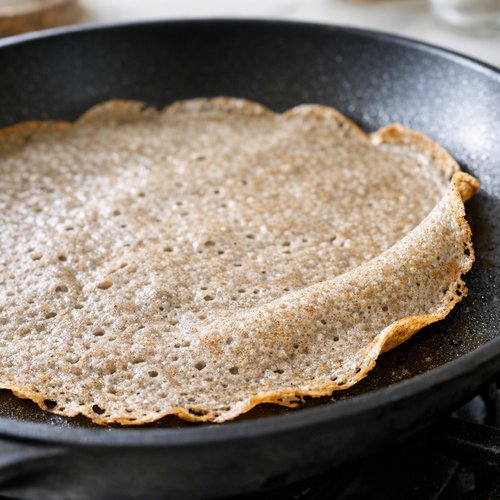
- Crispy edges, tender center – There’s a textural contrast here that makes these crepes more interesting than standard versions. The lacy edges provide a gentle crunch, while the center remains delicate and pliable.
- Versatile across every meal – Serve them for breakfast with jam and crème fraîche, for lunch wrapped around sautéed mushrooms and cheese, or for dinner with eggs and ham. They’re truly a blank canvas.
- Make-ahead friendly – I cook crepes when my schedule allows and store them for the week. They reheat beautifully, making weeknight dinners faster than you’d expect.
- Impressive to serve guests – There’s something about homemade crepes that feels restaurant-quality. People are always amazed when you tell them you made the crepes yourself.
The Ingredients
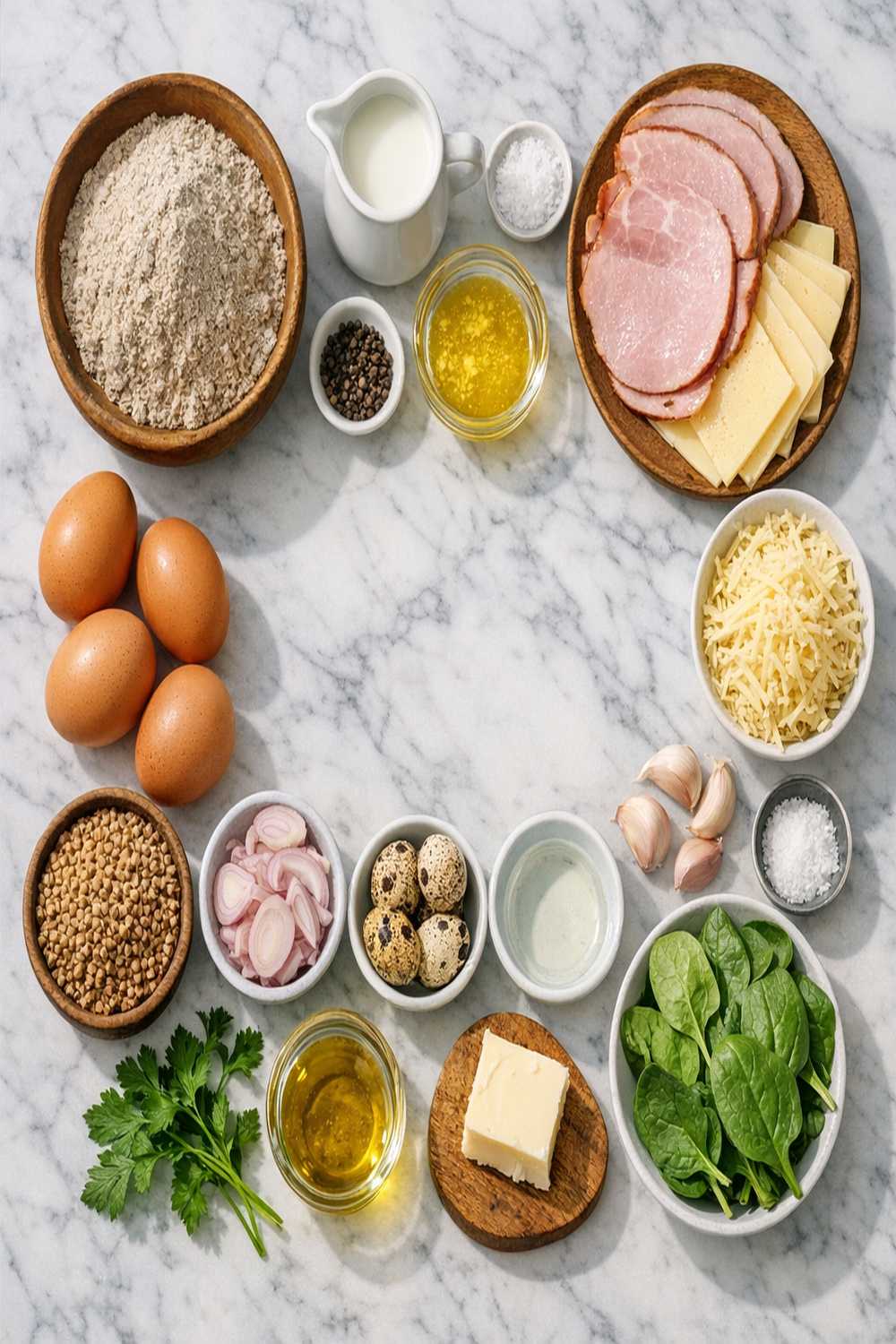
I’ve kept this ingredient list intentionally minimal. The magic of these crepes comes from technique and ratio, not from a long list of additions. Each ingredient plays a specific role, and understanding why they’re there will make you a better cook. This recipe makes approximately 12 to 14 crepes, depending on your pan size and how thin you spread the batter.
- 240 ml sparkling or still water (the liquid base for our batter)
- 240 ml whole milk (full-fat is essential for richness and better browning)
- 3 tablespoons unsalted butter (divided for cooking, plus extra for the pan)
- 2 large eggs (room temperature, they incorporate more smoothly)
- 1 teaspoon fine sea salt (for savory crepes; omit if making sweet)
- 1 tablespoon caster sugar (for sweet crepes; omit if making savory)
- 250 grams buckwheat flour (about 1⅔ cups, the foundation of our texture)
Pro Note on Sparkling Water: If you have it on hand, sparkling water creates slightly airier crepes with more delicate edges. Still water works perfectly well, though—don’t stress if that’s what you have. The difference is subtle but worth knowing.
How to Make French Buckwheat Crepe Recipe?
I’m going to walk you through this step by step. There are no shortcuts here, but there’s also nothing complicated. What matters is understanding the why behind each step so you can troubleshoot confidently if needed.
Step 1: Combine Your Dry Ingredients with Intention
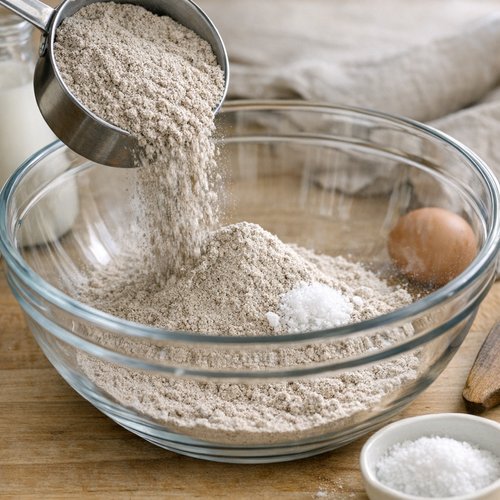
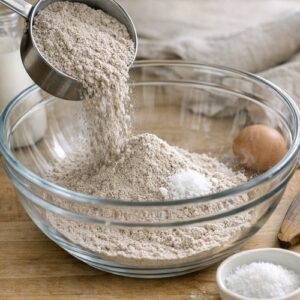
Pour your buckwheat flour into a large mixing bowl. If you’re making savory crepes, add the teaspoon of salt now. If you’re making sweet crepes, add the caster sugar instead. Whisk these together gently for about 30 seconds—this ensures the salt or sugar distributes evenly throughout the flour.
Now, use a wooden spoon or spatula to create a well in the center of your flour mixture, almost like you’re making a little nest. This well is where your wet ingredients will go, and it makes whisking the batter much easier than mixing everything at once.
Step 2: Whisk the Wet Ingredients Together First
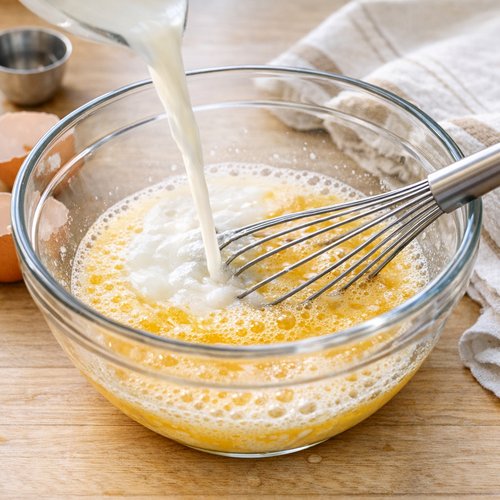
In a separate bowl, crack your 2 eggs and whisk them for about 30 seconds until they’re well combined and slightly frothy. Add your milk and water to the eggs, and whisk again for another minute until everything is fully incorporated. You want this mixture to be homogeneous—no streaks of egg white visible.
Why whisk the wet ingredients separately? Because when you pour them into the flour all at once, you can control the mixing process better. If you dump everything together, you’re more likely to overwork the batter, which can make crepes tough.
Step 3: Build Your Batter Gradually
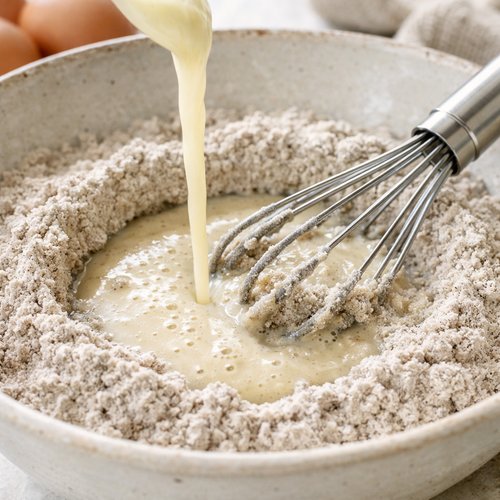
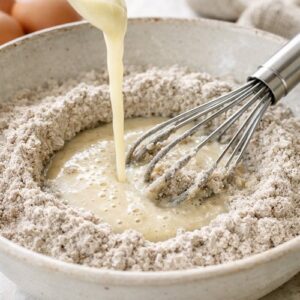
Pour about one-third of your whisked wet mixture into the well you created in the flour. Using a whisk, pull a little bit of the flour from the edges of your well toward the center, incorporating it gradually into the liquid. The key word here is gradually. You’re not trying to mix everything at once.
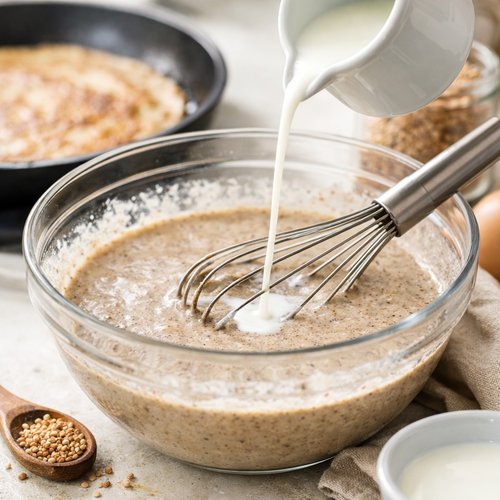
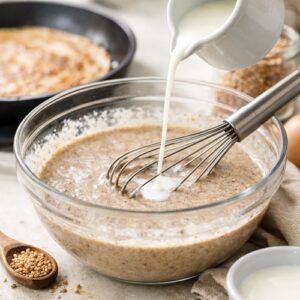
Once that first third is roughly combined (it’s okay if it’s a bit lumpy), add another third of your wet mixture and repeat. Finally, add the last third and whisk until you have a smooth, thin batter that resembles heavy cream or thin pancake batter. If you see a few small lumps, that’s fine—they’ll break down during resting.
Step 4: Let Time Do the Work (The Most Important Step)
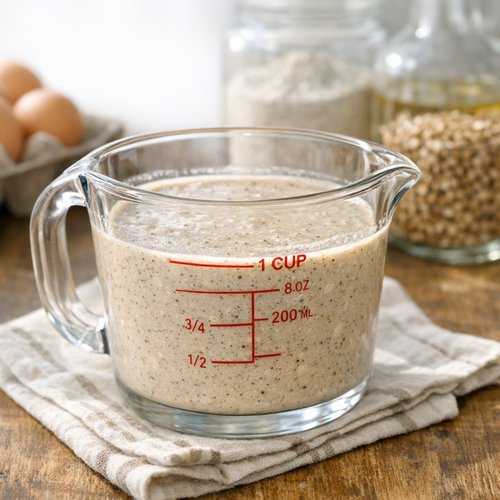
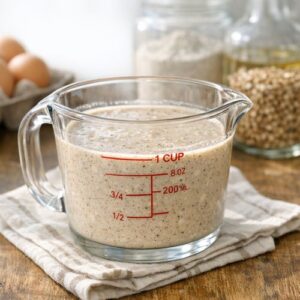
This is where patience becomes technique. Pour your batter into a measuring cup or pitcher (easier for pouring later) and let it rest at room temperature for at least 30 minutes, ideally 45 minutes to 1 hour. If you want to make these ahead, you can even rest the batter for up to 2 hours. This resting period allows the buckwheat flour to fully absorb all the liquid, which develops the structure you need for tender crepes with crispy edges.
During this time, the gluten-free starches in the buckwheat are hydrating and beginning to gelatinize. This isn’t optional—it’s what separates a great crepe from a mediocre one. I often prepare my batter in the evening and make crepes the next morning. It works beautifully.
Step 5: Heat Your Pan With Confidence
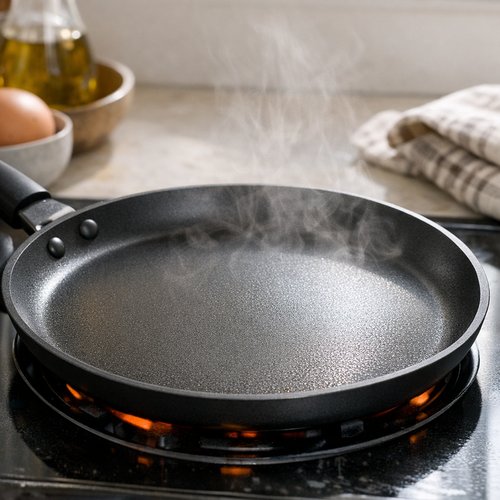
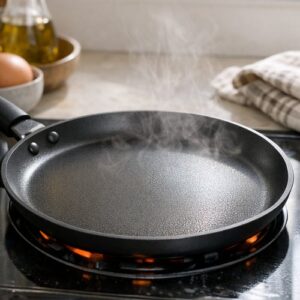
Use a non-stick crepe pan (about 8 to 10 inches in diameter) or a non-stick skillet. Medium heat is your target—not too low, or your crepes won’t brown; not too high, or the outside will burn before the inside cooks. Let your pan preheat for about 2 minutes until it feels warm when you hold your hand above it.
Add a small piece of butter—about half a teaspoon—and let it melt and coat the pan evenly. You’ll know the pan is ready when the butter foams and the foam begins to subside. This takes about 20 seconds. The butter is crucial; it seasons the crepe and helps with browning.
Step 6: Pour and Swirl With a Confident Hand
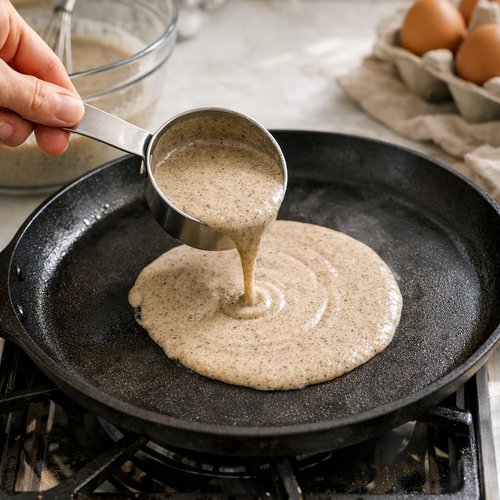
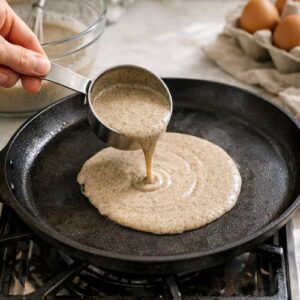
This is the moment that feels intimidating but becomes second nature quickly. Pour about ¼ cup of batter (I use a small ladle or ¼ cup measuring cup) into the center of your hot pan. Immediately tilt and swirl the pan in a circular motion—I rotate my wrist smoothly, moving the pan around so the batter spreads into a thin, even circle.
You want your crepe to be thin but not translucent. If you can see right through it, it’s too thin and will tear. If it’s thick and doughy, you used too much batter. This takes practice—by the third or fourth crepe, you’ll find your rhythm. Any crepe that doesn’t cooperate? It’s a delicious breakfast for you while you practice.
The entire swirling motion should take about 5 seconds. Once you’ve got your circle, leave the pan alone. Resist the urge to fiddle with it.
Step 7: Cook Until the Edges Begin to Curl
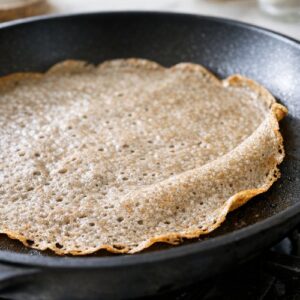
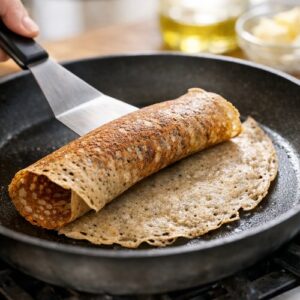
Cook your crepe on the first side for about 1 to 1½ minutes. You’ll know it’s ready to flip when you can see the edges beginning to lift and curl slightly at the sides, and the crepe has set enough that you can slide a thin spatula underneath it. The bottom should have light golden-brown spots, but it doesn’t need to be completely brown.
Buckwheat crepes cook differently than white flour crepes—they set faster because buckwheat has a different starch composition. Watch for those curling edges; they’re your signal that the structure is set.
Step 8: Flip and Finish
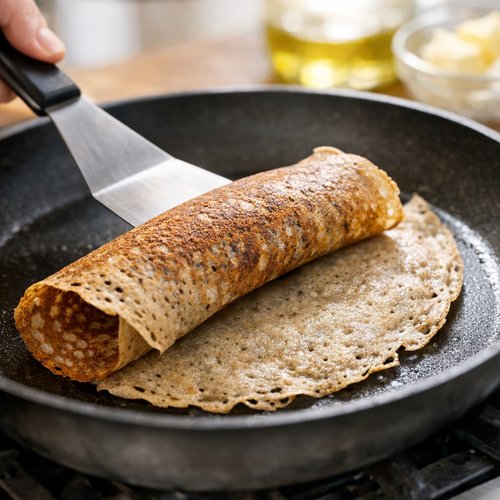
Once you see those edges curling, use a thin, flat spatula to gently loosen the crepe from the pan, then flip it over confidently. I usually slide the spatula underneath and flip it with a quick flick of my wrist—it’s satisfying, and it prevents the crepe from folding on itself.
Cook the second side for about 30 to 45 seconds. You don’t need as much color on the second side as the first; you’re just setting the structure. The bottom should have a few light spots of color, but it will be paler than the first side. This is normal and exactly what you want.
Transfer your crepe to a plate. If you’re serving it immediately, you can fill it now. If you’re stacking them for later (which I recommend for efficiency), stack them on a plate as they come off the pan—they’ll stay warm and pliable for several minutes.
Step 9: Adjust Your Batter as You Go
After your first couple of crepes, assess your batter. If it’s too thick and doesn’t spread easily across your pan, add a tablespoon of water or milk and whisk it in. If it’s too runny and spreads too thin, add a tablespoon of buckwheat flour and whisk it in. These adjustments account for variations in humidity, your specific pan, and how thinly you like your crepes.
Keep your pitcher of batter nearby so you can make small adjustments quickly. The batter will continue to thicken slightly as it sits, so you might need to add a splash of water toward the end of cooking.
Tips and Tricks
- Temperature consistency matters – Once your pan reaches the right temperature, keep it there. If you’re cooking a batch of crepes, I sometimes lower the heat slightly after the first two or three to prevent over-browning. Every stove is different, so pay attention to your specific heat source.
- Don’t skip the resting period – I know it’s tempting to start cooking immediately, but this 30-minute rest is non-negotiable. It’s the difference between a crepe that tears and one that’s supple and cooperative. If you’re short on time, at least rest for 20 minutes.
- Use a smaller amount of butter between crepes – You don’t need a fresh pat of butter for every single crepe. After the first crepe, a light wipe with butter on a paper towel is often enough. Too much butter and your crepes become greasy.
- Keep crepes warm and pliable – If you’re making a large batch, stack them on a plate and cover them loosely with a clean kitchen towel as you cook. This keeps them warm and prevents them from drying out, so they’re still easy to fold or fill when you’re ready to serve.
- Master the pan temperature before adding filling – Your first few crepes are your practice round. Adjust your heat, get comfortable with the swirling motion, and nail your technique before you worry about fancy fillings. The crepe itself is the skill to develop first.
- Buckwheat flour can settle – If your batter sits for more than an hour, give it a gentle stir before using. The buckwheat flour may settle to the bottom, and a quick whisk ensures even consistency.
- Invest in a non-stick crepe pan – A traditional French crepe pan (which has very low sides) makes this process so much easier than a regular skillet. They’re inexpensive and worth the investment if you plan to make crepes regularly.
Common Mistakes to Avoid
After teaching countless people how to make crepes, I’ve noticed patterns. Here are the mistakes that trip up even confident cooks:
- Skipping the batter rest – People rush this step because it feels like wasted time. Then their crepes tear, fall apart, or have a tough, rubbery texture. The rest isn’t optional; it’s essential chemistry.
- Using cold eggs and milk – Cold ingredients make batter that’s harder to whisk smoothly and doesn’t incorporate as evenly. Take your eggs and milk out of the fridge 20 minutes before making crepes, or let them sit in warm water for 5 minutes.
- Overthinking the flip – I see people trying to flip crepes with their hands or using massive spatulas. A thin, flexible spatula and a confident flick of your wrist make this easy. Practice on your first crepe (which you’ll eat anyway) and by the third one, you’ll be flipping like a pro.
- Not adjusting for pan consistency – Every pan heats differently, every stove has hot spots, and humidity affects your batter. The first three crepes are your calibration; pay attention and make adjustments. Once you’ve got one that turns out perfectly, you’ve got your baseline.
Make-Ahead Guide: Crepes for the Week
This is where these crepes become genuinely practical for busy people. I make a double batch on Sunday and have crepe options all week.
The batter itself: You can prepare the batter up to 24 hours in advance. Store it in an airtight container in the refrigerator. Before cooking, let it come to room temperature (about 20 minutes) and give it a gentle stir. The batter may thicken slightly, so you might need to add a tablespoon of water to restore the proper consistency.
Cooked crepes: Once cooked and cooled, stack your crepes on a plate, separate each one with a sheet of parchment paper, and wrap the entire stack tightly in plastic wrap. Store in the refrigerator for up to 4 days. To reheat, I place a crepe on a plate and microwave it for 15 seconds (this keeps it from drying out), or warm it in a dry non-stick pan over medium-low heat for about 20 seconds per side.
Crepes in the freezer: I often freeze extras. Stack them with parchment between each one, wrap the stack in plastic wrap, then place it in a freezer bag. They’ll keep for up to 2 months. Thaw at room temperature for about 30 minutes before reheating.
The beauty of this system is that you can make crepes when you have time, then spend weekday mornings filling them with whatever you have on hand. This is genuine meal prep without the “meal prep” feel.
Can I Store French Buckwheat Crepe Recipe?
Yes, absolutely. Here’s how I handle storage at every stage:
Uncooked batter: Store in an airtight container in the refrigerator for up to 24 hours. If you’ve added water or flour for adjustments, the batter might separate slightly during storage—just give it a gentle stir before using.
Cooked crepes (refrigerator): Stack them with parchment paper between each crepe, wrap tightly in plastic wrap or aluminum foil, and store in the refrigerator for up to 4 days. They’ll stay soft and pliable, ready to fill and serve whenever you need them.
Cooked crepes (freezer): Follow the same stacking method as above, but place the wrapped stack in a freezer-safe bag. They’ll keep for up to 2 months without losing quality. Thaw at room temperature for 30 minutes before reheating.
Filled crepes: If you’ve already filled them with savory or sweet ingredients, storage depends on what’s inside. As a general rule, eat them within 1 day if they contain dairy or fresh vegetables, or within 2 days if they’re filled with something shelf-stable like jam. Don’t freeze filled crepes unless you’ve verified that your specific fillings freeze well.
Nutrition Information
Based on USDA data for buckwheat flour and standard preparation methods, one crepe (without fillings) contains approximately 145 calories, 5 grams of protein, 29 grams of carbohydrates, 2 grams of fiber, and 2 grams of fat. The exact numbers depend on your pan size and how thin you spread the batter (thinner crepes = fewer calories per crepe).
What makes buckwheat nutritionally interesting: it’s a complete protein, meaning it contains all nine essential amino acids. This makes these crepes more substantial than regular white flour crepes. They’re also high in resistant starch, which supports digestive health. The fiber content supports satiety, meaning these crepes keep you satisfied longer than you might expect.
Dietitian’s Note: Buckwheat’s manganese and magnesium content supports bone health and energy metabolism. If you’re looking for a naturally gluten-free grain option that delivers actual nutrition (not just calories), buckwheat is genuinely exceptional. Pair these crepes with protein and vegetables to create a complete, balanced meal.
Seasonal Variations
One of my favorite things about this recipe is how it adapts to what’s in season:
Spring: Fill with sautéed asparagus, goat cheese, and a drizzle of lemon. The bright acidity cuts through the buckwheat’s earthiness beautifully.
Summer: Go for fresh berries and crème fraîche for sweet crepes, or fill savory versions with summer vegetables like zucchini, heirloom tomatoes, and fresh basil.
Fall: Sauté mushrooms with thyme and shallots, add some Gruyère cheese, and you’ve got a crepe that tastes like autumn. For sweet versions, try roasted pears with a touch of honey.
Winter: Braised short ribs or caramelized onions with aged cheddar make these crepes feel like comfort food. For sweet, stick with jam and winter citrus.
What Can I Serve With French Buckwheat Crepe Recipe?
This is where creativity meets practicality. These crepes work with nearly any filling you can imagine, but here are my go-to combinations:
- Savory breakfast: Fill with a fried egg, ham, and Emmental cheese. Add a pinch of Dijon mustard if you want brightness. Buckwheat’s earthiness pairs beautifully with eggs.
- Vegetarian lunch: Sauté mushrooms with garlic and thyme, add some crème fraîche and grated Gruyère. The crepe becomes a complete, protein-rich meal when paired with a simple salad.
- Dinner option: Consider serving crepes alongside french fried parsnips or french fried mashed potatoes for an unexpectedly elegant weeknight meal.
- Sweet breakfast: Top with fresh berries, a spoonful of jam, and a dollop of crème fraîche or Greek yogurt. A light dusting of powdered sugar is optional but traditional.
- Dessert crepes: Fill with Nutella and fresh raspberries, or with dark chocolate and sliced bananas. The nuttiness of buckwheat actually complements chocolate beautifully.
- Tropical twist: Fill with fresh pineapple salsa for a bright, unexpected combination that works for either sweet or savory applications.
- Pairing with sides: Crepes are meal-flexible, so serve them with whatever vegetables or proteins fit your day. A simple green salad, roasted vegetables, or even a soup round out the meal.
Substitutes
- Buckwheat flour alternative: If you can’t find buckwheat flour, you can substitute with a 1:1 blend of regular whole wheat flour and cornmeal (by weight). The flavor won’t be identical, but you’ll get a similar texture and a pleasant whole-grain taste. However, I’d encourage you to seek out buckwheat flour online or at a specialty grocery store—it’s becoming more widely available, and it’s genuinely worth having on hand.
- Sparkling water alternative: Still water works perfectly well. The sparkle from carbonated water creates slightly airier crepes, but the difference is subtle. Use the same amount of still water with no other adjustments needed.
- Milk alternative: If you need to avoid dairy, substitute with unsweetened oat milk or almond milk in a 1:1 ratio. I’ve found oat milk works better here because of its slight thickness. Coconut milk is also delicious if you want a subtle tropical note (use light coconut milk, not canned full-fat, or your batter will be too thick).
- Egg alternative: For a vegan version, use a flax egg (1 tablespoon ground flaxseed mixed with 3 tablespoons water, let sit for 5 minutes before using) per egg. The crepes will be slightly less tender, but they’ll still work well. You might need to add an extra tablespoon of water to the batter to compensate.
- Butter alternative: Use clarified butter (ghee) or a neutral oil like grapeseed or avocado oil for cooking. Coconut oil works, though it will impart a subtle coconut flavor. Avoid olive oil here—its lower smoke point makes it less ideal for crepe cooking.

French Buckwheat Crepe Recipe

Ingredients
- 240 ml sparkling or still water the liquid base for our batter
- 240 ml whole milk full-fat is essential for richness and better browning
- 3 tablespoon unsalted butter divided for cooking, plus extra for the pan
- 2 large eggs room temperature, they incorporate more smoothly
- 1 teaspoon fine sea salt for savory crepes; omit if making sweet
- 1 tablespoon caster sugar for sweet crepes; omit if making savory
- 250 gram buckwheat flour about 1⅔ cups, the foundation of our texture
Instructions
Step 1: Combine Your Dry Ingredients with Intention
- Pour your buckwheat flour into a large mixing bowl. If you're making savory crepes, add the teaspoon of salt now. If you're making sweet crepes, add the caster sugar instead. Whisk these together gently for about 30 seconds—this ensures the salt or sugar distributes evenly throughout the flour. Now, use a wooden spoon or spatula to create a well in the center of your flour mixture, almost like you're making a little nest. This well is where your wet ingredients will go, and it makes whisking the batter much easier than mixing everything at once.
Step 2: Whisk the Wet Ingredients Together First
- In a separate bowl, crack your 2 eggs and whisk them for about 30 seconds until they're well combined and slightly frothy. Add your milk and water to the eggs, and whisk again for another minute until everything is fully incorporated. You want this mixture to be homogeneous—no streaks of egg white visible. Why whisk the wet ingredients separately? Because when you pour them into the flour all at once, you can control the mixing process better. If you dump everything together, you're more likely to overwork the batter, which can make crepes tough.

Step 3: Build Your Batter Gradually
- Pour about one-third of your whisked wet mixture into the well you created in the flour. Using a whisk, pull a little bit of the flour from the edges of your well toward the center, incorporating it gradually into the liquid. The key word here is gradually. You're not trying to mix everything at once. Once that first third is roughly combined (it's okay if it's a bit lumpy), add another third of your wet mixture and repeat. Finally, add the last third and whisk until you have a smooth, thin batter that resembles heavy cream or thin pancake batter. If you see a few small lumps, that's fine—they'll break down during resting.
Step 4: Let Time Do the Work (The Most Important Step)
- This is where patience becomes technique. Pour your batter into a measuring cup or pitcher (easier for pouring later) and let it rest at room temperature for at least 30 minutes, ideally 45 minutes to 1 hour. If you want to make these ahead, you can even rest the batter for up to 2 hours. This resting period allows the buckwheat flour to fully absorb all the liquid, which develops the structure you need for tender crepes with crispy edges. During this time, the gluten-free starches in the buckwheat are hydrating and beginning to gelatinize. This isn't optional—it's what separates a great crepe from a mediocre one. I often prepare my batter in the evening and make crepes the next morning. It works beautifully.
Step 5: Heat Your Pan With Confidence
- Use a non-stick crepe pan (about 8 to 10 inches in diameter) or a non-stick skillet. Medium heat is your target—not too low, or your crepes won't brown; not too high, or the outside will burn before the inside cooks. Let your pan preheat for about 2 minutes until it feels warm when you hold your hand above it. Add a small piece of butter—about half a teaspoon—and let it melt and coat the pan evenly. You'll know the pan is ready when the butter foams and the foam begins to subside. This takes about 20 seconds. The butter is crucial; it seasons the crepe and helps with browning.
Step 6: Pour and Swirl With a Confident Hand
- This is the moment that feels intimidating but becomes second nature quickly. Pour about ¼ cup of batter (I use a small ladle or ¼ cup measuring cup) into the center of your hot pan. Immediately tilt and swirl the pan in a circular motion—I rotate my wrist smoothly, moving the pan around so the batter spreads into a thin, even circle. You want your crepe to be thin but not translucent. If you can see right through it, it's too thin and will tear. If it's thick and doughy, you used too much batter. This takes practice—by the third or fourth crepe, you'll find your rhythm. Any crepe that doesn't cooperate? It's a delicious breakfast for you while you practice. The entire swirling motion should take about 5 seconds. Once you've got your circle, leave the pan alone. Resist the urge to fiddle with it.
Step 7: Cook Until the Edges Begin to Curl
- Cook your crepe on the first side for about 1 to 1½ minutes. You'll know it's ready to flip when you can see the edges beginning to lift and curl slightly at the sides, and the crepe has set enough that you can slide a thin spatula underneath it. The bottom should have light golden-brown spots, but it doesn't need to be completely brown. Buckwheat crepes cook differently than white flour crepes—they set faster because buckwheat has a different starch composition. Watch for those curling edges; they're your signal that the structure is set.
Step 8: Flip and Finish
- Once you see those edges curling, use a thin, flat spatula to gently loosen the crepe from the pan, then flip it over confidently. I usually slide the spatula underneath and flip it with a quick flick of my wrist—it's satisfying, and it prevents the crepe from folding on itself. Cook the second side for about 30 to 45 seconds. You don't need as much color on the second side as the first; you're just setting the structure. The bottom should have a few light spots of color, but it will be paler than the first side. This is normal and exactly what you want. Transfer your crepe to a plate. If you're serving it immediately, you can fill it now. If you're stacking them for later (which I recommend for efficiency), stack them on a plate as they come off the pan—they'll stay warm and pliable for several minutes.
Step 9: Adjust Your Batter as You Go
- After your first couple of crepes, assess your batter. If it's too thick and doesn't spread easily across your pan, add a tablespoon of water or milk and whisk it in. If it's too runny and spreads too thin, add a tablespoon of buckwheat flour and whisk it in. These adjustments account for variations in humidity, your specific pan, and how thinly you like your crepes. Keep your pitcher of batter nearby so you can make small adjustments quickly. The batter will continue to thicken slightly as it sits, so you might need to add a splash of water toward the end of cooking.
Notes
Nutrition
FAQs
Why did my crepes come out tough and rubbery?
This almost always comes down to one of two things. First, you might have skipped or rushed the resting period. The batter needs that 30-minute rest to allow the buckwheat flour to fully hydrate. Without it, your crepes will be dense and tough. Second, you might be overmixing the batter. Once you’ve combined your wet and dry ingredients, stop whisking. A few small lumps are fine and will disappear during cooking; aggressive mixing develops gluten-like proteins even in buckwheat, which toughens the crepes.
Can I make these crepes gluten-free for someone with celiac disease?
Yes! Buckwheat flour is naturally gluten-free, making this recipe inherently suitable for celiac disease. However, if you’re cooking for someone with celiac, verify that your buckwheat flour is certified gluten-free, as cross-contamination can occur during harvesting or processing. Also, ensure your other ingredients (salt, sugar, eggs, milk, and butter) are also gluten-free certified if you’re concerned about trace amounts.
Why are my crepes tearing when I flip them?
This usually means either your batter didn’t rest long enough, or your pan temperature is inconsistent. If the batter hasn’t rested enough, the structure isn’t set properly when you flip. Try resting for the full hour and see if that helps. If temperature is the issue, let your pan heat for a full 2 minutes before adding batter, and keep the heat steady at medium throughout cooking. Also, make sure your spatula is thin and flexible—a thick or heavy spatula can catch and tear the crepe.
How do I get that lacy, crispy edge that looks so pretty?
Those lacy edges are exactly what happens when buckwheat batter hits a hot pan and sets quickly. You’re not doing anything special; it’s just the natural behavior of buckwheat starch. What you can do to enhance it: make sure your pan is properly preheated, use a little butter for browning, and cook at medium heat (not too low, or you won’t get crispy edges; not too high, or they’ll burn before cooking through). Those edges are the reward for doing the basics right.
Can I make sweet and savory crepes from the same batter?
No, I recommend making separate batches. If you’re making sweet crepes, you add caster sugar to the batter, which affects how it browns and tastes. If you’re making savory crepes, you use salt instead. The flavor difference is significant enough that mixing them together will be unsatisfying. Make one batch of each if you want both options—the batter takes 10 minutes to prepare, and you’ll have enough crepes for the whole week.
More Recipes You’ll Love
- Eggless Crepe Recipe – Perfect if you need a vegan-friendly crepe option that maintains that delicate texture
- French Fried Parsnips – An elegant side dish that pairs beautifully with savory crepes
- Eggs Bites in Oven – Another protein-rich breakfast option that works well alongside crepes for a complete brunch spread
There’s something genuinely special about mastering a recipe that has generations of tradition behind it. These French buckwheat crepes aren’t complicated, but they’re worth learning because they teach you fundamental cooking skills—understanding ingredient interactions, respecting resting times, managing pan temperature, and building confidence through repetition.
I still think about that morning with Madame Leclerc sometimes. She wasn’t just teaching me how to make crepes; she was showing me that food is about patience, precision, and respect for tradition. Every crepe you make is a small act of that same respect. Start with the batter today, let it rest while you have your coffee, and by tomorrow morning you’ll have the foundation for a week of beautiful, delicious meals.
Happy Cooking!