
Air Fry Pork Loin Recipe
There’s something magical about a perfectly cooked pork loin — that tender, juicy center with a flavorful crust that makes you feel like you’ve ordered from a fine dining kitchen. The beauty of this air fryer approach is that you get that restaurant-quality result in under 30 minutes, with minimal cleanup. I love serving this alongside fresh pineapple salsa for brightness, or creamy mashed potatoes to soak up those incredible pan juices.
How I Discovered the Joy of Quick, Elegant Proteins
I’ll never forget a dinner my grandmother made on a Tuesday night — not a holiday, not a special occasion, just an ordinary weekday. She’d prepared a beautiful pork loin with a spice rub that filled the entire house with warmth and anticipation. I was maybe twelve, and I remember thinking that this was the kind of meal that made people want to linger at the table, to talk longer, to feel cared for.
That memory stuck with me through culinary school and beyond. For years, I thought achieving that quality required hours of planning and precise oven timing. Then I started experimenting with air fryer techniques, and honestly? This method captures everything I loved about her approach — the flavor, the tenderness, the sense of occasion — but in a way that fits modern life. It’s become my go-to when I want to cook something impressive without the stress.
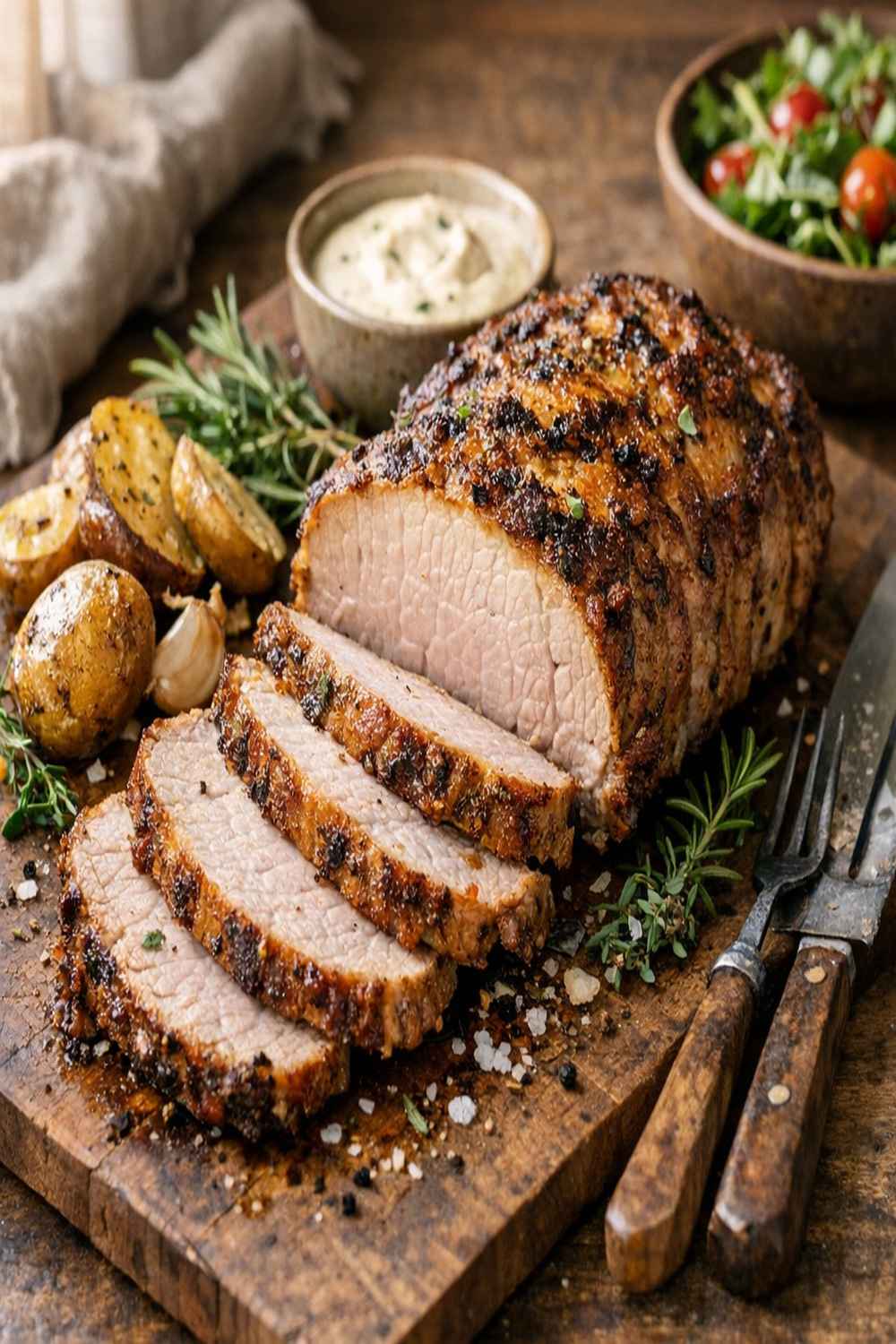
What is Air Fryer Pork Loin?
Air fryer pork loin is a quick-cooking preparation where a seasoned tenderloin is cooked using rapid circulating hot air instead of traditional oven roasting. The technique comes from modern air fryer technology but builds on the classic principles of dry-heat cooking that chefs have used for generations.
What makes this method special is the combination of speed and results. A well-trimmed pork loin develops a beautiful golden-brown exterior through the Maillard reaction — that chemical process where proteins and sugars bond under high heat to create deep, complex flavors. Meanwhile, the interior stays incredibly moist because the cooking time is so brief that moisture doesn’t have time to escape.
The smoky spice crust brings warmth and depth. I use brown sugar, smoked paprika, and ground mustard as the foundation because they work together beautifully — the sweetness balances the smoke, the paprika adds color and subtle heat, and the mustard provides an earthy undertone that enhances the natural pork flavor without overwhelming it.
Why You’ll Love This Air Fryer Pork Loin Recipe
- Restaurant-quality results in 30 minutes — From prep to resting, you’re looking at less than half an hour total. The air fryer’s intense, concentrated heat does the work that would normally take 45 minutes in a traditional oven.
- Incredibly tender and juicy — Because pork loin is a lean cut, it’s easy to overcook. The air fryer’s quick cooking and the resting period work together to keep every slice succulent. The internal temperature reaches 145°F, which is the USDA safe minimum while still maintaining a slightly pink, incredibly moist center.
- Minimal active cooking time — You prepare the spice rub, coat the meat, set the temperature, and then you have 20-22 minutes to set the table, prepare sides, or simply take a breath. This is cooking that works with your life, not against it.
- A flavor profile that’s familiar yet special — The smoky, slightly sweet, gently spiced crust feels elegant without being fussy. This is the kind of dinner that impresses guests or makes your family feel celebrated, even on an ordinary Tuesday.
- Naturally lower in fat than many proteins — Pork loin is one of the leaner meat options, making this a naturally lighter choice if you’re paying attention to nutrition. The air fryer method doesn’t add unnecessary oils, keeping it clean and straightforward.
- Endlessly adaptable — The core technique stays the same, but you can swap spices, add a glaze, or pair it with different sides depending on the season or what you’re craving. It’s a foundation recipe that grows with your confidence.
The Ingredients
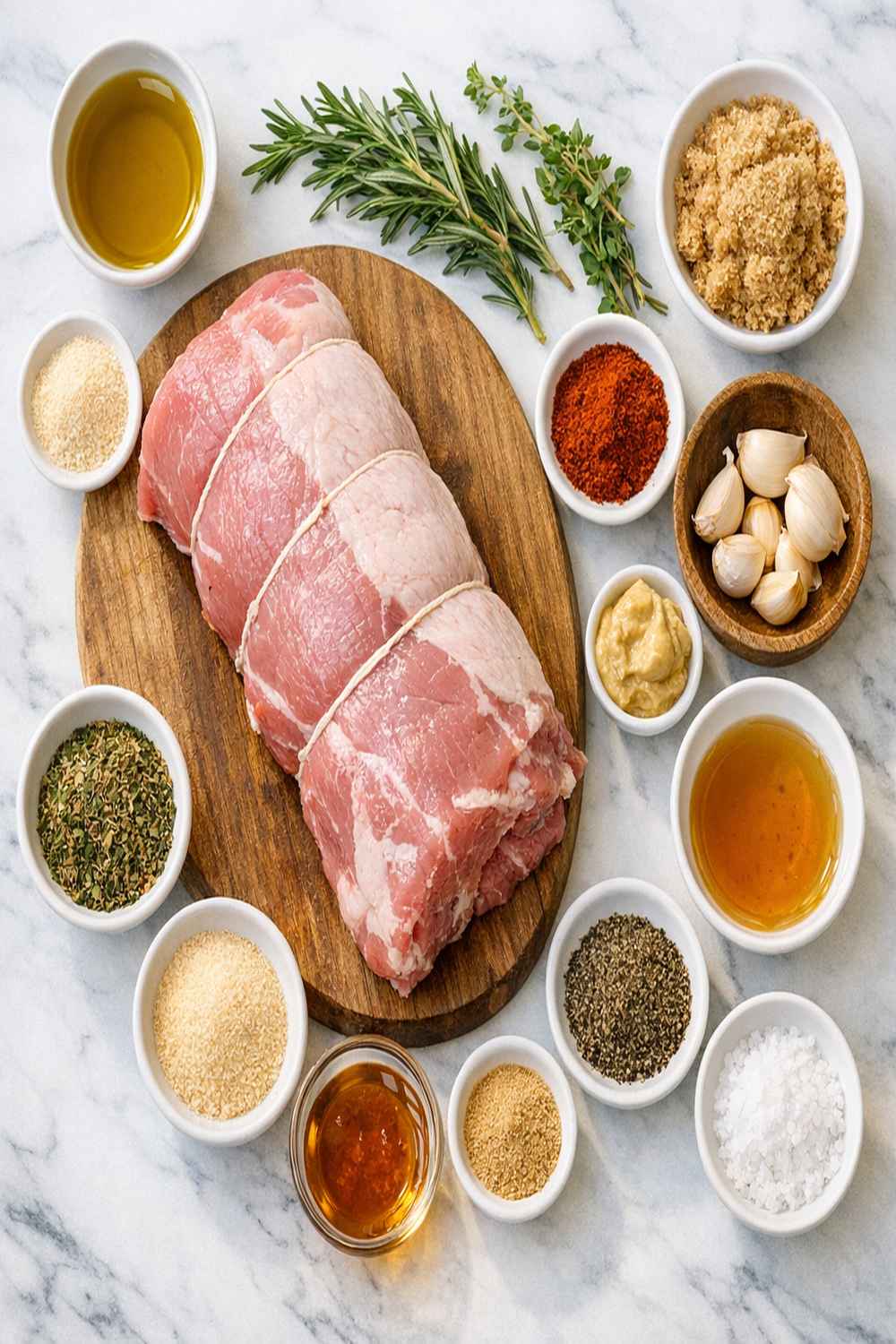
I’ve chosen these ingredients specifically because they layer flavors without competing. Each one serves a purpose — nothing is there just for tradition. The brown sugar isn’t just sweetness; it caramelizes in the high heat and helps create that beautiful crust. The smoked paprika does double duty, adding color and a subtle smokiness that makes people ask what your secret ingredient is.
A few notes as you gather these: make sure your spices are relatively fresh. I know that sounds obvious, but I learned this the hard way in culinary school — spices lose potency over time, especially once opened and exposed to light and humidity. If your paprika or mustard powder has been sitting in the back of your cabinet for more than a year, they’ll be noticeably less vibrant. Invest in fresh ones; they make a real difference.
- 1 teaspoon ground mustard powder (brings earthy depth)
- ½ teaspoon onion powder (enhances savory notes)
- Kosher salt (for final seasoning, if needed)
- ½ teaspoon freshly ground black pepper (coarse is ideal)
- 2 tablespoons brown sugar (packed, for caramelization)
- ¼ teaspoon garlic powder (just enough for background flavor)
- 1 tablespoon smoked paprika (adds color and subtle smokiness)
- ½ tablespoon extra-virgin olive oil (to help spices adhere)
- 1.5 pounds pork tenderloin (center-cut section, about 1.25 to 1.75 pounds)
- 1.5 teaspoons sea salt (fine grain works best for even distribution)
- ¼ teaspoon cayenne powder (optional, for those who enjoy gentle heat)
Serves: 4-5 people as a main course
How to Make Air Fryer Pork Loin?
The process is straightforward, but I want to walk you through the reasoning behind each step. When you understand the why, you become a more confident cook — someone who can adjust based on what you’re seeing and sensing, rather than just following directions blindly.
Step 1: Prepare Your Spice Blend
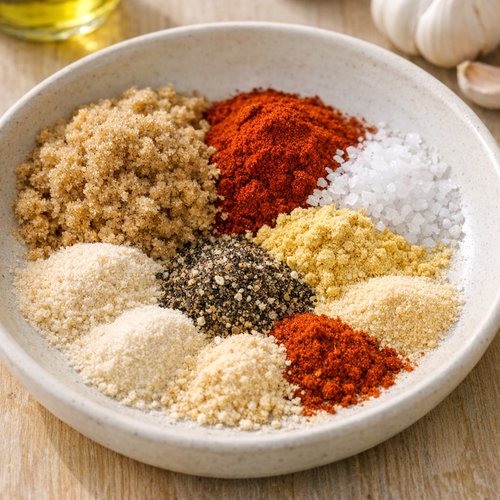
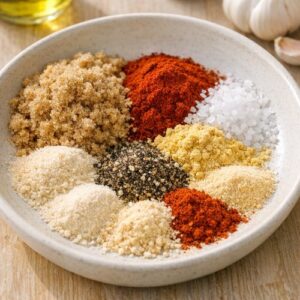
In a shallow bowl, combine the brown sugar, smoked paprika, sea salt, ground mustard, onion powder, black pepper, garlic powder, and cayenne if you’re using it. Stir them together with a fork, breaking up any lumps in the brown sugar. This matters because lumps won’t distribute evenly, leaving you with pockets of concentrated sweetness and bare spots on your meat.
I like to smell the mixture at this point — it’s a tiny ritual that reminds me why I love cooking. That aroma tells you whether your spices are fresh and alive. If something smells flat or muted, that’s your signal to replace it before your next cook.
Step 2: Prepare the Pork Loin
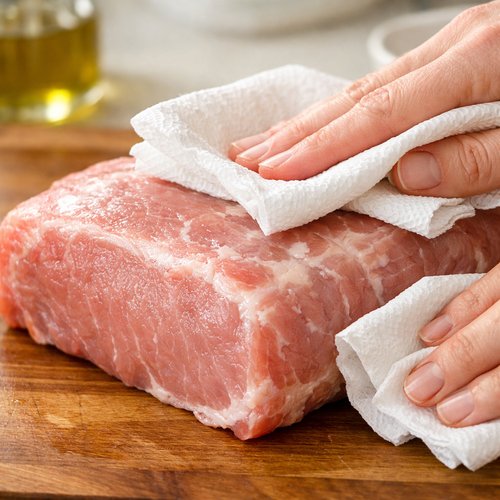
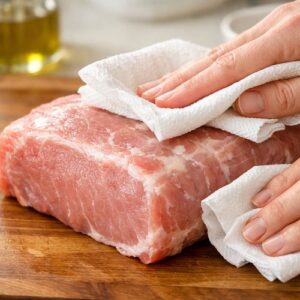
Pat your pork loin completely dry with paper towels. Any surface moisture will create steam rather than allowing for browning, so this step is crucial. Look over the meat carefully and trim any excess fat or silver skin (that thin, tough membrane that doesn’t cook well). You want to remove the obvious bits without being obsessive — a little fat adds flavor and keeps things juicy.
Once trimmed, drizzle the olive oil over the surface and use your hands to coat it evenly. The oil acts as an adhesive for the spice rub, helping it stick rather than falling off during cooking. This is one of those small techniques that separates a well-executed dish from one that’s just okay.
Step 3: Apply the Spice Crust
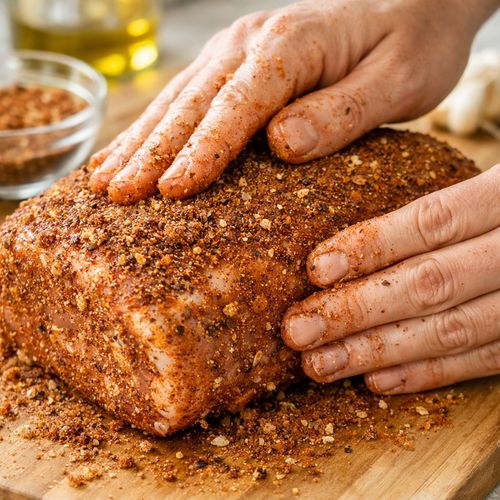
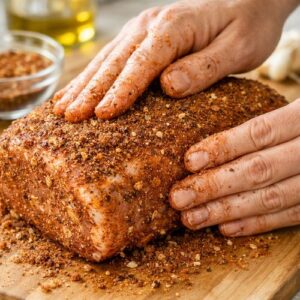
Now comes the satisfying part — coating your loin with the spice mixture. I use my hands rather than a brush because I want tactile control. Pour the spice blend onto a plate, then roll and massage the pork through it, using your fingers to press it onto every surface. Make sure you get the ends, the sides, everywhere. You want a generous, visible crust that will caramelize beautifully.
Don’t be timid here. The spices are your flavor insurance — they’re what make this special. A light dusting isn’t enough. Be generous, and trust the process.
Step 4: Preheat Your Air Fryer
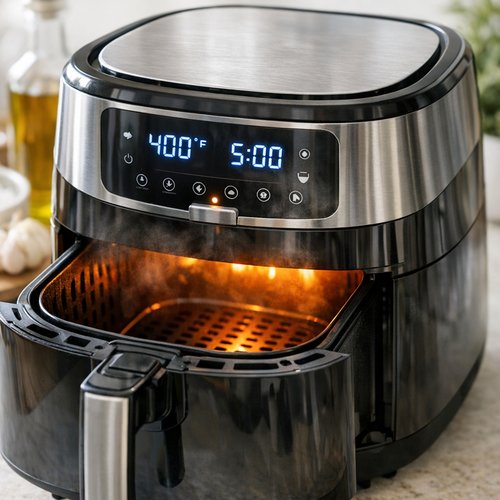
Set your air fryer to 400°F and let it preheat for 5 minutes. This step matters more than people realize. A properly preheated air fryer is hot and ready to sear the exterior of your meat immediately, which triggers that Maillard reaction I mentioned earlier. If you skip this or cut it short, your crust won’t develop that beautiful golden-brown color and depth of flavor.
While it’s preheating, take a moment to set up your workspace — get a cutting board ready, gather any serving dishes, and set your timer. Good prep work makes the actual cooking feel calm and intentional rather than rushed.
Step 5: Cook the Pork Loin
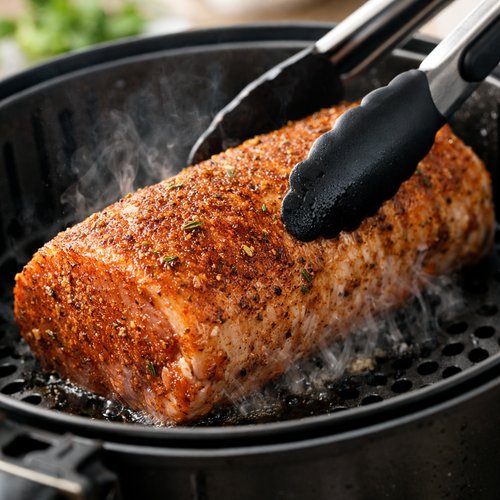
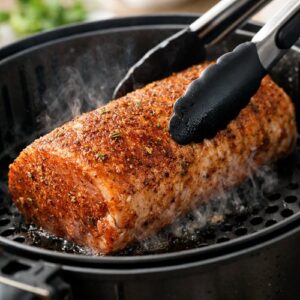
Carefully place your spiced pork loin into the preheated air fryer basket. It should sizzle slightly as it hits the hot surface — that’s the sound of flavor development happening. Set the temperature to 400°F for 20-22 minutes. Every air fryer is slightly different, so start checking at the 18-minute mark.
You’re looking for an internal temperature of 145°F measured at the thickest part. This is the USDA safe minimum for pork, and at this temperature, the meat is still moist with just a hint of pink in the very center. If you prefer your pork more thoroughly cooked, take it to 160°F, though I find that can sometimes result in a slightly drier texture.
Use an instant-read thermometer — it’s one of the most valuable tools in your kitchen. It removes guesswork and gives you confidence that you’re hitting the mark every single time.
Step 6: Rest and Serve
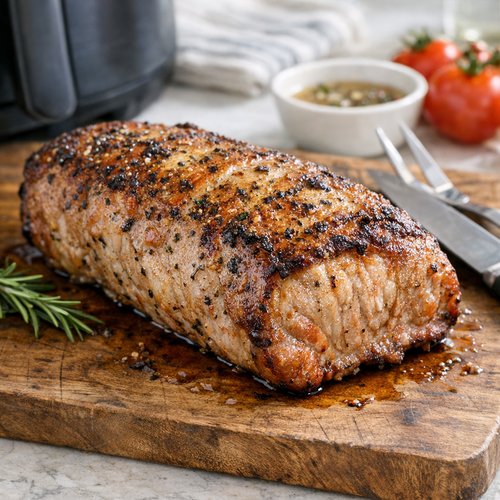
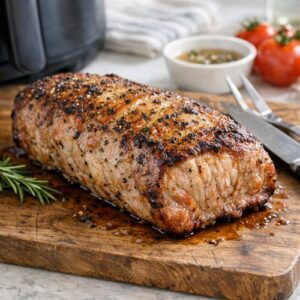
This step is non-negotiable: when the pork emerges from the air fryer, place it on a cutting board and let it rest for 5 minutes. I know it’s tempting to slice immediately, but here’s what’s happening during that rest: the muscle fibers are relaxing and reabsorbing the juices that were driven toward the center during cooking. If you cut too early, all those flavorful juices run out onto the board instead of staying in your meat.
While it rests, look at what’s accumulated on the air fryer basket — those caramelized bits and juices are liquid gold. Carefully pour them into a small bowl; you’ll drizzle them over the sliced pork before serving. It adds moisture, flavor, and elegance to the finished dish.
Slice the pork against the grain (perpendicular to the direction the muscle fibers run) into ½-inch thick pieces. This makes each bite tender rather than stringy. Arrange on a serving platter, pour those reserved juices over the top, and you’re ready to serve something special.
Tips and Tricks from My Kitchen to Yours
- Choose the right cut carefully — Pork tenderloin and pork loin are sometimes confused in grocery stores, though they’re different cuts. Tenderloin is smaller, more uniform, and cooks more evenly. It’s my preferred choice for this recipe because it reaches the target temperature consistently. If you use a larger loin, you may need slightly longer cooking time.
- Room temperature meat cooks more evenly — Remove your pork from the refrigerator about 15-20 minutes before cooking. Cold meat straight from the fridge will have a cold center, and by the time the middle reaches 145°F, the exterior can overcook slightly. Room temperature meat cooks through more evenly, giving you that perfect edge-to-center consistency.
- Don’t skip the resting period — I mentioned this in the steps, but it’s important enough to emphasize. Those 5 minutes of rest are when the magic of moisture retention happens. The difference between a slice of pork that’s juicy and flavorful versus one that’s dry is often just those few minutes of patience.
- Make the spice blend ahead — You can mix your dry spices the night before and store them in an airtight container. This way, when you’re ready to cook, you can focus on the pork itself. It’s a small hack that makes weeknight cooking feel less overwhelming.
- Invest in a good meat thermometer — This is your insurance policy against overcooking. An instant-read thermometer costs about $20-30 and will serve you for years. It’s one of the best investments you can make in your cooking confidence.
- Let your air fryer basket breathe — Don’t overcrowd it. The pork needs space for hot air to circulate around all sides. If your air fryer is small and your pork barely fits, you’re in the right zone. If you have to squeeze it in, your basket is too full.
Make-Ahead Guide and Meal Prep
I love this recipe for meal planning because it offers flexibility at different stages. Here’s how I approach it depending on my schedule:
Prepare the night before: Mix your spice blend and store it in an airtight container. Trim and pat dry your pork loin, wrap it in plastic wrap, and refrigerate. In the morning or evening you plan to cook, you literally just have to coat the meat with oil and spices, then pop it in the air fryer. This is my preferred approach for busy weeknights because the mental load is minimal.
Cook and refrigerate: If you prefer to do all the cooking at once, you can air fry your pork loin, let it cool, wrap it tightly, and refrigerate for up to 4 days. To reheat, slice it, place the slices on a plate, cover with a damp paper towel, and warm in a 300°F oven for about 8-10 minutes until heated through. The moisture from the paper towel prevents it from drying out further.
Freeze for later: Cooked pork loin freezes beautifully for up to 3 months. Slice it before freezing, layer slices with parchment paper between each one, and store in an airtight freezer bag with as much air removed as possible. Thaw overnight in the refrigerator before reheating.
Common Mistakes to Avoid
- Skipping the trimming step — I understand wanting to save time, but untrimmed silver skin and excess fat create uneven cooking and less-than-ideal texture. It’s worth the 2-3 minutes to do this properly. You’ll notice the difference in every bite.
- Cooking from cold — Pulling meat straight from the refrigerator into a hot air fryer creates a temperature gradient that’s hard to manage. You end up with an overcooked exterior and an undercooked center. Those 15-20 minutes of rest on the counter are an investment in better results.
- Not using a meat thermometer — This is how accidents happen. Visual cues are unreliable, and once you’ve overcooked pork, there’s no fixing it. A thermometer is your safety net and your path to consistent success.
- Cutting too early — The 5-minute rest isn’t optional. It’s when the muscle fibers relax and reabsorb moisture. Cut too early, and you lose all those flavorful juices to the cutting board.
Seasonal Variations
Spring and Summer: Add ½ teaspoon of fresh lemon zest to your spice blend for brightness, and serve alongside fresh pineapple salsa for a lighter, more refreshing plate. You could also use white pepper instead of black for a milder flavor profile that lets the fruit shine.
Fall and Winter: Increase the cayenne to ½ teaspoon if you like heat, and add ¼ teaspoon of ground cloves or a touch of cinnamon for warmth. Serve with root vegetables or rich sides like baked potatoes for a cozier feel.
Any season upgrade: Finish the plated pork with a drizzle of aged balsamic vinegar or a touch of whole grain mustard mixed with honey. These additions bring extra dimension and feel like a restaurant touch without requiring any real technique.
Expert’s Nutritional Insight
As someone trained in culinary arts who’s also interested in the whole picture of nourishment, I want to highlight something about pork loin that often gets overlooked: it’s an exceptional source of B vitamins, particularly B12 and niacin. These aren’t fancy nutrients — they’re fundamental to how your body converts food into energy and maintains healthy nerve function.
What I appreciate about this recipe is that it achieves all that nutritional benefit without adding unnecessary fat. We’re using just ½ tablespoon of olive oil for the entire dish, which is restraint without sacrifice. The pork tenderloin itself contains about 185 calories per 3-ounce serving, with approximately 26 grams of protein. According to USDA nutritional data, that same serving delivers about 0.4 micrograms of B12 — a nutrient that many people don’t get enough of, particularly those following certain dietary patterns.
The spice blend — particularly the mustard powder and paprika — also contributes antioxidants and anti-inflammatory compounds, though not in massive quantities. But over the course of your week, eating nutritionally thoughtful meals like this adds up to real impact on how you feel and function.
Can I Store Air Fryer Pork Loin?
Yes, and it stores beautifully. Here’s my storage approach:
Refrigerator: Store leftover cooked pork loin in an airtight container for up to 4 days. Keep the slices as a single piece if possible, or layer slices with parchment between them to prevent sticking. Include those pan juices in the container — they’ll keep the meat moist as it sits.
Freezer: Pork loin freezes exceptionally well for up to 3 months. Slice it, layer with parchment, and store in a freezer-safe airtight container or vacuum-sealed bag. Label it with the date so you remember when you made it.
Reheating: For refrigerated pork, place slices on a plate, cover loosely with a damp paper towel, and microwave at 50% power for 1-2 minutes, or reheat in a 300°F oven for 8-10 minutes until warmed through. For frozen pork, thaw overnight in the refrigerator first, then use the same reheating method. The key is gentle heat to avoid drying it out further.
Nutrition Information
Per serving (based on 4 servings, approximately 6 ounces cooked pork with spice crust):
- Calories: 225-240
- Protein: 28-30 grams
- Fat: 8-10 grams (mostly from the olive oil and natural pork fat)
- Saturated Fat: 3 grams
- Carbohydrates: 5-6 grams (from the brown sugar in the rub)
- Fiber: 0 grams
- Sodium: 480-510 milligrams
These values are based on USDA nutritional data for pork tenderloin and standard ingredient measurements. Individual variation will occur depending on the exact size of your pork and how much of the spice crust adheres.
What Can I Serve With Air Fryer Pork Loin?
The beauty of this pork is that it plays well with almost any side. It’s flavorful enough to stand on its own but not so aggressive that it overwhelms complementary dishes. Here are my go-to pairings:
- Creamy mashed potatoes — The juices from the pork create a simple gravy when you spoon them over buttery potatoes. It’s comfort food elevation. See my creamy mashed potato recipe for a version that pairs beautifully with this pork.
- Roasted root vegetables — Carrots, parsnips, and Brussels sprouts roasted until caramelized bring earthiness that complements the smoky spice crust. The char on the vegetables echoes the char on the pork.
- Fresh pineapple salsa — The brightness and acidity cut through the richness beautifully. I love this pairing because it brings tropical freshness while honoring the slightly sweet brown sugar in the rub. Check out my fresh pineapple salsa for a recipe that complements this perfectly.
- Garlic green beans — Simple, elegant, and lets the pork be the star. Toss fresh green beans with garlic, olive oil, and a squeeze of lemon, and you have a light, sophisticated side.
- Crispy roasted potatoes — Season potato cubes with olive oil, salt, and pepper, roast until golden, then toss with fresh herbs. It’s substantial without being heavy.
- Quinoa or grain pilaf — If you’re looking for something lighter, a warm grain pilaf with herbs brings texture and nutrition without overwhelming the palate.
- Wilted spinach with garlic — Quick to prepare, nutritionally dense, and the earthiness plays nicely with the smoked paprika in the rub.
Substitutes and Variations
- Different cuts of pork — You can use pork chops (reduce cooking time to 12-15 minutes depending on thickness) or even a larger pork shoulder (increase time significantly and check temperature). Each cut has different characteristics, so adjust your expectations — shoulder will be more forgiving if slightly overcooked, while thin chops require more precision.
- Swap the spice profile — Replace smoked paprika with regular paprika for less smokiness, or use chili powder for more complexity. Exchange the mustard powder for 1 teaspoon of Dijon mustard mixed into the oil before coating. The foundation stays the same, but the flavor journey changes.
- Add a glaze — After cooking, brush the pork with a mixture of honey and whole grain mustard, or a balsamic reduction, for added depth and shine.
- Use a spice rub with Asian notes — Replace the paprika and mustard with ginger powder, five-spice powder, and a touch of soy sauce mixed into the oil. Completely different flavor profile, same technique.
- Make it Mediterranean — Use oregano, thyme, and lemon zest instead of the paprika and mustard. Finish with a drizzle of good olive oil and fresh parsley.
- Chicken breast alternative — You can use this same approach with boneless, skinless chicken breasts (reduce cooking time to 12-14 minutes at 400°F). Chicken is milder, so you might increase the spices by 25% to maintain flavor intensity.
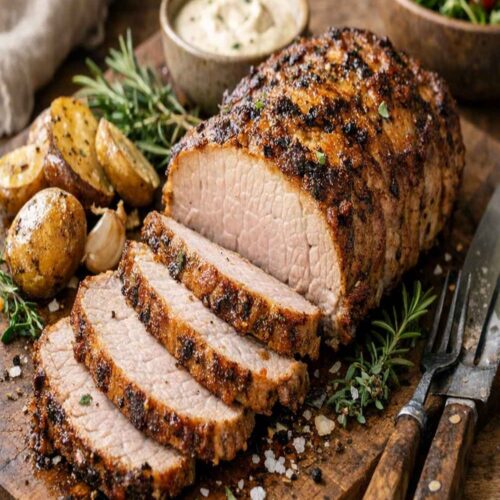
Air Fry Pork Loin Recipe

Ingredients
- 1 teaspoon ground mustard powder brings earthy depth
- ½ teaspoon onion powder enhances savory notes
- Kosher salt for final seasoning, if needed
- ½ teaspoon freshly ground black pepper coarse is ideal
- 2 tablespoon brown sugar packed, for caramelization
- ¼ teaspoon garlic powder just enough for background flavor
- 1 tablespoon smoked paprika adds color and subtle smokiness
- ½ tablespoon extra-virgin olive oil to help spices adhere
- 1.5 pound pork tenderloin center-cut section, about 1.25 to 1.75 pounds
- 1.5 teaspoon sea salt fine grain works best for even distribution
- ¼ teaspoon cayenne powder optional, for those who enjoy gentle heat
Instructions
Step 1: Prepare Your Spice Blend
- In a shallow bowl, combine the brown sugar, smoked paprika, sea salt, ground mustard, onion powder, black pepper, garlic powder, and cayenne if you're using it. Stir them together with a fork, breaking up any lumps in the brown sugar. This matters because lumps won't distribute evenly, leaving you with pockets of concentrated sweetness and bare spots on your meat. I like to smell the mixture at this point — it's a tiny ritual that reminds me why I love cooking. That aroma tells you whether your spices are fresh and alive. If something smells flat or muted, that's your signal to replace it before your next cook.
Step 2: Prepare the Pork Loin
- Pat your pork loin completely dry with paper towels. Any surface moisture will create steam rather than allowing for browning, so this step is crucial. Look over the meat carefully and trim any excess fat or silver skin (that thin, tough membrane that doesn't cook well). You want to remove the obvious bits without being obsessive — a little fat adds flavor and keeps things juicy. Once trimmed, drizzle the olive oil over the surface and use your hands to coat it evenly. The oil acts as an adhesive for the spice rub, helping it stick rather than falling off during cooking. This is one of those small techniques that separates a well-executed dish from one that's just okay.
Step 3: Apply the Spice Crust
- Now comes the satisfying part — coating your loin with the spice mixture. I use my hands rather than a brush because I want tactile control. Pour the spice blend onto a plate, then roll and massage the pork through it, using your fingers to press it onto every surface. Make sure you get the ends, the sides, everywhere. You want a generous, visible crust that will caramelize beautifully. Don't be timid here. The spices are your flavor insurance — they're what make this special. A light dusting isn't enough. Be generous, and trust the process.
Step 4: Preheat Your Air Fryer
- Set your air fryer to 400°F and let it preheat for 5 minutes. This step matters more than people realize. A properly preheated air fryer is hot and ready to sear the exterior of your meat immediately, which triggers that Maillard reaction I mentioned earlier. If you skip this or cut it short, your crust won't develop that beautiful golden-brown color and depth of flavor. While it's preheating, take a moment to set up your workspace — get a cutting board ready, gather any serving dishes, and set your timer. Good prep work makes the actual cooking feel calm and intentional rather than rushed.

Step 5: Cook the Pork Loin
- Carefully place your spiced pork loin into the preheated air fryer basket. It should sizzle slightly as it hits the hot surface — that's the sound of flavor development happening. Set the temperature to 400°F for 20-22 minutes. Every air fryer is slightly different, so start checking at the 18-minute mark. You're looking for an internal temperature of 145°F measured at the thickest part. This is the USDA safe minimum for pork, and at this temperature, the meat is still moist with just a hint of pink in the very center. If you prefer your pork more thoroughly cooked, take it to 160°F, though I find that can sometimes result in a slightly drier texture. Use an instant-read thermometer — it's one of the most valuable tools in your kitchen. It removes guesswork and gives you confidence that you're hitting the mark every single time.
Step 6: Rest and Serve
- This step is non-negotiable: when the pork emerges from the air fryer, place it on a cutting board and let it rest for 5 minutes. I know it's tempting to slice immediately, but here's what's happening during that rest: the muscle fibers are relaxing and reabsorbing the juices that were driven toward the center during cooking. If you cut too early, all those flavorful juices run out onto the board instead of staying in your meat. While it rests, look at what's accumulated on the air fryer basket — those caramelized bits and juices are liquid gold. Carefully pour them into a small bowl; you'll drizzle them over the sliced pork before serving. It adds moisture, flavor, and elegance to the finished dish. Slice the pork against the grain (perpendicular to the direction the muscle fibers run) into ½-inch thick pieces. This makes each bite tender rather than stringy. Arrange on a serving platter, pour those reserved juices over the top, and you're ready to serve something special.
Notes
FAQs
What’s the difference between pork loin and pork tenderloin?
This is one of the most common grocery store confusions, and I see it all the time. Pork tenderloin is smaller (about 1-1.5 pounds), more uniform in shape, and cooks more evenly. It’s the most tender cut of pork, which is where it gets its name. Pork loin is larger (often 2-3 pounds or more), less uniform, and contains a little more fat, which can make it slightly juicier but also requires more careful cooking to ensure even doneness throughout.
For this air fryer recipe, tenderloin is my recommendation because its uniform thickness cooks predictably. If you use a larger loin, I’d increase cooking time by 2-3 minutes and check the temperature earlier. The good news is that pork loin’s added fat makes it more forgiving if you accidentally cook it slightly longer.
Is 145°F really safe for pork?
Yes, absolutely. The USDA updated their safe minimum internal temperature for pork to 145°F back in 2011, followed by a 3-minute rest. Before that, the recommendation was 160°F, which resulted in drier pork than necessary. Modern food safety science recognizes that 145°F is adequate to eliminate harmful pathogens like trichinella. The slight pink color you might see in the very center at this temperature is actually myoglobin (a protein), not blood, and it’s completely safe. If seeing any pink bothers you psychologically, cook to 160°F — it’s safe, though the texture will be noticeably less moist.
Can I cook this pork in a regular oven?
Absolutely. If you don’t have an air fryer, you can roast this in a preheated 400°F oven on a sheet pan for 20-25 minutes, until the internal temperature reaches 145°F. The main difference is that a regular oven won’t create quite the same golden-brown crust on the bottom of the pork because it’s not surrounded by rapidly circulating hot air. Your result will still be delicious — you might just want to sear the pork briefly in a hot skillet first (2-3 minutes per side) to develop color before transferring to the oven.
Can I marinate the pork overnight?
A dry rub like this one doesn’t benefit from extended marinating because there’s no liquid to penetrate the meat. However, you absolutely can apply the spice rub the night before and refrigerate it. In fact, this gives the seasonings time to adhere better and flavor the exterior more deeply. Just remove the pork from the refrigerator 15-20 minutes before cooking to bring it closer to room temperature.
If you want to add moisture, you could mix the spices with a little oil or even a touch of soy sauce and apply it the night before. This adds another dimension of flavor, though it’s not necessary for success.
Why do you rest the meat and what exactly happens during that time?
This is such an important question because resting is where a good pork chop becomes an exceptional one. During cooking, heat drives moisture toward the center of the meat, away from the surface. The muscle fibers contract and squeeze out their water content. When you remove the pork from heat and let it rest, two things happen simultaneously: the meat’s temperature continues to rise slightly (called carryover cooking), and the muscle fibers relax, allowing the moisture to redistribute back throughout the meat.
If you cut immediately, all that moisture runs out onto your cutting board because the fibers are still contracted. By waiting those 5 minutes, you’re allowing the pork to reabsorb its own juices, resulting in every slice being moist and flavorful. It’s a simple technique that makes a genuinely noticeable difference. I think of it as the pork settling into itself before you ask it to perform on the plate.
More Recipes You’ll Love
- Foiled Baked Potatoes — A foolproof method for perfectly fluffy baked potatoes that pair beautifully with the pork and its pan juices, ideal for soaking up every last drop of flavor.
- Fresh Pineapple Salsa — The bright, tropical contrast that elevates your pork plate from simple to special, bringing acidity and freshness that balance the smoky spices.
- French Fried Mashed Potatoes — A creamier, more elegant take on a classic side that transforms your pork dinner into something feel-worthy.
- Food Faith Fitness — A broader approach to intuitive cooking that celebrates nourishment and balance, perfect for understanding how meals like this air fryer pork fit into your overall wellness picture.
There’s a reason my grandmother’s pork loin dinner stayed with me all these years — it wasn’t just about the food, though it was delicious. It was about sitting around a table with people I cared about, eating something someone had taken care to prepare well. This air fryer method brings you right back to that feeling: something special, made with intention, on a perfectly ordinary evening.
The magic isn’t in the equipment or even in the complexity. It’s in the attention to detail — trimming the meat properly, coating it generously with spices, respecting the rest period, understanding why each step matters. Those little choices are what transform a simple protein into something memorable.
I hope you’ll make this soon and create your own memory around it. Whether it’s a special occasion or just a Tuesday night that deserves to feel a little more intentional, this pork loin will deliver. Happy Cooking!