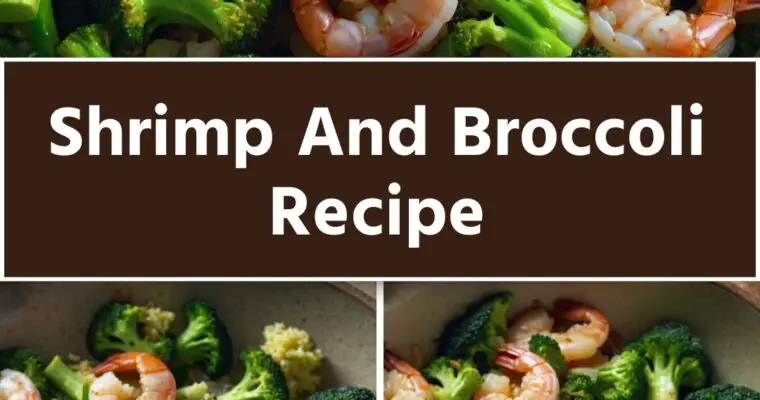
Before we dive into the delicious world of shrimp and broccoli, let’s talk about what you can serve alongside this dish. From my experience, a few select sides complement the flavors beautifully. Here are some ideas: Brown Rice: A great choice for a wholesome base, …
Before diving deep into the art of making katsudon, let’s talk about what you can pair with this delicious dish. Katsudon is a versatile meal that thrives when complemented by a few side dishes. Try serving it alongside: Katsudon, a beloved Japanese dish, is like …
Ah, the prime rib roast! That tender, juicy cut of meat that turns any meal into a celebration. Before diving into the recipe, let’s chat about some delightful pairings that will complement your prime rib. You want to create a feast, not just a meal, right?
1. Roasted Garlic Mashed Potatoes: Creamy mashed potatoes with a hint of roasted garlic will balance out the richness of the beef. The smooth texture pairs well with the tender meat.
2. Honey-Glazed Carrots: These sweet and vibrant veggies add a splash of color to your plate and their earthy sweetness contrasts beautifully with the savory roast.
3. Creamy Horseradish Sauce: A dollop of this adds a zesty punch. The heat cuts through the richness of the prime rib, enhancing each bite.
4. Classic Caesar Salad: The crisp greens and tangy dressing provide a refreshing counterpoint. Plus, who can resist garlic croutons?
5. Red Wine: A full-bodied red, such as Cabernet Sauvignon or Merlot, offers a lovely match. Its tannins and fruity notes elevate the flavors of the roast.
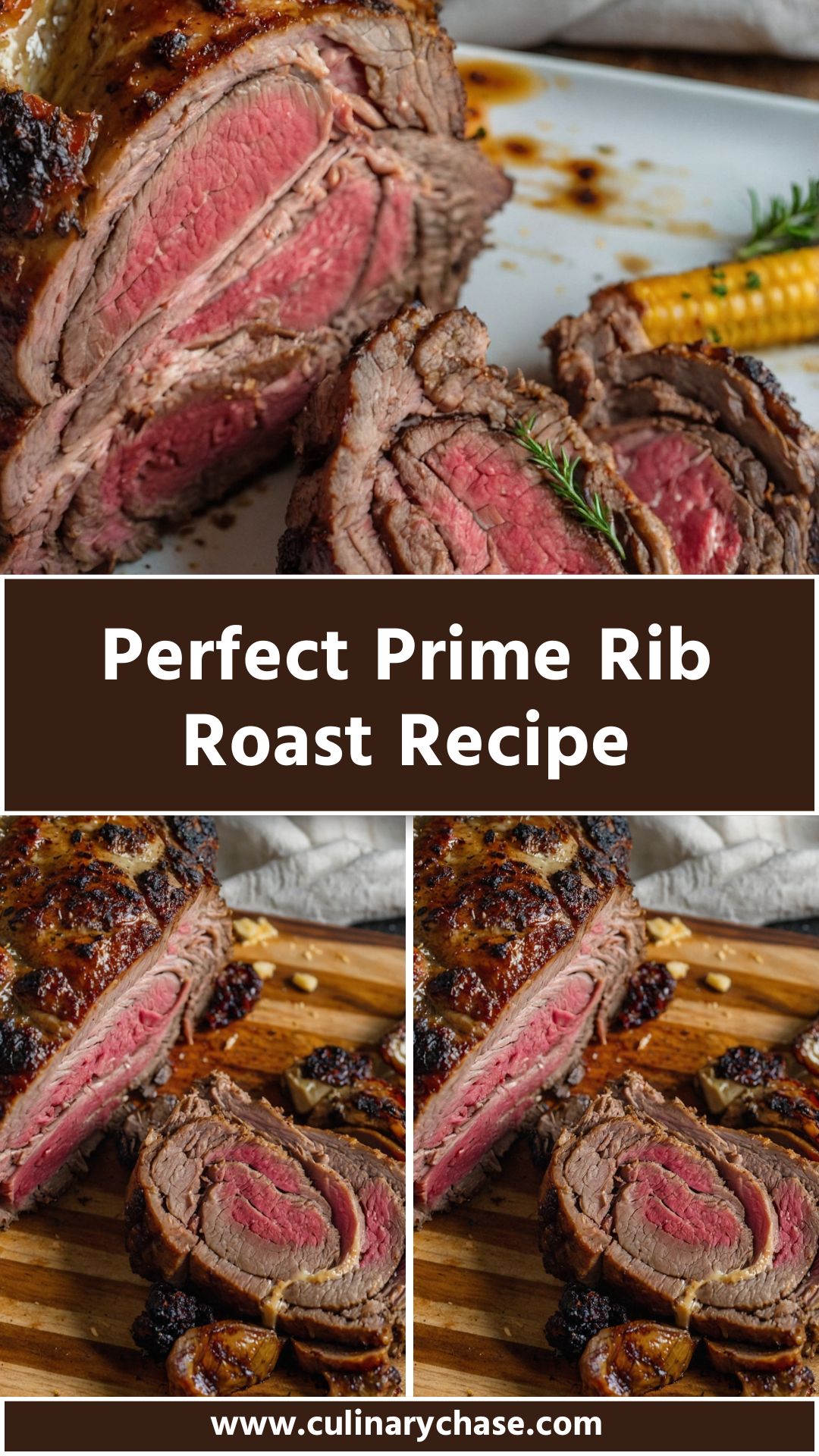
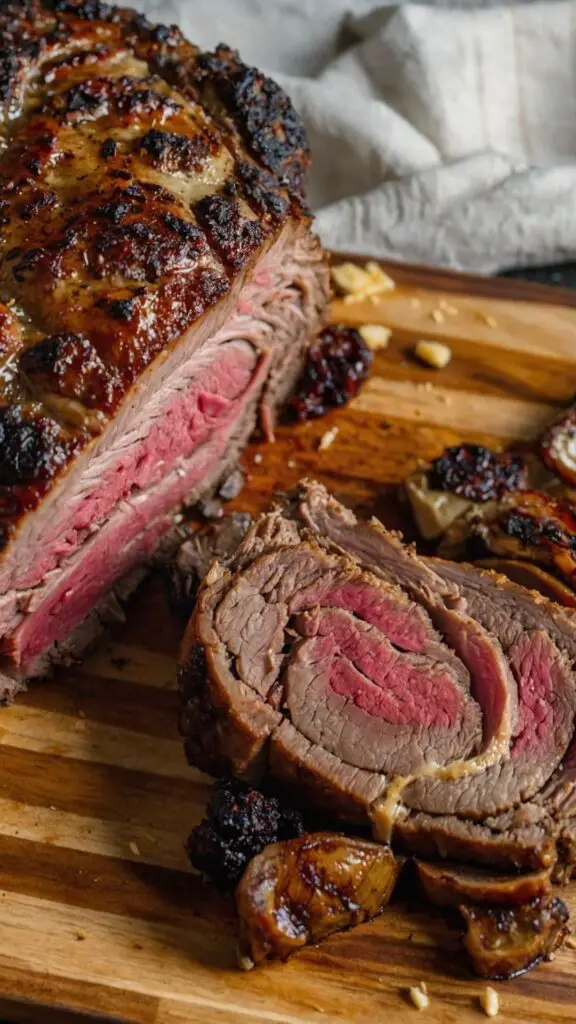
Today, I want to share my absolute favorite recipe: the Perfect Prime Rib Roast. Let me take you on a culinary journey where tender, juicy beef meets the warmth of family and friends. Imagine the aroma filling your kitchen, setting the stage for laughter and shared stories.
This recipe is a game-changer. It’s not just about cooking; it’s about creating lasting memories that revolve around food. I learned through years of trial and error that prime rib can be a crowd-pleaser when done right, so get ready for a delicious experience.
What is Perfect Prime Rib Roast?
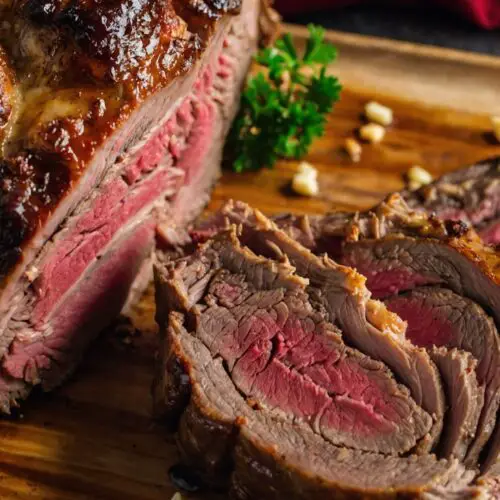
The Perfect Prime Rib Roast is more than just a meal; it’s a celebration of flavor, texture, and technique. It’s a grand centerpiece that invites gathering, festivity, and indulgence.
But different cuts of meat can overwhelm the amateur cook. Fear not! This recipe simplifies the process to help you achieve a tender and mouthwatering roast.
You will also like the following Lunch and Dinner recipes!
Let’s break it down into bite-sized pieces. What makes this prime rib roast recipe stand out among the crowd? Here are four solid reasons:
1. Simplicity: This recipe doesn’t require advanced culinary skills. With minimal ingredients and straightforward steps, anyone can master it. You won’t need a culinary degree; just passion and hunger!
2. Time-Tested Techniques: Slow-roasting at a low temperature preserves the juiciness while ensuring an even cook. This method allows the meat to tenderize perfectly—trust me, it pays off.
3. Flavor Infusion: The combination of spices, fresh herbs, and butter not only enhances the taste but also lends depth to each slice. The garlic powder and herbes de Provence work wonders here.
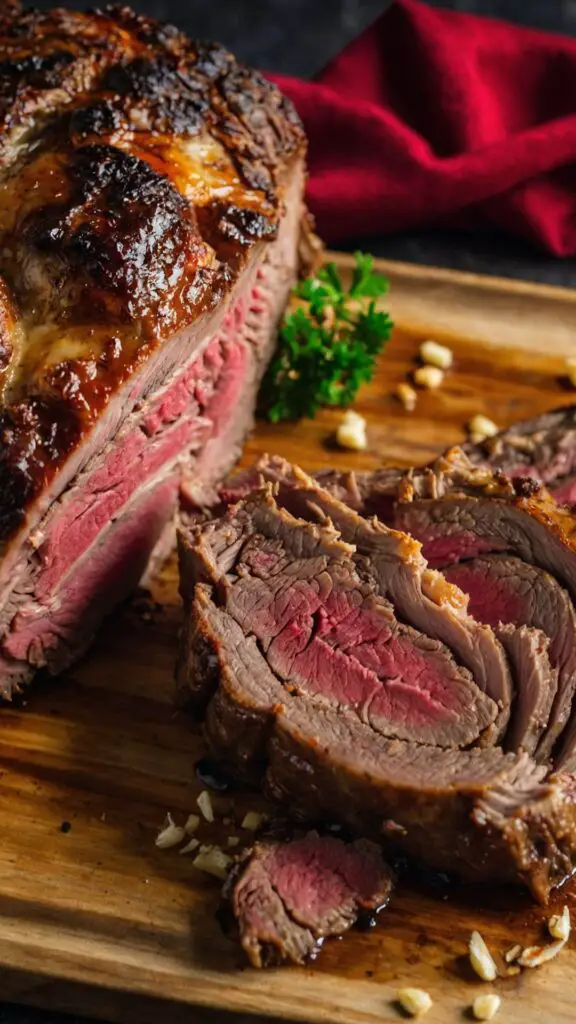
4. Visual Appeal: Let’s face it—presentation matters. A beautifully cooked prime rib, with a glorious crust and juicy interior, is like art on a plate. It grabs attention instantly and makes your guests feel special.
Ingredients You’ll Need To Make This Perfect Prime Rib Roast Recipe
1 tablespoon freshly cracked black peppercorns
1 (4-pound) bone-in standing rib roast
1 tablespoon finely chopped fresh rosemary
¼ cup unsalted whipped butter, softened
kosher salt, adjusted to taste
1 teaspoon herbes de Provence blend
1 teaspoon garlic powder
How To Make This Perfect Prime Rib Roast?
Let’s get cooking! Follow these steps carefully for delicious results.
Step 1: Prepare the Roast
Start by letting your rib roast sit at room temperature for about an hour. This helps it cook evenly. Preheat your oven to 450°F (232°C).
Step 2: Season Generously
Pat the roast dry with paper towels. In a small bowl, mix the softened butter, garlic powder, chopped rosemary, black pepper, and salt together. Spread this mixture all over the roast. Use your hands to massage it into the meat.
Step 3: Create a Cooking Setup
Place the seasoned rib roast in a roasting pan, bone-side down. You want to cook it fat-side up to allow the juices to flow down through the meat.
Step 4: Roast at High Heat
Pop the roast in the preheated oven for 15 minutes. This helps create a nice crust on the outside.
Step 5: Lower the Temperature
After 15 minutes, lower the oven temperature to 325°F (163°C) and continue roasting. The general rule is about 15-20 minutes per pound for medium-rare.
Step 6: Use a Thermometer
Insert a meat thermometer into the thickest part of the roast, away from the bone. Remove the roast when it reaches an internal temperature of 125°F (52°C) for medium-rare. Don’t worry; it will continue cooking while resting.
Step 7: Rest Before Carving
Let the roast rest for at least 20 minutes before slicing. This allows the juices to redistribute. Trust me; this step is crucial for flavor!
Tips
Here are some tips to achieve a flawless prime rib roast:
Choose Quality Meat: Fresh, high-quality rib roast makes all the difference in flavor and tenderness.
Use a Meat Thermometer: This is your best friend. It ensures you achieve the desired doneness without guesswork.
Don’t Rush the Resting Period: Cutting into the meat too early will let precious juices escape.
Consider Cooking Time: Every oven is different. Monitor the roast closely, especially during the last half-hour.
Experiment with Herbs: Feel free to add your favorite herbs. Thyme or oregano can add unique flavors worth trying.
Nutrition Information
Perfect Prime Rib Roast Recipe Nutrition Facts
How to Store the Leftovers?
If you’re lucky enough to have leftovers (which are the best part), follow these steps to store them properly:
1. Cool the Roast: Allow the meat to cool to room temperature. 2. Wrap Tightly: Wrap it in plastic wrap or aluminum foil. This prevents exposure to air. 3. Refrigerate or Freeze: Store wrapped leftovers in the refrigerator for up to 3 days, or freeze for up to 3 months. 4. Reheat with Care: When you’re ready to enjoy again, reheat in the oven at a low temperature to avoid drying it out.
Recommended Side Dishes for Perfect Prime Rib Roast
Want to create a robust meal? Pair your prime rib roast with these side dishes:
1. Yorkshire Pudding: This classic British side is a must-have. Its light and airy texture soaked in gravy complements each bite of juicy meat.
2. Creamed Spinach: The creaminess of this dish works wonders next to the rich beef. Spinach adds a nutritious edge too.
3. Baked Potatoes: Easy and delicious, baked potatoes let everyone customize their toppings from sour cream to chives.
4. Brussels Sprouts: Roasted Brussels sprouts add a slight char and nutty flavor. They balance the richness of the prime rib beautifully.
Substitute Options for the Ingredients
No need to panic if you can’t find what you need. Here are some substitutes:
1. Rib Roast Alternatives: If you can’t find prime rib, look for ribeye roasts. They have similar flavor profiles and tenderness.
2. Fresh Herbs: Don’t have rosemary? Thyme or sage work equally well in adding aromatic flavor.
3. Butter Replacement: If you’re out of butter, try olive oil. It won’t replicate the creaminess, but it’ll enhance flavor.
4. Garlic Powder: Fresh minced garlic can be substituted. Use about three times as much since dried spices are more concentrated.
Perfect Prime Rib Roast Recipe
Ah, the prime rib roast! That tender, juicy cut of meat that turns any meal into a celebration. Before diving into the recipe, let’s chat about some delightful pairings that will complement your prime rib.
Start by letting your rib roast sit at room temperature for about an hour. This helps it cook evenly. Preheat your oven to 450°F (232°C).
Step 2: Season Generously
Pat the roast dry with paper towels. In a small bowl, mix the softened butter, garlic powder, chopped rosemary, black pepper, and salt together. Spread this mixture all over the roast. Use your hands to massage it into the meat.
Step 3: Create a Cooking Setup
Place the seasoned rib roast in a roasting pan, bone-side down. You want to cook it fat-side up to allow the juices to flow down through the meat.
Step 4: Roast at High Heat
Pop the roast in the preheated oven for 15 minutes. This helps create a nice crust on the outside.
Step 5: Lower the Temperature
After 15 minutes, lower the oven temperature to 325°F (163°C) and continue roasting. The general rule is about 15-20 minutes per pound for medium-rare.
Step 6: Use a Thermometer
Insert a meat thermometer into the thickest part of the roast, away from the bone. Remove the roast when it reaches an internal temperature of 125°F (52°C) for medium-rare. Don’t worry; it will continue cooking while resting.
Step 7: Rest Before Carving
Let the roast rest for at least 20 minutes before slicing. This allows the juices to redistribute. Trust me; this step is crucial for flavor!
Notes
Choose Quality Meat: Fresh, high-quality rib roast makes all the difference in flavor and tenderness.
Use a Meat Thermometer: This is your best friend. It ensures you achieve the desired doneness without guesswork.
Don’t Rush the Resting Period: Cutting into the meat too early will let precious juices escape.
Consider Cooking Time: Every oven is different. Monitor the roast closely, especially during the last half-hour.
Experiment with Herbs: Feel free to add your favorite herbs. Thyme or oregano can add unique flavors worth trying.
Here are some commonly asked questions about prime rib roasts:
1. What’s the best way to determine doneness?
Using a meat thermometer is key. For medium-rare, look for 125°F (52°C) internally. For medium, target 135°F (57°C).
2. Can I make prime rib ahead of time?
While it’s best fresh, you can roast ahead and reheat. Slice it the day before and store as described above.
3. How do I carve a prime rib?
Start by removing the rib bones. Then slice against the grain into thick pieces. This ensures tenderness with every bite.
4. Should I marinate the rib before cooking?
It’s unnecessary since the roast is flavorful on its own. Seasoning the exterior will suffice for taste.
5. What’s the best way to reheat leftover prime rib?
Reheat gently in the oven at a low temperature, covered with foil to keep it from drying.
Conclusion
Creating the Perfect Prime Rib Roast is simpler than you might think. With the right approach, you can enchant your palate and bring joy to those gathered around your table.
From a great seasoning blend to the right cooking techniques, mastering this fabulous roast opens up a world of culinary delight. Use the tips, enjoy the pairings, and most importantly, savor the experience.
Happy cooking! Your tastebuds will thank you, and your guests will be eager for seconds!
Mango Sago is a sweet, creamy dessert that pairs beautifully with a variety of accompaniments to elevate its tropical flavors. These pairings bring balance and added texture to the dish. Fresh tropical fruits like kiwi and passion fruit add a tangy contrast that enhances the …
When it comes to savoring Taiwanese beef noodle soup, the right side dishes elevate the experience. You might want to serve some pickled vegetables to add a tangy crunch. A simple cucumber salad provides a refreshing contrast to the rich flavors of the soup. If …
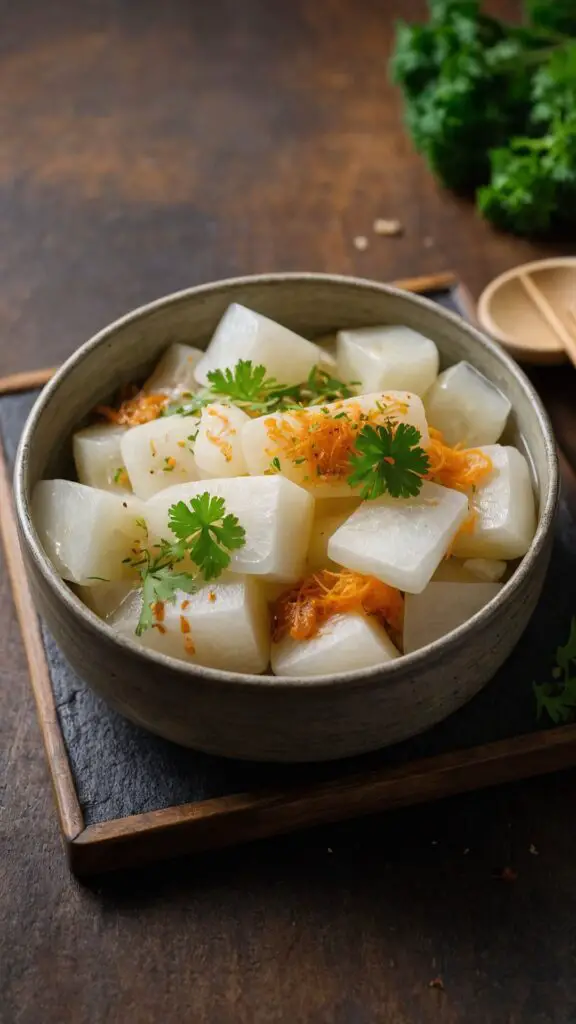
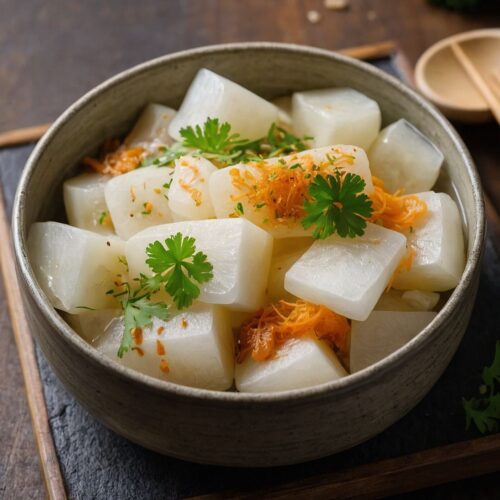
Before we dive into the deliciousness of boiled daikon radish, let’s talk about what you can enjoy it with. Think about a steaming bowl of rice.
The delicate flavor of daikon pairs wonderfully with the simple, earthy quality of cooked rice. You could also serve it alongside grilled fish, as the refreshing crunch of daikon complements the tender, juicy meat beautifully. Even a drizzle of soy sauce or a sprinkle of sesame seeds can elevate your dish to something extraordinary.
But what makes boiled daikon radish stand out? Let me share why tackling this recipe is not just delightful but also beneficial. Imagine biting into a tender piece of daikon, where each taste is a celebration of health and nutrition.
That’s right. Daikon is low in calories and high in vitamin C, offering several health benefits including digestive support and anti-inflammatory properties. Plus, they are versatile enough to fit into many dietary preferences.
Why This Recipe is Great for You
Let’s chat about why this boiled daikon radish recipe should be your next go-to dish. As a registered dietitian and someone who adores cooking, I’ve seen the impact of incorporating wholesome ingredients into meals. Daikon radish has a crisp texture and a refreshing taste that can brighten up any dining experience.
These little beauties have been a staple in Asian cuisine, and they are making their way into more mainstream diets due to their health benefits and unique flavor profile.
This recipe allows you to experience the daikon in a way that brings out its natural sweetness. The simplicity of boiling makes any additional flavors shine through, and you’ll be surprised how a few pantry staples can create such a culinary gem.
I’ve experimented with various cooking methods, but boiling these radishes brings out their best.
You will also like the following Side Dishes recipes!
Ready to roll up your sleeves? Here’s what you’ll need to create this delightful dish:
1 tablespoon vegetarian oyster sauce
1 pound white daikon root
1/4 teaspoon toasted sesame oil
½ teaspoon sea salt (adjust to taste)
1 cup vegetable broth or water
¼ teaspoon ground white pepper
1 thin slice fresh ginger
1/2 teaspoon light soy sauce
1 green onion, finely chopped
⅛ teaspoon granulated sugar
These ingredients come together to create a dish that’s not only nourishing but also incredibly flavorful.
How to Make Boiled Daikon Radish
Now, let’s jump into the kitchen and get cooking!
Step 1: Prepare the Daikon
Start with the freshest daikon radish you can find. Peel off the outer skin using a vegetable peeler. Make sure to remove any blemishes.
After peeling, slice the daikon radish into rounds about 1/4 inch thick. This will ensure even cooking and a delightful texture.
Step 2: Cook the Daikon
In a pot, combine the vegetable broth (or water) with the sliced daikon. Add the slice of fresh ginger, which is going to impart its fragrant quality into the dish. It’s like a warm hug on a winter day. Bring the mixture to a boil over medium heat.
Once boiling, reduce the heat to low and let it simmer for about 10 to 15 minutes until the daikon is tender. You know it’s done when you can easily pierce it with a fork.
Step 3: Season the Daikon
After the daikon is tender and cooked, it’s time to jazz it up with flavors. Stir in the vegetarian oyster sauce, light soy sauce, granulated sugar, and ground white pepper. These ingredients add depth and a little zing.
I often think of seasoning as an artist thinking about the final brushstrokes on their canvas. Once everything is well mixed, allow it to cook for another minute or so to let the flavors meld together.
Step 4: Add the Finishing Touches
Once the daikon has absorbed all those fantastic flavors, remove the pot from heat. Drizzle a little toasted sesame oil over the top.
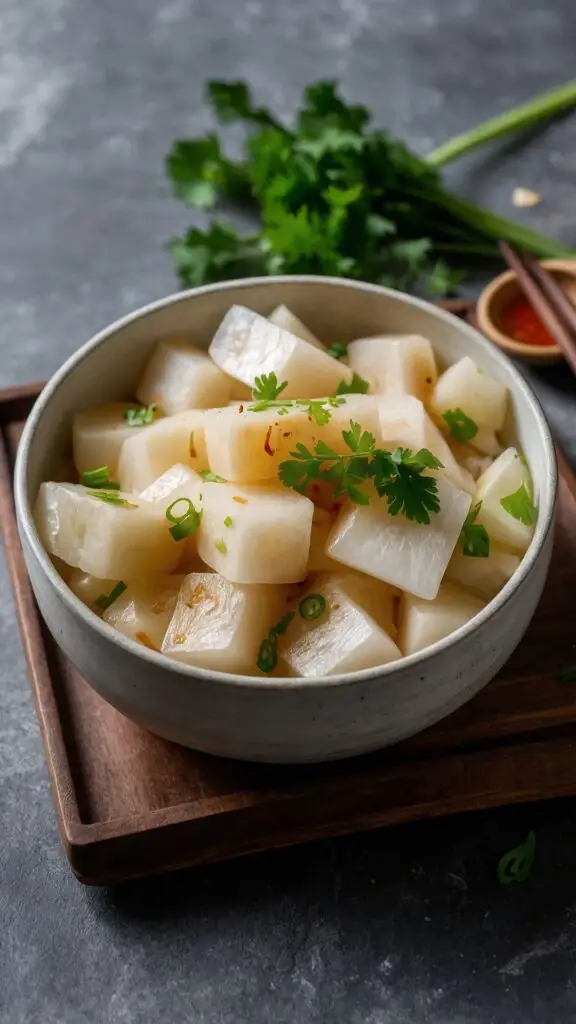
Don’t skip this step! It adds a beautiful nutty aroma that elevates the entire dish. Finally, garnish with finely chopped green onions. They contribute a fresh crunch and visual appeal.
Recipe Notes
Here’s a closer look at our star ingredients:
1. Daikon Radish: This root vegetable is crisp and refreshing. It boasts a mild flavor that makes it quite adaptable to different recipes. 2. Vegetarian Oyster Sauce: Don’t worry; this has no oysters! It’s made from mushrooms and provides umami, enhancing the dish’s richness. 3. Sesame Oil: A staple in Asian cooking. A little goes a long way in adding robust, nutty flavors that elevate the meal. 4. Ginger: Fresh ginger brings warmth and spice, working harmoniously with the daikon for a flavor boost. 5. Light Soy Sauce: It’s a wonderful way to deepen flavor without overpowering the natural sweetness of the daikon.
Recipe Variations
Feeling adventurous? Here are a few ideas to switch up the boiled daikon radish:
Spicy Twist: Add red pepper flakes or a splash of sriracha to the seasoning mix for a spicy kick.
Add Protein: Incorporate cooked chickpeas or tofu for a heartier meal option that includes protein.
Herb Infusion: Toss in a handful of fresh herbs like cilantro or basil just before serving for a bright, fresh flavor.
Citrus Zing: A squeeze of lime or lemon juice before serving can add a lovely acidity that balances the sweetness.
Nutrition Facts
Boiled Daikon Radish Recipe Nutrition Facts
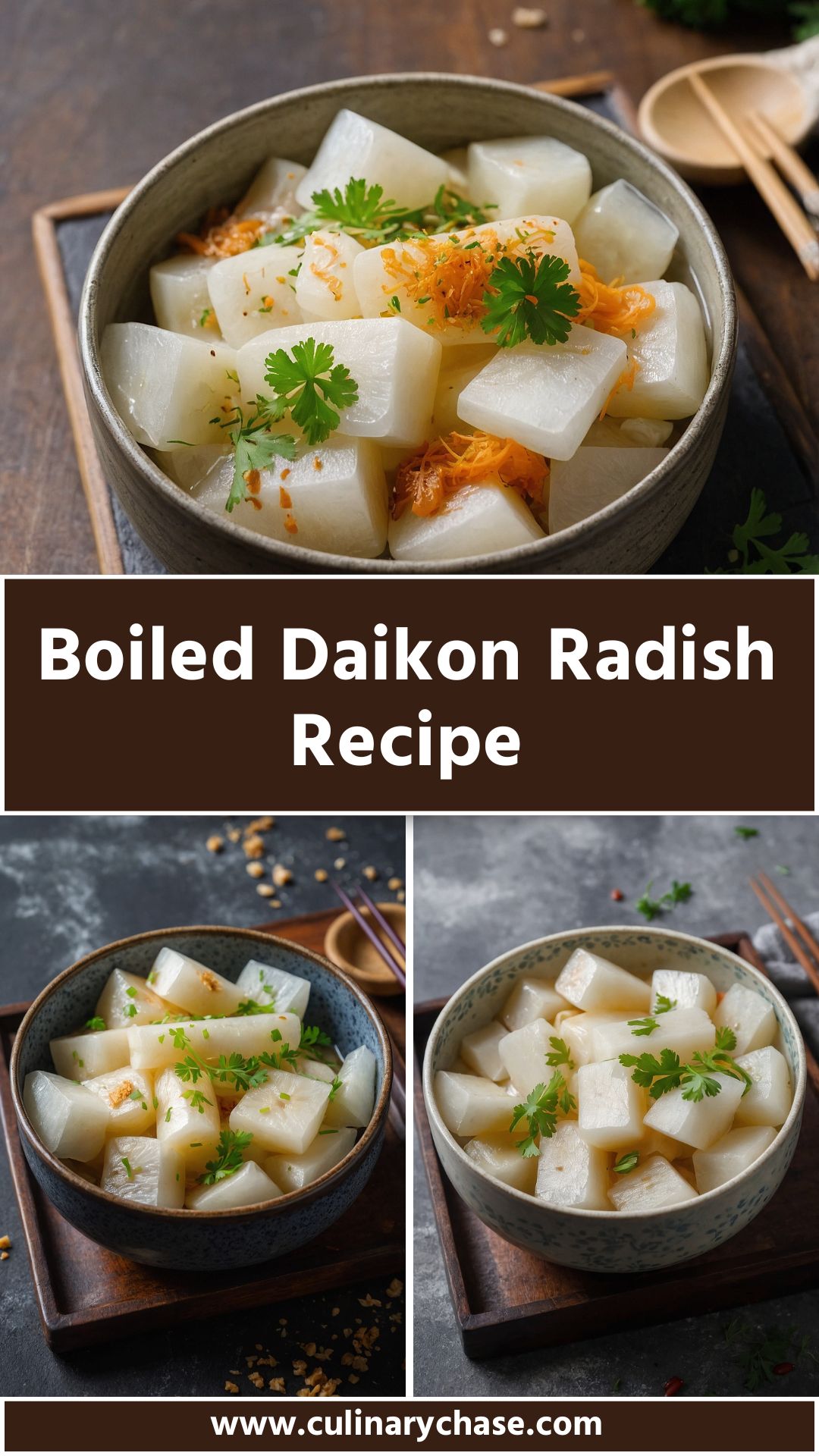
Boiled Daikon Radish Recipe
Before we dive into the deliciousness of boiled daikon radish, let's talk about what you can enjoy it with.
Start with the freshest daikon radish you can find. Peel off the outer skin using a vegetable peeler. Make sure to remove any blemishes.
After peeling, slice the daikon radish into rounds about 1/4 inch thick. This will ensure even cooking and a delightful texture.
Step 2: Cook the Daikon
In a pot, combine the vegetable broth (or water) with the sliced daikon. Add the slice of fresh ginger, which is going to impart its fragrant quality into the dish. It’s like a warm hug on a winter day. Bring the mixture to a boil over medium heat.
Once boiling, reduce the heat to low and let it simmer for about 10 to 15 minutes until the daikon is tender. You know it’s done when you can easily pierce it with a fork.
Step 3: Season the Daikon
After the daikon is tender and cooked, it’s time to jazz it up with flavors. Stir in the vegetarian oyster sauce, light soy sauce, granulated sugar, and ground white pepper. These ingredients add depth and a little zing.
I often think of seasoning as an artist thinking about the final brushstrokes on their canvas. Once everything is well mixed, allow it to cook for another minute or so to let the flavors meld together.
Step 4: Add the Finishing Touches
Once the daikon has absorbed all those fantastic flavors, remove the pot from heat. Drizzle a little toasted sesame oil over the top.
Don’t skip this step! It adds a beautiful nutty aroma that elevates the entire dish. Finally, garnish with finely chopped green onions. They contribute a fresh crunch and visual appeal.
Notes
Daikon Radish: This root vegetable is crisp and refreshing. It boasts a mild flavor that makes it quite adaptable to different recipes. 2. Vegetarian Oyster Sauce: Don’t worry; this has no oysters! It’s made from mushrooms and provides umami, enhancing the dish’s richness. 3. Sesame Oil: A staple in Asian cooking. A little goes a long way in adding robust, nutty flavors that elevate the meal. 4. Ginger: Fresh ginger brings warmth and spice, working harmoniously with the daikon for a flavor boost. 5. Light Soy Sauce: It’s a wonderful way to deepen flavor without overpowering the natural sweetness of the daikon.
Yes! Daikon can be eaten raw in salads or as a crunchy snack. It’s crisp and very refreshing.
2. How should I store leftover boiled daikon radish?
Store leftovers in an airtight container in the fridge. They can be enjoyed for up to three days. Just reheat them gently to avoid overcooking.
3. Is daikon radish good for digestion?
Absolutely! Daikon radish is low in calories and high in fiber, which promotes digestive health and helps to keep you feeling full.
4. Can I use other types of radish for this recipe?
Sure! While daikon is the star here, you can use other radishes; however, flavors and textures may vary. Red radishes are spicier. Adjust your cooking time based on their size and thickness.
5. What other ways can I use boiled daikon?
Use boiled daikon as a side dish. You can chop it up and toss it into stir-fries or soups for added texture and nutrition.
6. Are there health benefits to eating daikon?
Yes! It’s packed with vitamins, particularly vitamin C. The high fiber content assists in digestion and helps maintain a healthy weight.
Conclusion
Boiled daikon radish is more than just a side dish; it’s a celebration of simple ingredients that come together beautifully.
With this recipe, you have the foundation to create something healthful and delicious. Whether you’re looking to impress guests at a gathering or simply want to enjoy a nourishing meal, this dish is for you.
As you explore the world of daikon, keep in mind its versatility. It can transform your meals in delicious ways. You might even find kids enjoying a tasty bowl of boiled daikon. Who knew eating healthy could be so delightful? Give it a whirl! You might just find a new family favorite.
When it comes to enjoying Steamed Pork Buns Baozi, consider accompaniments that enhance the meal without overshadowing it. For a refreshing palate cleanser, pair these buns with a cucumber salad, lightly tossed in rice vinegar and sesame oil. Its crunch and brightness counterbalance the tender, …
Before diving into the deliciousness of Sour Patch Grapes, let me offer some pairing options. These sweet and tangy treats go beautifully with a variety of dishes. Consider serving them alongside grilled chicken or fish. The acidity of the grapes complements the protein perfectly. Alternatively, …
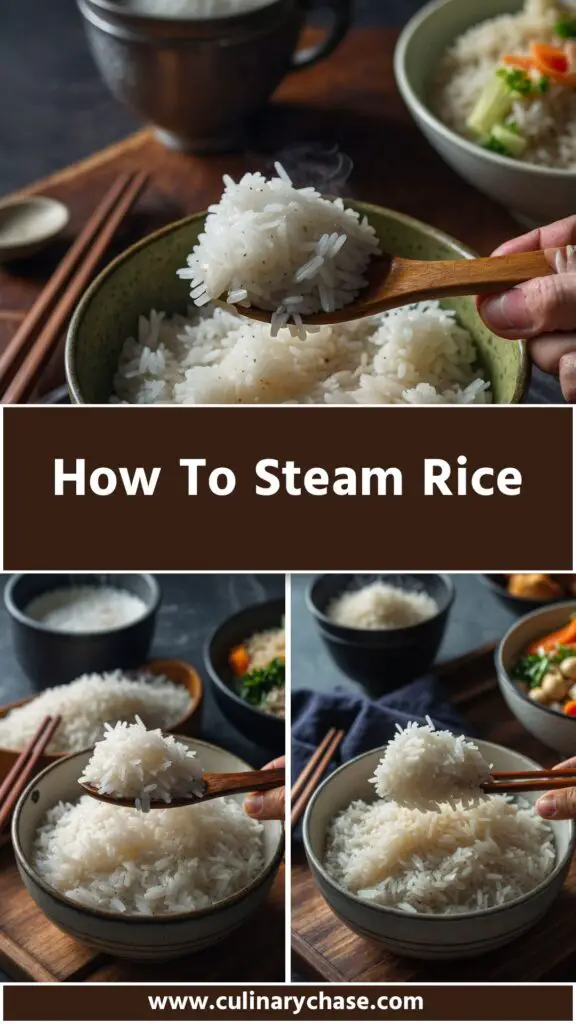
I remember the first time I attempted to steam rice. It was a haphazard affair, and let’s just say my kitchen looked like a scene from a culinary disaster movie.
I had all the right ingredients but somehow managed to create a gloppy mess instead of the fluffy perfection I envisioned. Since then, I’ve made it my mission to master the art of steaming rice. When you get it right, rice is a beautiful side dish or base for your main courses.
Let me take you on this journey to perfect steamed rice, complete with tips and tricks that I’ve gathered through lots of trial and error.
What is How To Steam Rice?
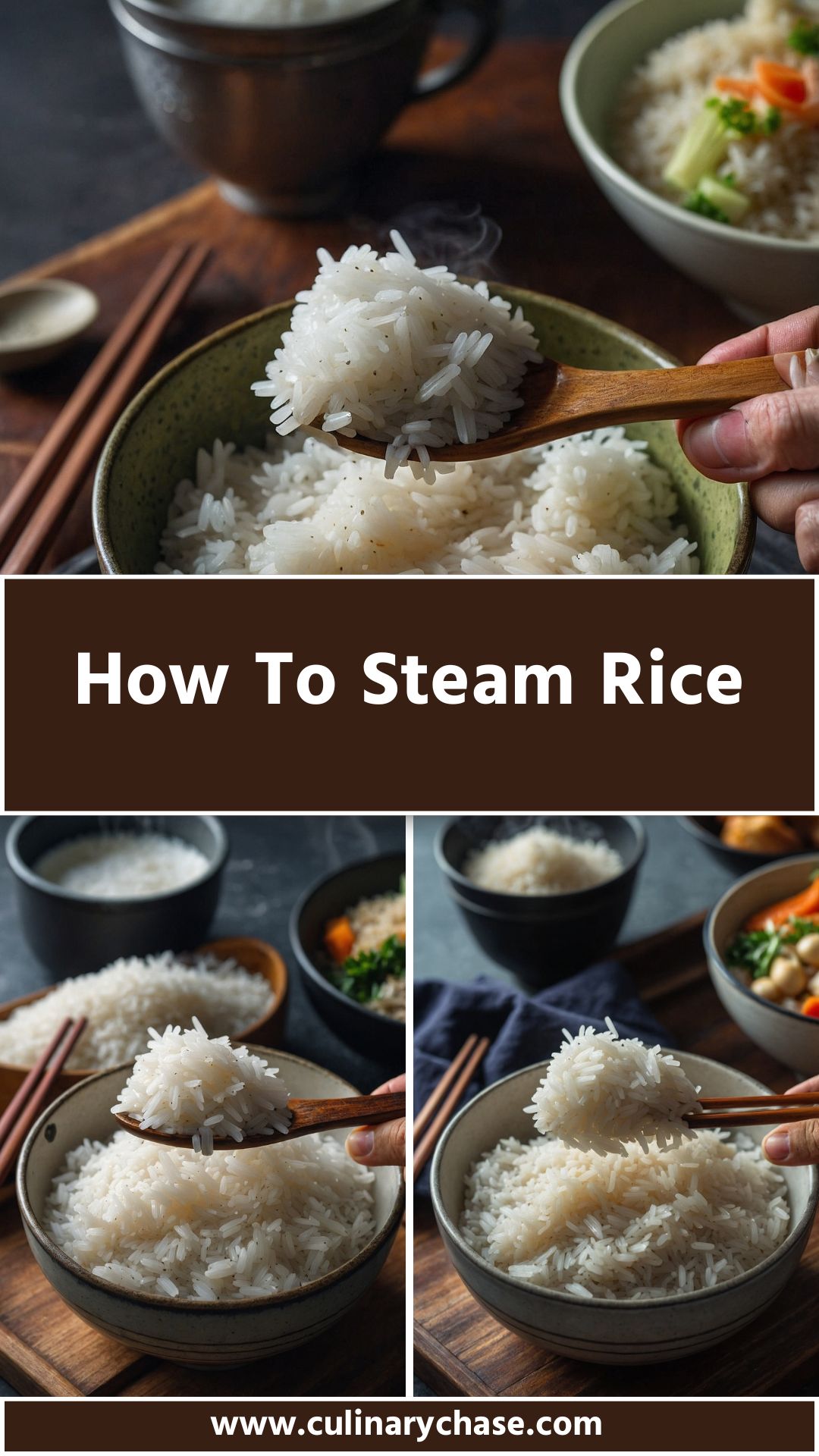
Steaming rice involves cooking rice over simmering water.
This technique ensures that the rice absorbs moisture evenly without direct contact with the liquid, preventing overcooking. You might wonder why steaming rice is beneficial compared to boiling it. Well, when steamed, the grains stay distinct and tender.
Each bite should offer a slight chew, a quality boiled rice often lacks. If you’re after that restaurant-quality rice at home, this one’s for you.
Why You’ll Love this How To Steam Rice?
Here’s the kicker—steamed rice is incredibly versatile. You can pair it with almost any dish, from curries to stir-fries, and even enjoy it sweetened for breakfast.
Moreover, steaming is a healthier cooking method since it doesn’t require any additional fats. Trust me when I say it’s not just about taste; it’s about enjoying a healthy meal too!
Let’s dive into the details, shall we?
You will also like the following Side Dishes recipes!
With these ingredients in your pantry, you’re already on your way to making fluffy rice.
Step by Step Instructions
Step 1: Rinse the Rice
First things first. Place the jasmine rice in a bowl and rinse it under cold water. I usually do this for about two minutes. This removes excess starch and prevents the rice from becoming gummy. Rinsing is a small but mighty step in achieving that fluffy texture we all crave.
Step 2: Prepare Water and Equipment
Next, grab your steamer basket or a heat-proof colander. Make sure it fits snugly over a pot. Add 2/3 cup of filtered water to the pot and bring it to a gentle simmer.
Using a pot with a lid is crucial. This creates a steamy environment, making sure your rice cooks evenly.
Step 3: Add the Rice
Once your water is simmering, transfer the rinsed rice into the steamer basket. If you want to add flavor, drizzle that teaspoon of olive oil over the rice and sprinkle on the sea salt. Spread the rice evenly to ensure consistent cooking.
Step 4: Cover and Steam
Now, cover the pot tightly with the lid and steam the rice for about 20 minutes. Don’t peek! Lifting the lid lets the steam escape, which can throw off the cooking time.
Step 5: Let it Rest
When the time’s up, carefully remove the lid. Steam will escape, so be cautious. Let the rice sit for another 5 minutes, covered, off the heat. This is key! It allows the remaining steam to finish cooking the rice.
Step 6: Fluff and Serve
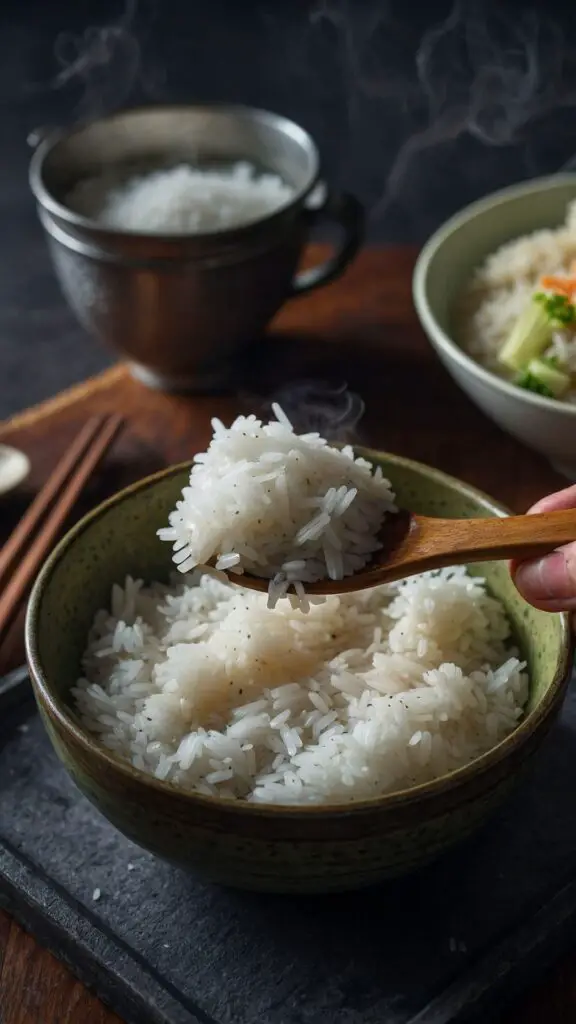
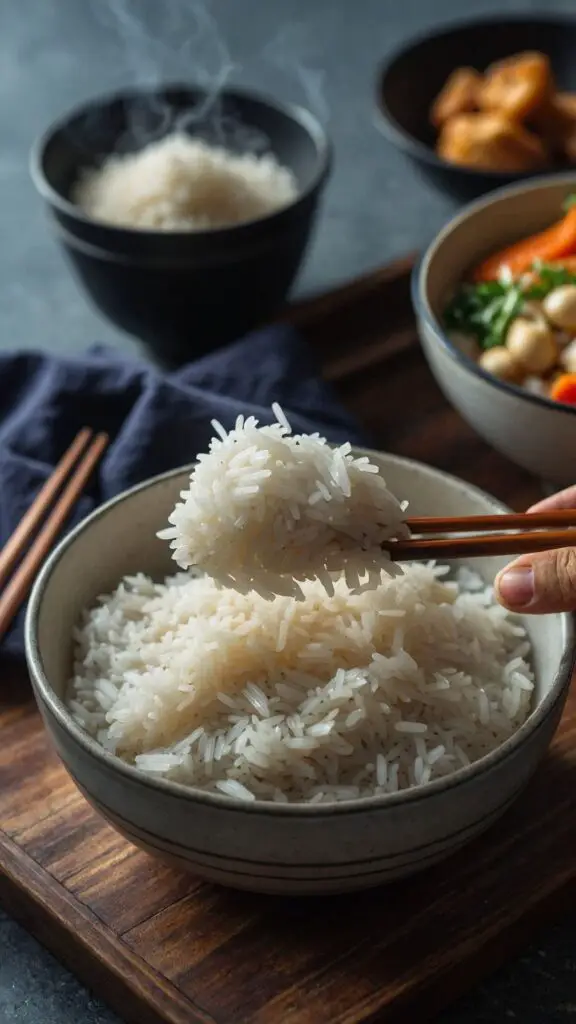
Finally, use a fork to fluff the rice gently. This step makes all the difference. Serve it up with your favorite dishes or just eat it plain. I promise, you’ll be proud of this accomplishment.
Tips & Tricks
Here are some nuggets of wisdom I’ve gathered along the way:
Use the Right Ratio: For each cup of rice, a general rule is to add 1.5 cups of water. Adjust based on the type of rice.
Temperature Control: Keep the heat low for a consistent simmer. High heat can lead to uneven cooking.
Flavor Boost: Add herbs, spices, or broth to your water for an extra kick.
Don’t Skimp on Time: If you’re using brown rice or a different variety, be prepared to steam it longer.
Experiment: Try adding ingredients like saffron, turmeric, or coconut milk for a twist on traditional steamed rice.
Nutrition Information
How To Steam Rice Nutrition Facts
Can I store How To Steam Rice?
Absolutely! Steamed rice can be stored in an airtight container in the fridge for up to 4-5 days. When reheating, splash on a little water to revive that steamy goodness.
You can also freeze the rice in portions, and it lasts for about 6 months in the freezer.
What can I serve with How To Steam Rice?
You have countless options to pair with rice. Here are just a few ideas:
Stir-fried Vegetables: The crunchy texture contrasts perfectly with soft rice.
Grilled Chicken: Seasoned simply, chicken complements rice very well.
Curry Sauces: Curries soak into the rice in the most delicious way.
Steamed Fish: Lightly seasoned fish allows the rice to shine.
Rounding out the meal with some fresh herbs adds a nice touch!
Variations
Feeling adventurous? Here are some variations to elevate your steamed rice game:
Coconut Rice: Substitute water with coconut milk for a tropical twist. Sweet coconut flavor pairs brilliantly with grilled fish.
Cilantro Lime Rice: Toss cooked rice with fresh lime juice and chopped cilantro for a refreshing palate. This pairs beautifully with tacos or burrito bowls.
Garlic Butter Rice: Sauté minced garlic in butter, then mix it into the steamed rice for a savory taste. Ideal for a comfort meal.
Spanish Rice: Celebrate with spices! Add diced tomatoes, bell peppers, and paprika for a colorful side dish with your favorite dishes.
Herbed Rice: Mix in a blend of fresh herbs like parsley, dill, or basil after steaming for a fragrant sidekick.
How To Steam Rice
I remember the first time I attempted to steam rice. It was a haphazard affair ,and let’s just say my kitchen looked like a scene from a culinary disaster movie.
First things first. Place the jasmine rice in a bowl and rinse it under cold water. I usually do this for about two minutes. This removes excess starch and prevents the rice from becoming gummy. Rinsing is a small but mighty step in achieving that fluffy texture we all crave.
Step 2: Prepare Water and Equipment
Next, grab your steamer basket or a heat-proof colander. Make sure it fits snugly over a pot. Add 2/3 cup of filtered water to the pot and bring it to a gentle simmer.
Using a pot with a lid is crucial. This creates a steamy environment, making sure your rice cooks evenly.
Step 3: Add the Rice
Once your water is simmering, transfer the rinsed rice into the steamer basket. If you want to add flavor, drizzle that teaspoon of olive oil over the rice and sprinkle on the sea salt. Spread the rice evenly to ensure consistent cooking.
Step 4: Cover and Steam
Now, cover the pot tightly with the lid and steam the rice for about 20 minutes. Don’t peek! Lifting the lid lets the steam escape, which can throw off the cooking time.
Step 5: Let it Rest
When the time’s up, carefully remove the lid. Steam will escape, so be cautious. Let the rice sit for another 5 minutes, covered, off the heat. This is key! It allows the remaining steam to finish cooking the rice.
Step 6: Fluff and Serve
Finally, use a fork to fluff the rice gently. This step makes all the difference. Serve it up with your favorite dishes or just eat it plain. I promise, you’ll be proud of this accomplishment.
Notes
Use the Right Ratio: For each cup of rice, a general rule is to add 1.5 cups of water. Adjust based on the type of rice.
Temperature Control: Keep the heat low for a consistent simmer. High heat can lead to uneven cooking.
Flavor Boost: Add herbs, spices, or broth to your water for an extra kick.
Don’t Skimp on Time: If you’re using brown rice or a different variety, be prepared to steam it longer.
Experiment: Try adding ingredients like saffron, turmeric, or coconut milk for a twist on traditional steamed rice.
Yes, you can use a heat-proof colander or a mesh sieve that fits snugly above a pot. Just ensure it’s covered tightly with a lid.
2. What type of rice can I use for steaming?
While jasmine rice is a top choice, you can truly use any white rice, brown rice, or even a fragrant basmati. Just remember that cooking times may vary.
3. How do I know when the rice is done?
Steam is the best indicator. If you see the water has evaporated and the rice looks fluffy, it’s likely done. A taste test never hurts either.
4. Is it okay to steam rice with other ingredients?
Certainly! You can incorporate vegetables or proteins like diced chicken or shrimp into the steaming process. Just adjust cooking times accordingly.
5. What’s the difference between steaming and boiling rice?
Steaming cooks the rice gently without it being submerged in water, allowing for a fluffier outcome. Boiling can lead to soggy or sticky rice if not monitored closely.
Conclusion
Steamed rice doesn’t have to be an enigma. It can be simple, fulfilling, and creative. With a bit of practice and a sprinkle of flavor, you can impress your family and friends.
Steaming rice is more than just a cooking technique—it’s a culinary skill that opens up a world of possibilities. Whether it serves as a side dish, base for other meals, or even a breakfast staple, steamed rice holds its place in our kitchens for good reasons.
Now, armed with this guide and my experiences, you’re ready to conquer steamed rice. Give it a try, and who knows? You might just become the rice master in your household. Enjoy the process and let me know how it turns out on your first try!
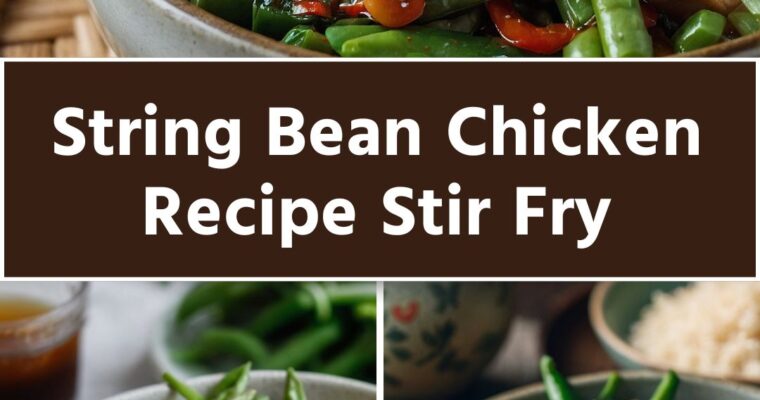
Before diving into the Whys and Hows of String Bean Chicken Stir Fry, let’s talk pairings. This dish is a delightful dance of flavors and textures that can shine alongside a variety of companions. Think fluffy jasmine rice or soft noodles, things that soak up …