
Air Fry Bacon Wrapped Chicken Tenders Recipe
There’s something magical about bacon-wrapped chicken—it’s the kind of dish that bridges comfort and elegance without breaking a sweat. I’ve served these at weeknight dinners and dinner parties alike, and they disappear just as fast either way. The air fryer takes what used to be a stovetop juggling act and transforms it into something genuinely simple. Pair these with fresh pineapple salsa for brightness, or go classic with foiled baked potatoes on the side for a full, satisfying meal.
Where This Dish Comes From (And Why It Never Gets Old)
I remember the first time my grandmother wrapped bacon around chicken breasts. I was maybe eight years old, standing on a step stool in her kitchen, watching her work with the kind of focus that made it seem like she was creating art. She’d tell me, “Joe, the bacon does two things—it adds flavor and keeps the meat tender.” That lesson stuck with me through culinary school and into my professional kitchen.
Bacon-wrapped chicken has been a cornerstone of American home cooking for generations, but it hit peak popularity in the 1980s and 90s when it appeared on every upscale restaurant menu and dinner party table. What I love about bringing it to the air fryer isn’t just convenience—it’s that the technique actually produces better results. The circulating hot air renders the bacon to a crisp that’s hard to achieve in a traditional oven, while the chicken stays incredibly juicy inside.
This recipe specifically uses chicken tenders, which is where the real genius lives. Tenders cook faster and more evenly than full breasts, they’re naturally more forgiving, and they’re the perfect vehicle for wrapping and sauce. It’s the kind of dish that feels fancy but tastes like home.
What Is Air Fry Bacon Wrapped Chicken Tenders Recipe?
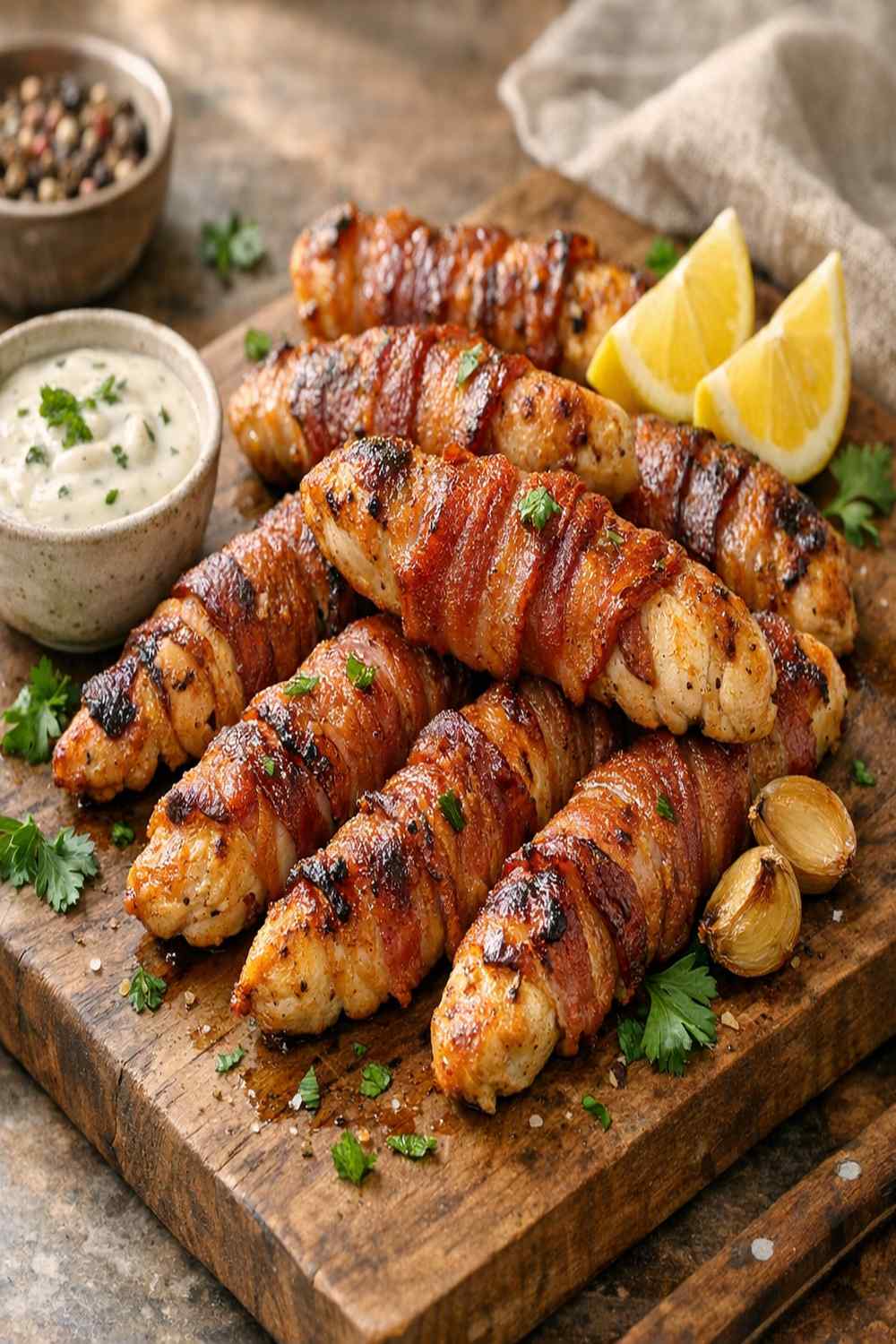
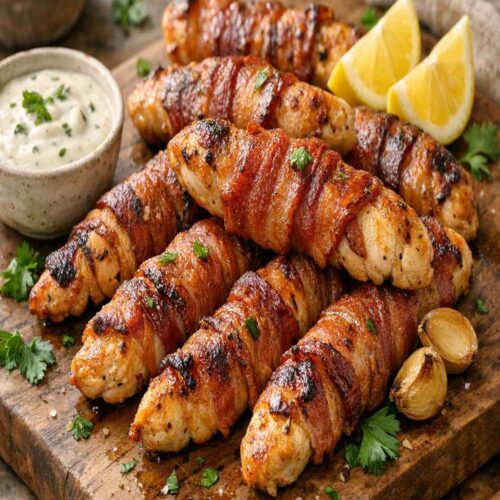
At its core, this is simplicity itself: tender strips of chicken breast wrapped snugly in bacon, seasoned with a smoky spice blend, then brushed with a tangy-sweet sauce and air fried until the exterior is crackled and golden. The result is chicken that’s fall-apart tender on the inside and genuinely crispy on the outside—something that bacon and chicken alone might not deliver without that circulating air heat.
What makes this version special is the dual-sauce approach. Rather than choosing between barbecue and sweet chili, I use both—the barbecue brings depth and smokiness, while the sweet chili adds brightness and a whisper of heat. The brown sugar and smoked paprika in the spice rub create a flavorful crust that gets amplified by the sauce layers. This isn’t just “chicken with bacon”—it’s a carefully composed dish where every element has a job to do.
The air fryer is the perfect tool here because it gives you that restaurant-quality bacon crispness without any of the grease splatter or uneven cooking you’d get on a stovetop. The cooking time is genuinely fast—we’re talking about 9-10 minutes of actual cooking time—and there’s minimal cleanup.
Why You’ll Love This Air Fry Bacon Wrapped Chicken Tenders Recipe
- Genuinely fast cooking – From prep to plate in about 20 minutes, this is a weeknight hero when you need something substantial that doesn’t require hours of attention or a complicated ingredient list.
- Restaurant-quality texture – The air fryer renders bacon to a crackle you can’t easily achieve in a traditional oven, and the chicken stays so tender it practically melts in your mouth because of how quickly it cooks.
- Flexible enough for any occasion – These work as casual family dinner, as appetizers for a gathering, or as part of a more formal meal—they’re genuinely at home anywhere.
- Minimal cleanup – No splattered grease on your stovetop, no oil-soaked pans to scrub. The air fryer basket is the only thing that needs washing, and that takes seconds.
- Customizable flavor profile – The base recipe is a launching pad. Want more heat? Add cayenne to the rub. Prefer Asian flavors? Swap the sauces for soy and ginger. This is a framework, not a rigid rule.
- Budget-friendly protein – Chicken tenders are inexpensive, bacon adds perceived luxury without actually costing much, and you’re using your energy-efficient air fryer instead of heating your whole oven.
The Ingredients
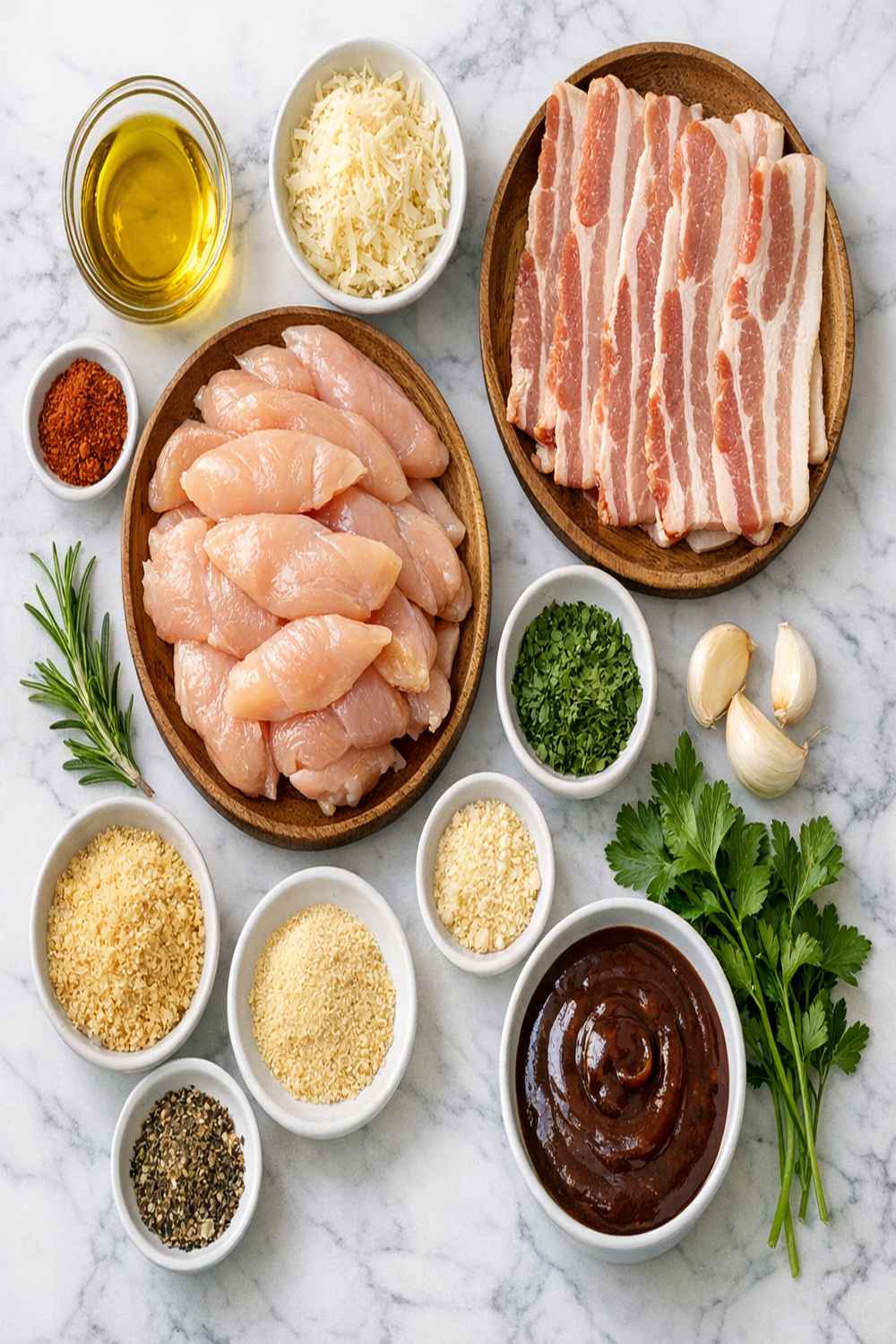
I want to walk you through each ingredient and explain the “why” because that’s where real cooking understanding comes from. These aren’t random items—they’re selected because they work together to create specific flavors and textures. Makes approximately 8 servings (about 16 tenders total, or 2 per serving).
- 12 ounces bacon, cut into halves (about 12 slices—look for bacon that has good fat content, not the ultra-lean variety that crisps unevenly)
- ¼ cup sweet chili sauce (the slightly spicy-sweet element that balances the salty bacon)
- 2 tablespoons brown sugar (packed, because it caramelizes slightly in the air fryer and creates a subtle crust)
- ¼ teaspoon chili powder (just enough heat to make things interesting without overwhelming)
- 1 tablespoon honey (a small addition that helps the sauce adhere and adds subtle sweetness)
- 1 teaspoon garlic powder (adds savory depth that amplifies both the chicken and bacon flavors)
- ¼ cup barbecue sauce (depth and smokiness that takes this from “nice” to “memorable”)
- Sea salt and freshly ground black pepper (your baseline seasoning—don’t skip or reduce these)
- 1 tablespoon smoked paprika (this is where the complexity comes from—it adds smokiness without actual smoke)
- 8 boneless, skinless chicken tenders (about 1.5 to 2 pounds total, the leaner cuts that cook fastest)
How to Make Air Fry Bacon Wrapped Chicken Tenders Recipe?
What I’ve learned through years of cooking is that technique matters less when you understand the why behind each step. So as we go through this together, I’m going to give you not just the what, but the reasoning. That way, if something in your kitchen is different from mine—your air fryer runs hot, your bacon is thicker, your preferences lean spicier—you’ll know how to adjust.
Step 1: Get Your Air Fryer Ready
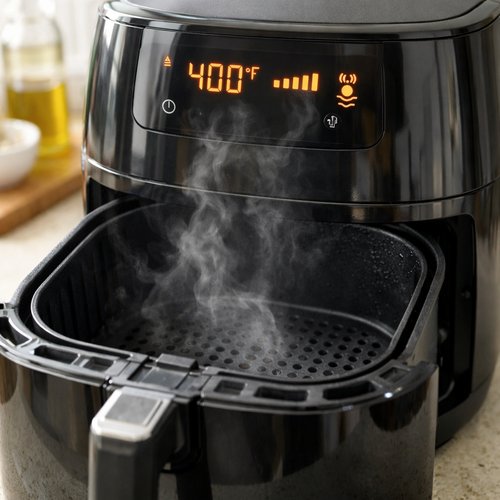
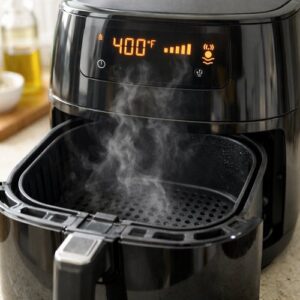
Set your air fryer to 400 degrees Fahrenheit and let it preheat for 5 minutes. This matters more than you might think. A properly preheated air fryer circulates heat consistently from the very first second your food goes in. If you skip this step, the first minute or so of cooking happens at a lower temperature, which means uneven cooking and potentially soggy bacon at the edges. The preheat also allows any residual oil or moisture from previous cooking to evaporate, which helps you get maximum crispness.
Step 2: Season Your Chicken Properly
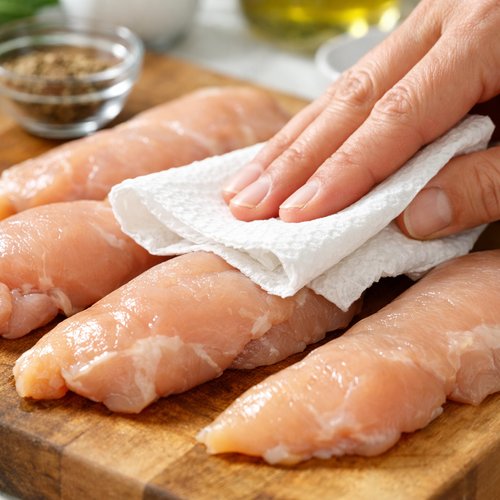
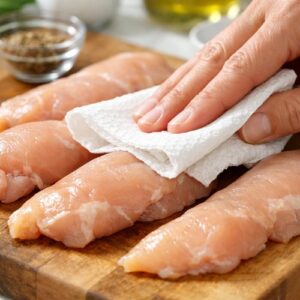
Pat your chicken tenders dry with paper towels—this is actually crucial, though I know it seems like an extra step. Moisture on the surface prevents the spice rub from adhering properly and can create steam pockets that keep the bacon from crisping as well. Once they’re dry, season each tender generously with sea salt and freshly ground black pepper on all sides. I recommend being a bit heavier-handed here than you might be with other dishes because the bacon will add saltiness too, but the seasoning underneath needs to be present enough to build flavor.
Step 3: Wrap Each Tender With Bacon
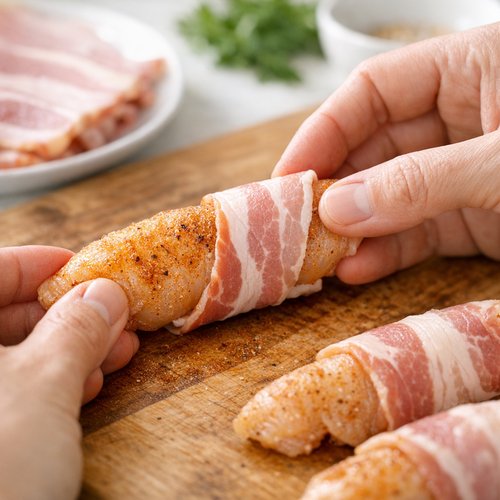
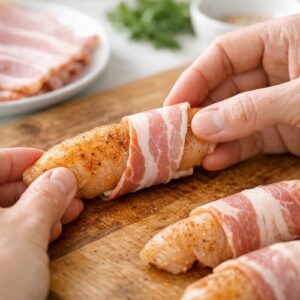
This is where the magic happens, and it’s simpler than you might imagine. Take a half-slice of bacon (remember, we’re cutting full slices in half) and wrap it around the widest part of each chicken tender, overlapping the bacon slightly so it stays secure. You don’t need toothpicks—the bacon naturally clings to the chicken as it cooks, and gravity works in your favor here. The key is wrapping it snugly but not so tight that you’re squeezing the chicken itself. Think of it like a gentle hug, not a stranglehold. The bacon should spiral slightly around the chicken, covering the surface as much as possible.
Step 4: Make Your Spice Rub
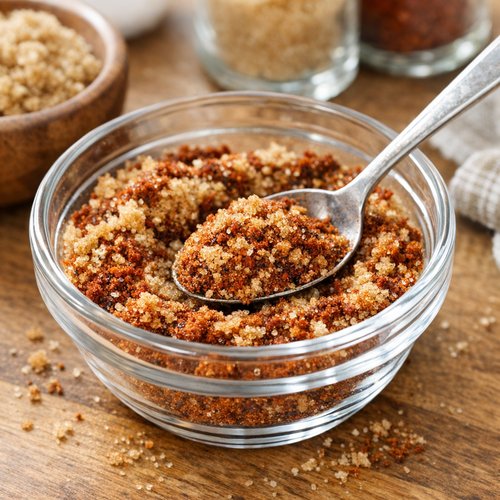
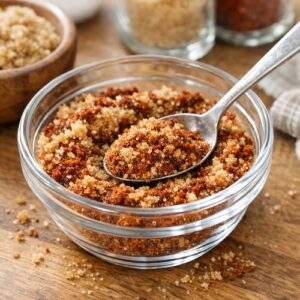
In a small bowl, combine the smoked paprika, garlic powder, chili powder, and brown sugar. The brown sugar might seem odd in a savory rub, but here’s the thing—brown sugar contains molasses, which adds subtle caramel notes and helps create a light crust in the air fryer. Mix everything together with a fork, breaking up any brown sugar clumps as you go. The texture should be like damp sand, not clumpy.
Step 5: Apply the Spice Rub
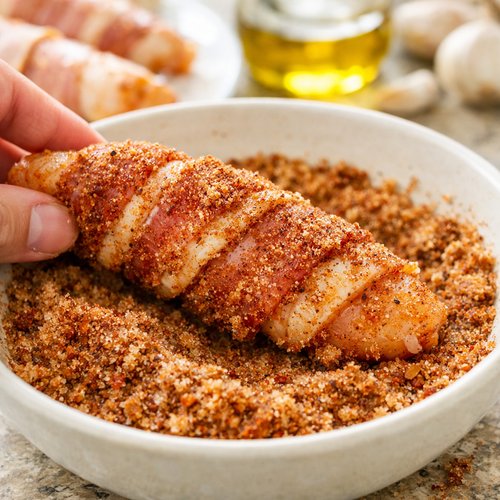
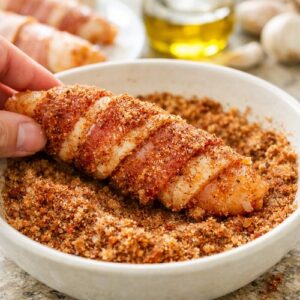
One at a time, gently roll each bacon-wrapped tender in the spice rub, making sure all surfaces get coated. The moisture from the raw chicken helps the rub stick. Don’t pack it on so heavily that you’re creating thick clumps—you want an even, thin coating that will caramelize as it cooks. This is the seasoning foundation that everything else builds on, so take your time here.
Step 6: Arrange in the Air Fryer Basket
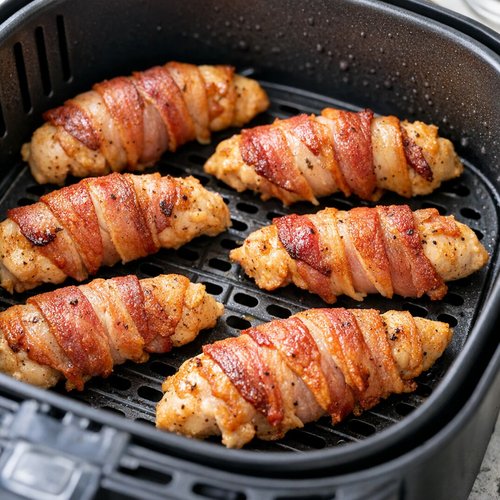
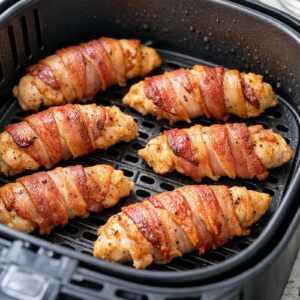
Place the tenders in your preheated air fryer basket in a single layer, leaving space between each one. This is non-negotiable—if they’re touching or crowded, the air can’t circulate properly, and you’ll end up with steamed chicken instead of the crispy-outside, juicy-inside texture we’re after. I typically fit 4-5 tenders per basket depending on the size of my air fryer. If you’re making 8 tenders, plan on doing two batches. Yes, it takes a few extra minutes, but the result is worth it.
Step 7: Apply the Sauce (First Side)
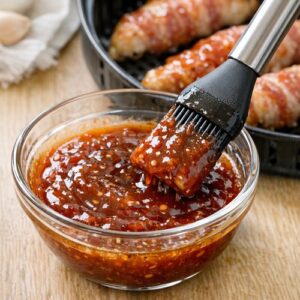
While those tenders are settling into the basket, whisk together the sweet chili sauce, barbecue sauce, and honey in a small bowl. The honey acts as a binder and adds a subtle floral sweetness. Using a pastry brush or even the back of a spoon, apply a light coating of this sauce to the top of each tender. Don’t drench them—you want a thin, even layer. You’ll be applying sauce again after flipping, so this first coat is about building layers of flavor, not drowning the chicken.
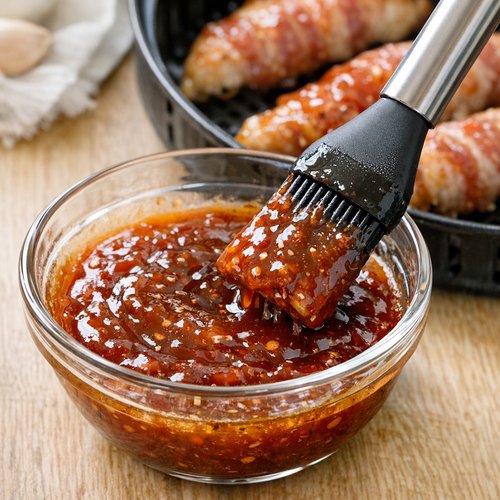
Step 8: First Cook at 400°F
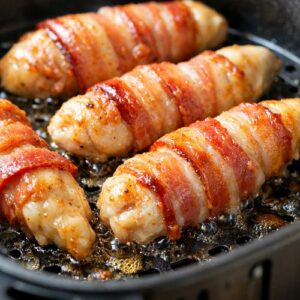
Air fry at 400 degrees for 5 minutes. During these first five minutes, the bacon begins rendering its fat, which bastes the chicken underneath, and the spice rub starts to caramelize. You’ll start to smell that incredible bacon aroma—that’s a good sign. The exterior starts getting color, and the sugars in the sauce begin to slightly char.
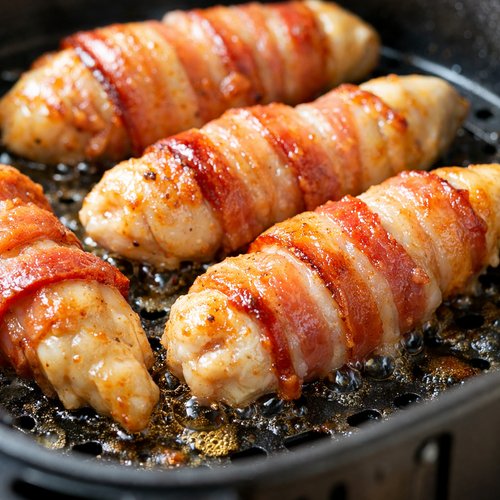
Step 9: Flip and Sauce Again
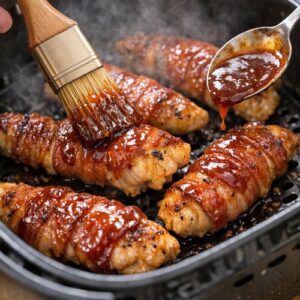
Carefully remove the basket (watch out for the steam) and flip each tender so the other side is facing down. This is important because you want even cooking and even crisping on all sides. Now, brush the second side with another light coating of that sauce mixture. You don’t want the bacon to be swimming in sauce—you want just enough to caramelize and add flavor without preventing crispness.
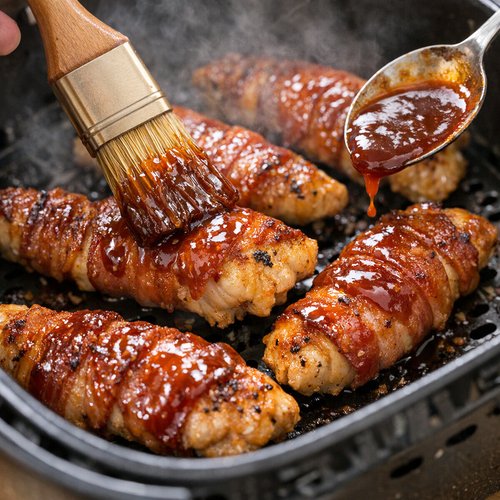
Step 10: Final Cook
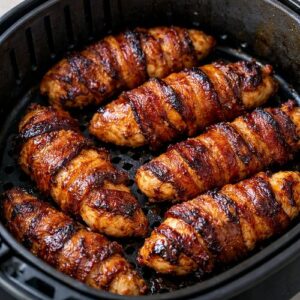
Return the basket to the air fryer and cook for another 4-5 minutes at 400 degrees. Start checking at the 4-minute mark. The bacon should be deeply browned and crispy to the touch, not greasy. The internal temperature of the chicken should reach 165 degrees Fahrenheit on an instant-read thermometer (insert it into the thickest part of the tender). If you don’t have a thermometer, the chicken should have no pink inside and should feel firm but not hard when pressed gently.
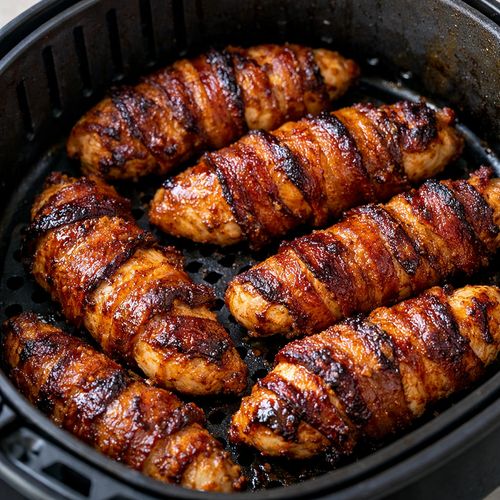
Step 11: Rest and Drain
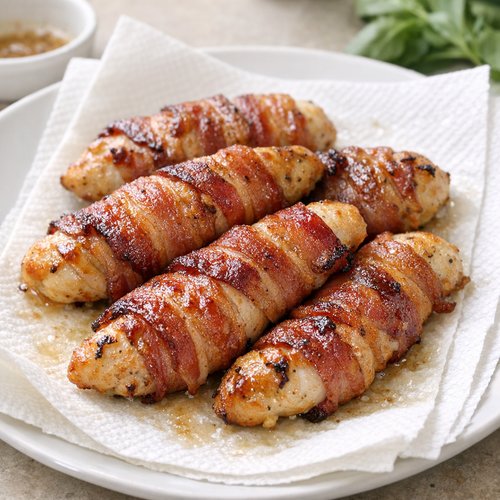
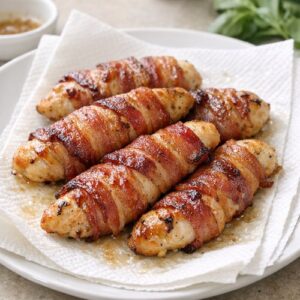
Transfer the cooked tenders to a plate lined with paper towels. This serves two purposes: it allows the residual heat to finish cooking through gently without overcooking the exterior, and any excess moisture or grease drains away. Let them rest for 2-3 minutes before serving. During this rest, the juices redistribute throughout the chicken, so when you take a bite, it’s incredibly tender rather than dry.
Expert’s Nutritional Tip
Here’s something I learned from studying nutrition in culinary school that genuinely changed how I think about this dish: the bacon isn’t just flavor—it’s actually improving the bioavailability of the fat-soluble vitamins in the chicken. Chicken tenders contain vitamin D and essential fatty acids, but your body absorbs them more efficiently when paired with dietary fat. So that bacon isn’t just making it taste incredible; it’s actually making the nutrition more complete. The air frying method also means you’re using far less added oil than pan-frying would require, making this genuinely a nutritionally smart choice for a protein-forward meal.
Tips and Tricks
- Bacon thickness matters – If your bacon is very thick-cut, it might not render completely in 9-10 minutes. In that case, you can partially cook the bacon (about 3 minutes in a skillet) before wrapping. This ensures it gets crispy without the chicken overcooking.
- Don’t skip the preheat – I mention this during cooking, but it’s worth repeating: a fully preheated air fryer gives you consistent, even results. A cold or partially heated air fryer is the number-one reason for uneven cooking.
- Sauce consistency matters – If your barbecue sauce or sweet chili sauce is very thick, thin it slightly with a teaspoon of water. You want it to be brushable, not glob-able. Thick sauce pools in areas and burns while other areas don’t get coverage.
- Size consistency helps – Try to select chicken tenders that are roughly the same size. A very thin tender will dry out while a thicker one finishes cooking. If you have significant size variation, you can butterfly the thicker ones to even them out.
- Don’t overcrowd your air fryer – I know you want to cook everything at once, but air frying is about circulation. Crowded baskets make steamed chicken, not crispy chicken. If you need to do batches, that’s perfectly fine—they’ll stay warm while you cook the second batch.
- Double-check your internal temperature – An instant-read thermometer is genuinely the best way to know when chicken is done. Don’t rely on color alone, because the sauce can make the exterior look cooked while the inside is still underdone.
- Customize the spice blend – If you love heat, add ½ teaspoon cayenne pepper to the rub. If you prefer smokier, increase the paprika to 1.5 tablespoons. The base is flexible—make it yours.
Common Mistakes to Avoid
- Not patting the chicken dry before seasoning – Wet chicken won’t hold seasoning, and the spice rub won’t adhere properly. Thirty seconds with a paper towel makes a genuine difference in the final result.
- Wrapping too tightly or too loosely – Too tight, and you’re squeezing moisture out of the chicken before it cooks. Too loose, and the bacon unravels during cooking. That gentle spiral is the sweet spot.
- Applying too much sauce – This is the most common mistake I see. Excess sauce won’t dry in the time available, and it actually prevents the bacon from crisping. Thin, even coats are your friend here.
- Not leaving space between tenders in the basket – This is probably the single biggest reason people get disappointing results. Air frying requires air circulation. Crowded tenders steam instead of crisp. Work in batches if you need to.
Make-Ahead Guide
One of my favorite things about this recipe is how well it handles advance preparation, which is crucial when you’re cooking for a family or hosting guests. Here’s how I approach it from my restaurant experience:
Up to 8 hours ahead: You can wrap all your chicken tenders in bacon, season them, and keep them on a parchment-lined tray in the refrigerator. Cover the tray loosely with plastic wrap. The cold actually helps the seasoning adhere better, and the bacon becomes slightly more pliable. When you’re ready to cook, remove them from the fridge about 5 minutes before air frying so they come closer to room temperature for more even cooking.
The sauce components: Mix your spice rub up to 2 days ahead and store it in an airtight container. Combine the sweet chili sauce, barbecue sauce, and honey up to 4 hours ahead, but don’t apply it to the tenders until you’re about to cook them—applying sauce too far ahead makes everything soggy.
Cooking and holding: These tenders are honestly best served immediately, but if you need to hold them, keep them uncovered on a warm plate in a 200-degree oven for up to 15 minutes. Covering them traps steam and softens the bacon. If you’re making these for a party, I’d suggest doing the final batch just as your guests are sitting down, which means some will be the absolute peak of crispy while others are in the 10-minute window where they’re still excellent.
Can I Store Air Fry Bacon Wrapped Chicken Tenders?
Yes, though let me be honest about what happens—the bacon loses some of its crispness as it cools and picks up moisture from the chicken. That said, they’re still genuinely delicious and make excellent leftovers.
Refrigerator storage: Keep leftovers in an airtight container for up to 3 days. The chicken stays tender, and the flavors actually meld together nicely overnight. I often eat these cold the next day straight from the fridge, or I’ll reheat them.
Reheating: This is crucial—don’t use a microwave if you want to preserve any crispness. Instead, reheat in your air fryer at 350 degrees for about 3-4 minutes, just until warmed through. This restores a good amount of the bacon’s crispness without drying out the chicken.
Freezing: You can freeze cooked tenders for up to 2 months. Cool them completely, then store them in a freezer bag with parchment paper between layers so they don’t stick together. Reheat from frozen in the air fryer at 375 degrees for 5-7 minutes. They won’t be quite as crispy as the first time, but they’re still remarkably good.
Nutrition Information
Based on USDA nutritional data for the individual ingredients, each serving (2 tenders, approximately) contains roughly 280 calories, with 18 grams of protein, 15 grams of fat, and 12 grams of carbohydrates. The protein comes primarily from the chicken and bacon, making this a genuinely protein-forward meal that will keep you satisfied. The fat is largely from the bacon, though some comes from the sauces. The carbohydrates come from the brown sugar in the rub and the sugars in the barbecue and chili sauces.
This is a nutrient-dense option for a main protein dish—you’re getting substantial, complete protein, healthy fats that support nutrient absorption, and flavors complex enough that you feel satisfied with a reasonable portion size. If you’re tracking macros for fitness goals, these are genuinely friendly to most eating approaches.
What Can I Serve With Air Fry Bacon Wrapped Chicken Tenders?
The beauty of this dish is that it works with nearly any side, but I have some favorites based on what makes the meal feel balanced and complete. I love pairing these with something that offers brightness and contrast to the richness of the bacon and the sweetness of the sauce.
- Crispy vegetable sides – French fried parsnips offer an unexpected sophistication, or you could do classic French fries with a touch of rosemary and sea salt. The crispness contrasts beautifully with the tender chicken.
- Creamy potato dishes – French fried mashed potatoes deliver comfort, or simple creamy garlic mashed potatoes with a knob of butter and fresh chives work perfectly. The creaminess balances the smokiness of the spice rub.
- Fresh and bright sides – A simple arugula salad with lemon vinaigrette cuts through the richness. Or a crisp coleslaw with a lime-based dressing provides cooling brightness that makes the whole meal feel lighter.
- Grain-based options – Brown rice pilaf with herbs, quinoa with toasted nuts, or orzo with fresh herbs all provide a neutral base that lets the chicken shine without competing for attention.
- Vegetable sides – Roasted broccoli with garlic, green beans with almonds, or sautéed spinach with lemon all offer nutrition and color without heaviness.
- Dipping sauces – Beyond serving as-is, consider offering additional dipping options: ranch, sriracha mayo, or a honey-mustard sauce. These give your guests options and add even more flavor complexity.
Substitutes
- Chicken breast instead of tenders – If you can’t find tenders, you can butterfly thick chicken breasts or pound them to about ½-inch thickness. You might need to add 2-3 minutes to the cooking time since they’re larger, but the technique remains the same.
- Turkey instead of chicken – Ground turkey won’t work here, but turkey tenderloins or thin-cut turkey breast absolutely will. Turkey is slightly leaner, so don’t skip the bacon—it’s what keeps everything moist. Cooking time might be 1-2 minutes longer due to the lower fat content.
- Pork tenderloin instead of chicken – Slice pork tenderloin into strips similar to chicken tenders. Pork actually pairs beautifully with bacon and the brown sugar in the rub. Cooking time should be about the same since tenderloin is quite tender by nature.
- Different sauce combinations – If you don’t like sweet chili sauce, try honey mustard mixed with your barbecue sauce, or even a teriyaki-barbecue blend. The technique of brushing twice remains the same; only the flavors change.
- Spice rub variations – Substitute the smoked paprika with regular paprika plus ¼ teaspoon liquid smoke if you want less smokiness. Swap the chili powder for cayenne if you want more heat, or omit it entirely if you’re sensitive to spice.
- Different bacon types – Thick-cut bacon takes a bit longer and might need partial pre-cooking. Turkey bacon will cook faster but won’t render fat the same way. Maple bacon adds sweetness that plays nicely with the sauce. Experiment to find your preference.
- Pancetta or prosciutto – If you want something different, wrap with pancetta (will need slightly longer cooking) or thin prosciutto (will crisp very quickly, reduce cooking time by 1-2 minutes). These change the flavor profile but work within the same technique.
Seasonal Variations
One of the things I’ve learned about cooking is that the best recipes aren’t rigid—they breathe and change with the seasons and with what’s available. Here’s how I approach these chicken tenders throughout the year:
Spring variation: In spring, I love adding fresh herbs to the spice rub—increase the garlic powder slightly and add ½ teaspoon of dried tarragon or fresh thyme mixed into the brown sugar rub. Serve with a fresh pea purée or spring salad with asparagus. The lighter seasonings match the season’s energy.
Summer variation: Summer is when I’m most likely to serve these with fresh fruit sides. A grilled pineapple salsa (similar to what you’d find in my fresh pineapple salsa recipe) offers brightness, and I’ll add a tiny pinch of cayenne to the rub to echo the spice of the pineapple. Everything feels lighter and brighter.
Fall variation: When autumn hits, I add ½ teaspoon of smoked cinnamon or regular cinnamon to the spice rub, and I increase the brown sugar slightly. I serve these with roasted root vegetables—think floured fries but maybe made with sweet potato. The warmth of the spices feels seasonally appropriate.
Winter variation: Winter is all about deepening and richening. I add ¼ teaspoon of black pepper to the spice rub for more heat, and I use a spicier barbecue sauce or add a dash of hot sauce to the brush mixture. I serve with creamy mashed potatoes or a warm kale salad. The heaviness feels right for the season.
Air Fry Bacon Wrapped Chicken Tenders Recipe

Ingredients
- 12 ounce bacon, cut into halves (about 12 slices
- ¼ cup sweet chili sauce the slightly spicy-sweet element that balances the salty bacon
- 2 tablespoon brown sugar packed, because it caramelizes slightly in the air fryer and creates a subtle crust
- ¼ teaspoon chili powder just enough heat to make things interesting without overwhelming
- 1 tablespoon honey a small addition that helps the sauce adhere and adds subtle sweetness
- 1 teaspoon garlic powder adds savory depth that amplifies both the chicken and bacon flavors
- ¼ cup barbecue sauce depth and smokiness that takes this from "nice" to "memorable"
- Sea salt and freshly ground black pepper (your baseline seasoning
- 1 tablespoon smoked paprika (this is where the complexity comes from
- 8 boneless, skinless chicken tenders about 1.5 to 2 pounds total, the leaner cuts that cook fastest
Instructions
Step 1: Get Your Air Fryer Ready
- Set your air fryer to 400 degrees Fahrenheit and let it preheat for 5 minutes. This matters more than you might think. A properly preheated air fryer circulates heat consistently from the very first second your food goes in. If you skip this step, the first minute or so of cooking happens at a lower temperature, which means uneven cooking and potentially soggy bacon at the edges. The preheat also allows any residual oil or moisture from previous cooking to evaporate, which helps you get maximum crispness.
Step 2: Season Your Chicken Properly
- Pat your chicken tenders dry with paper towels—this is actually crucial, though I know it seems like an extra step. Moisture on the surface prevents the spice rub from adhering properly and can create steam pockets that keep the bacon from crisping as well. Once they're dry, season each tender generously with sea salt and freshly ground black pepper on all sides. I recommend being a bit heavier-handed here than you might be with other dishes because the bacon will add saltiness too, but the seasoning underneath needs to be present enough to build flavor.
Step 3: Wrap Each Tender With Bacon
- This is where the magic happens, and it's simpler than you might imagine. Take a half-slice of bacon (remember, we're cutting full slices in half) and wrap it around the widest part of each chicken tender, overlapping the bacon slightly so it stays secure. You don't need toothpicks—the bacon naturally clings to the chicken as it cooks, and gravity works in your favor here. The key is wrapping it snugly but not so tight that you're squeezing the chicken itself. Think of it like a gentle hug, not a stranglehold. The bacon should spiral slightly around the chicken, covering the surface as much as possible.
Step 4: Make Your Spice Rub
- In a small bowl, combine the smoked paprika, garlic powder, chili powder, and brown sugar. The brown sugar might seem odd in a savory rub, but here's the thing—brown sugar contains molasses, which adds subtle caramel notes and helps create a light crust in the air fryer. Mix everything together with a fork, breaking up any brown sugar clumps as you go. The texture should be like damp sand, not clumpy.
Step 5: Apply the Spice Rub
- One at a time, gently roll each bacon-wrapped tender in the spice rub, making sure all surfaces get coated. The moisture from the raw chicken helps the rub stick. Don't pack it on so heavily that you're creating thick clumps—you want an even, thin coating that will caramelize as it cooks. This is the seasoning foundation that everything else builds on, so take your time here.
Step 6: Arrange in the Air Fryer Basket
- Place the tenders in your preheated air fryer basket in a single layer, leaving space between each one. This is non-negotiable—if they're touching or crowded, the air can't circulate properly, and you'll end up with steamed chicken instead of the crispy-outside, juicy-inside texture we're after. I typically fit 4-5 tenders per basket depending on the size of my air fryer. If you're making 8 tenders, plan on doing two batches. Yes, it takes a few extra minutes, but the result is worth it.
Step 7: Apply the Sauce (First Side)
- While those tenders are settling into the basket, whisk together the sweet chili sauce, barbecue sauce, and honey in a small bowl. The honey acts as a binder and adds a subtle floral sweetness. Using a pastry brush or even the back of a spoon, apply a light coating of this sauce to the top of each tender. Don't drench them—you want a thin, even layer. You'll be applying sauce again after flipping, so this first coat is about building layers of flavor, not drowning the chicken.
Step 8: First Cook at 400°F
- Air fry at 400 degrees for 5 minutes. During these first five minutes, the bacon begins rendering its fat, which bastes the chicken underneath, and the spice rub starts to caramelize. You'll start to smell that incredible bacon aroma—that's a good sign. The exterior starts getting color, and the sugars in the sauce begin to slightly char.
Step 9: Flip and Sauce Again
- Carefully remove the basket (watch out for the steam) and flip each tender so the other side is facing down. This is important because you want even cooking and even crisping on all sides. Now, brush the second side with another light coating of that sauce mixture. You don't want the bacon to be swimming in sauce—you want just enough to caramelize and add flavor without preventing crispness.
Step 10: Final Cook
- Return the basket to the air fryer and cook for another 4-5 minutes at 400 degrees. Start checking at the 4-minute mark. The bacon should be deeply browned and crispy to the touch, not greasy. The internal temperature of the chicken should reach 165 degrees Fahrenheit on an instant-read thermometer (insert it into the thickest part of the tender). If you don't have a thermometer, the chicken should have no pink inside and should feel firm but not hard when pressed gently.
Step 11: Rest and Drain
- Transfer the cooked tenders to a plate lined with paper towels. This serves two purposes: it allows the residual heat to finish cooking through gently without overcooking the exterior, and any excess moisture or grease drains away. Let them rest for 2-3 minutes before serving. During this rest, the juices redistribute throughout the chicken, so when you take a bite, it's incredibly tender rather than dry.
Notes
Nutrition
FAQs
Can I use chicken breasts instead of tenders?
Absolutely. Chicken breasts are larger, so you’ll need to either butterfly them (cut them in half horizontally to create two thinner pieces) or pound them to about ½ inch thickness before wrapping with bacon. Thinner chicken cooks more evenly. If you use whole, unpounded breasts, you’ll need to add 3-4 minutes to the cooking time, and you might need to cover the air fryer basket with foil for the first few minutes to prevent the exterior from burning before the inside cooks through. The technique remains identical—wrap, season, sauce, air fry.
My bacon isn’t getting crispy. What’s happening?
This usually comes down to three things: overcrowding the basket (prevent air circulation), not preheating your air fryer (starts cooking at too low a temperature), or your bacon being cut too thick. Thick-cut bacon genuinely needs longer than 9-10 minutes. Try partially cooking it first—about 3 minutes in a skillet to render some fat before wrapping—then air fry as directed. Also, make sure you’re not applying too much sauce, which can trap steam and prevent crisping.
How do I know when the chicken is done without a thermometer?
An instant-read thermometer is genuinely the most reliable method (insert into the thickest part, looking for 165 degrees), but if you don’t have one: the chicken should have no pink inside, it should be opaque white throughout, and when you press it gently with a fork or knife, juices should run clear, not pink. The meat should feel firm but not hard or rubbery. If you’re unsure, it’s better to cook a minute or two longer than to serve undercooked chicken.
Can I prepare these ahead and refrigerate them before cooking?
Yes, this is actually something I recommend. Wrap your chicken in bacon and apply the spice rub up to 8 hours ahead. Store them on a parchment-lined tray, loosely covered, in the refrigerator. The cold allows the seasoning to adhere better, and it slightly firms up the chicken, which actually helps with even cooking. Remove them from the fridge about 5 minutes before cooking to bring them slightly closer to room temperature. Don’t apply the sauce until just before cooking, as applying it too far ahead makes everything soggy.
What’s the best way to reheat leftovers so they stay crispy?
Use your air fryer set to 350 degrees for 3-4 minutes. This reheats them gently while restoring crispness to the bacon. Do not use a microwave, as it will make the bacon rubbery and the overall texture steamed rather than crispy. The air fryer method gives you back about 85% of the original texture, which is genuinely impressive for a leftover. If you don’t have an air fryer handy, you can use a regular oven at 375 degrees for about 5 minutes, though this is slightly less effective than the air fryer.
More Recipes You’ll Love
- Eggs Bites In Oven – If you love the convenience of air fryer cooking, these protein-packed egg bites are breakfast or snack perfection, cooked with the same technique you’ve just mastered.
- Food Faith Fitness – This approach to cooking combines nutrition knowledge with genuine flavor, which aligns perfectly with making these chicken tenders a regular part of your healthy rotation.
- Empanada Dough Pinoy Recipe – For when you want to take your cooking skills global, these hand-held pastries showcase how technique and tradition create genuine comfort food across cultures.
There’s something deeply satisfying about mastering a dish like bacon-wrapped chicken tenders. It looks impressive, tastes incredible, and actually comes together faster than many home-cooked meals. I hope you’ll make this often—at casual weeknight dinners, at gatherings where you want something reliably delicious, and especially the first time you serve it to someone and watch their face light up at that first crispy, tender bite.
The air fryer has genuinely changed how I cook at home, not because it replaces traditional methods, but because it does certain things so beautifully that I’d be foolish not to use it. These chicken tenders are exhibit A—they’re proof that sometimes the simplest approach, executed with attention to detail, is the most rewarding. You’ve got this. Happy Cooking!
META DESCRIPTION:
Air fry bacon wrapped chicken tenders in just 15 minutes. Crispy bacon, juicy chicken, and double-sauce magic—restaurant quality made easy at home.
air-fry-bacon-wrapped-chicken-tenders-recipe