
5 Spice Chicken Thighs Recipe
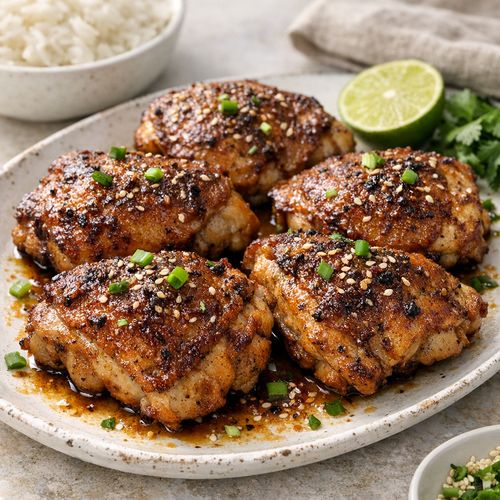
There’s something magical about chicken thighs roasted with five-spice powder—the way that complex blend of cinnamon, star anise, clove, and Sichuan pepper fills your kitchen is absolutely intoxicating. This recipe is perfect served over steamed rice with your favorite green vegetables, or pair it with foiled baked potatoes for a heartier meal. I’ve been making this version for years, and it never fails to impress both my family and anyone I’m cooking for.
The Night My Grandmother Taught Me What Real Flavor Means
I was maybe eight years old, sitting in my grandmother’s kitchen on a Saturday afternoon. She’d just pulled a sheet pan out of the oven, and the aroma—honestly, I can still smell it decades later. She’d learned this technique from a friend who’d lived in Shanghai, and she made it look effortless. The chicken skin crackled under her knife, and the meat inside was impossibly tender. She handed me a piece and said, “Joe, taste how the spices know exactly what they’re doing. They’re not fighting each other—they’re dancing together.”
That moment stuck with me through culinary school and into my professional cooking career. I realized she wasn’t just teaching me a recipe; she was teaching me that good cooking comes from understanding why each ingredient matters. This five-spice chicken thighs recipe carries that philosophy in every bite.
What is 5 Spice Chicken Thighs Recipe?
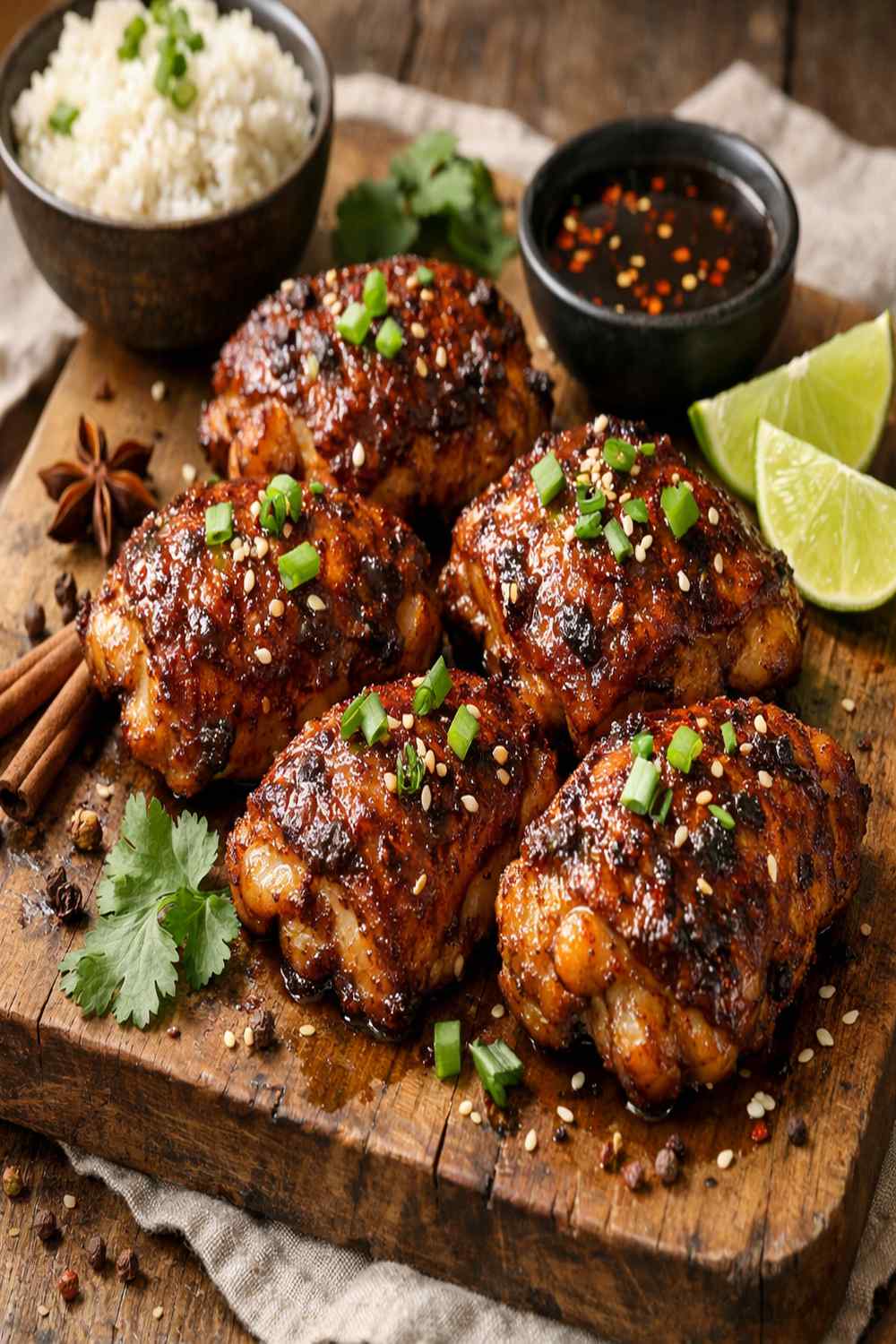
Five-spice chicken thighs represent the beautiful intersection of Chinese culinary tradition and weeknight practicality. This dish features bone-in, skin-on chicken thighs marinated in a savory blend anchored by five-spice powder—that aromatic combination of star anise, cloves, cinnamon, Sichuan pepper, and fennel that’s been central to Asian cooking for centuries.
What makes this recipe special isn’t just the spice blend itself, but how it transforms when combined with soy sauce, aromatic garlic and red onion, and a touch of sesame oil. The marinade penetrates the meat while the oven’s dry heat crisps the skin to golden perfection. I’ve always preferred thighs over breasts for this preparation because the dark meat stays moist and flavorful, even after roasting.
This is a dish that feels restaurant-quality but requires almost no active cooking time. The oven does the heavy lifting while you spend time on what matters—whether that’s family conversation, meal prep, or simply enjoying a moment of peace.
Why You’ll Love This 5 Spice Chicken Thighs Recipe
- Minimal hands-on time – Once the marinade is ready and the chicken goes in the oven, you’re free for 35-40 minutes. This is perfect for busy weeknights when you need something that looks like you spent hours cooking but didn’t.
- Incredibly forgiving marinade – I’ve marinated these for as little as 20 minutes and as long as 48 hours. The flavor develops beautifully either way, which means flexibility if you’re meal prepping or forgot to plan ahead.
- Crispy skin, tender meat – Chicken thighs have more fat content than breasts, which means the skin becomes genuinely crispy in the oven while the meat stays juicy and tender. That’s not luck—that’s chemistry working in your favor.
- Builds a flavorful pan sauce – As the chicken roasts, it releases rendered fat and concentrated flavors that pool in the pan. After you remove the chicken, you can deglaze that pan with a splash of water or broth to create a simple sauce that’s better than anything store-bought.
- Naturally gluten-free – The entire marinade is built on naturally gluten-free components, making this accessible to more people at your table without any modification or compromise.
- Impressive presentation – Individual thighs look stunning on a plate. There’s something about presenting a whole chicken piece with that golden skin and those aromatic spices that makes people feel like you’ve really elevated dinner.
The Ingredients
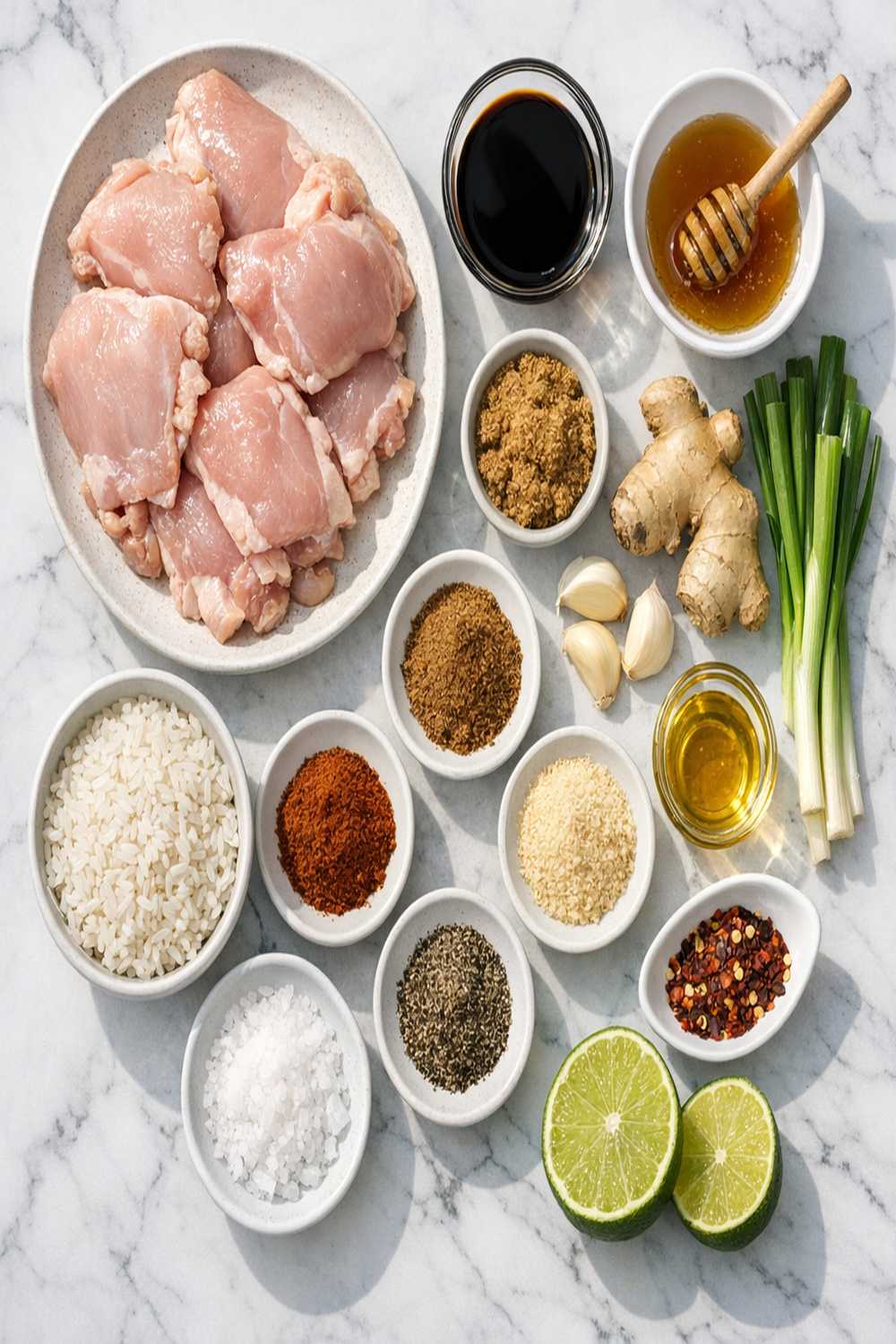
Before we start, I want to mention that every single ingredient in this marinade serves a purpose. There’s no filler here—just building blocks that create something genuinely greater than the sum of their parts. These amounts yield four servings with two thighs per person, though this scales beautifully if you’re cooking for a crowd.
- 1 tablespoon reduced-sodium soy sauce (the umami backbone that ties everything together)
- 1 tablespoon Shaoxing wine (Chinese rice wine—dry cooking sherry is a legitimate substitute if you can’t find it)
- 1 teaspoon freshly grated ginger (optional but highly recommended—adds warmth and brightness)
- 8 bone-in, skin-on chicken thighs (or 4 chicken leg quarters if you prefer—skin-on is non-negotiable for crispiness)
- 1 teaspoon neutral cooking oil (canola or vegetable oil helps everything emulsify)
- 2 cloves garlic (minced finely so the pieces distribute throughout the marinade evenly)
- 1 medium red onion (minced small, adds natural sweetness that balances the salty and umami elements)
- 1 teaspoon Chinese five-spice powder (star anise, clove, cinnamon, Sichuan pepper, and fennel—the soul of this dish)
- 1 teaspoon fine sea salt (kosher salt works too, but use slightly less since it measures differently)
- 2 whole star anise pods (optional garnish, toasted and crushed—intensifies the five-spice aroma)
- 1 teaspoon roasted sesame oil (toasted, not raw—this adds nutty, complex depth)
How to Make 5 Spice Chicken Thighs Recipe?
This recipe breaks down into three phases: building the marinade, prepping the chicken, and roasting to golden perfection. Each step is straightforward, but I’ll explain the reasoning behind the technique because understanding the ‘why’ makes you a better cook.
Step 1: Build Your Marinade
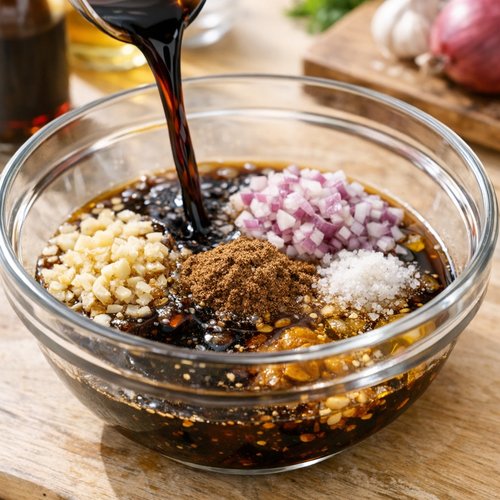
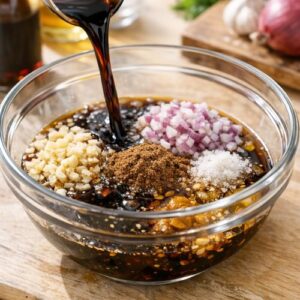
In a medium mixing bowl, combine your minced garlic, minced red onion, soy sauce, five-spice powder, salt, Shaoxing wine, sesame oil, and neutral cooking oil. Stir everything together until well combined—you want the salt to dissolve into the liquid and all the aromatics to be evenly distributed. This shouldn’t take more than a minute of stirring.
Here’s what’s happening: the soy sauce and Shaoxing wine are your liquid components, and they’re carrying flavors into the meat. The oils are emulsifying slightly, creating a cohesive marinade rather than separated components. The garlic and onion are releasing their natural sugars and sulfur compounds, which will caramelize slightly when the chicken roasts.
Step 2: Prepare Your Chicken
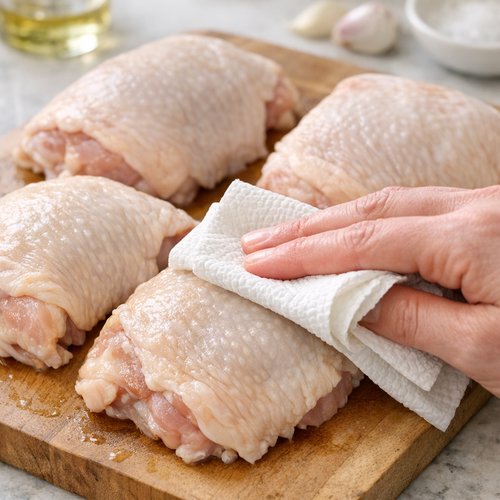
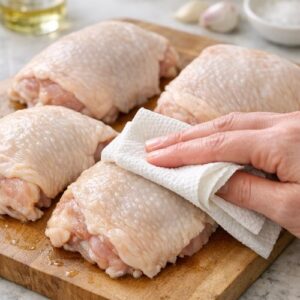
Pat your chicken thighs completely dry using paper towels. This step matters more than people realize—wet skin will steam rather than roast, and you’ll lose that precious crispiness we’re working toward. Don’t skip this.
Once the thighs are dry, add them to your marinade bowl. Using your hands (this is what cooking is about—getting in there), work the marinade onto the meat, making absolutely sure to work it under the skin. That’s where the magic happens. The marinade will penetrate the meat through the underside, and when the skin roasts, it will have absorbed all these incredible flavors from beneath.
Step 3: Marinate With Intention
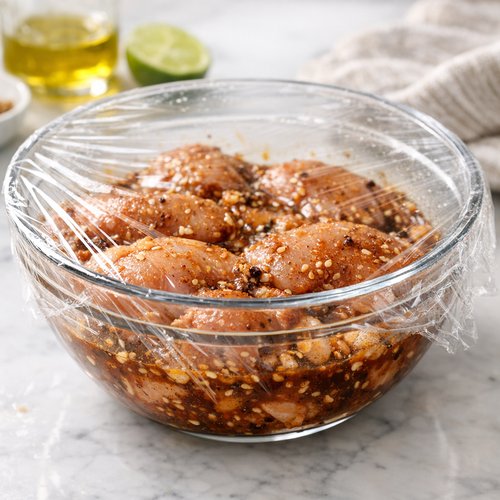
Cover your bowl with plastic wrap and refrigerate. Now, here’s where flexibility becomes your friend. You can marinate for as little as 20 minutes if you’re in a time crunch, but overnight is genuinely better. If you’re marinating overnight, pull the chicken from the fridge 30 minutes before you plan to roast it—this brings it closer to room temperature, which ensures more even cooking.
The longer marinade allows the five-spice powder to fully bloom and the soy sauce to penetrate deeper into the muscle fibers. The salt in the marinade also begins the process of breaking down proteins, which results in more tender meat. This is science working in your favor.
Step 4: Prepare Your Oven and Pan
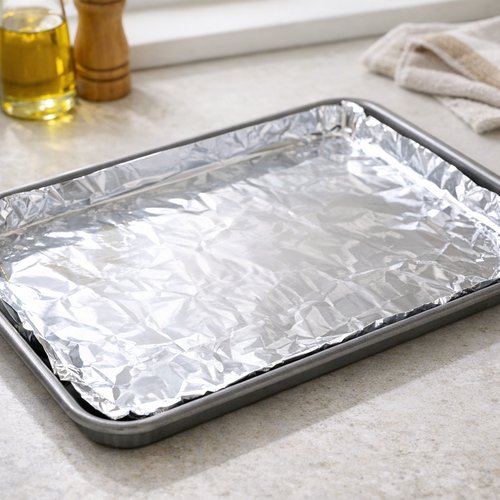
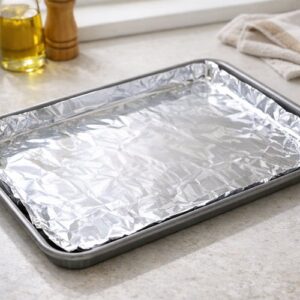
Preheat your oven to 375°F (190°C). While it’s heating, line a sturdy sheet pan with either parchment paper or non-stick foil. This step prevents sticking and makes cleanup infinitely easier—and honestly, cleanup is part of cooking too.
I prefer parchment paper because it allows slightly better air circulation under the chicken, which helps with that skin crispiness. Non-stick foil works perfectly fine if that’s what you have.
Step 5: Arrange and Roast
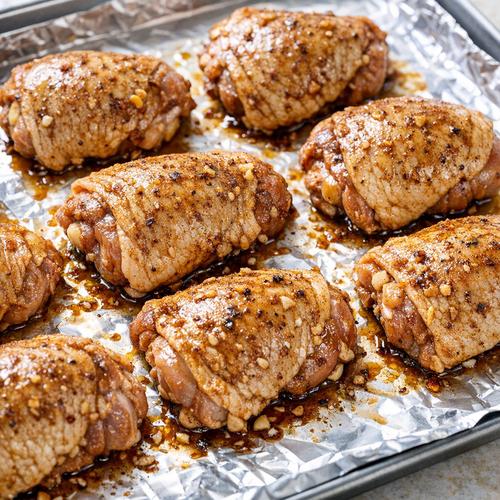
Arrange your marinated chicken thighs on the prepared pan, skin-side up. Make sure they’re not touching each other—they need space for air to circulate around them. If they’re crowded together, you’ll end up steaming instead of roasting.
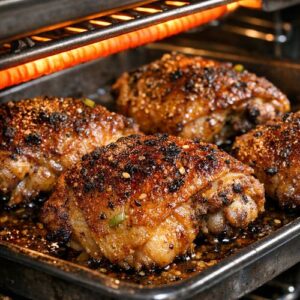
Place the pan in your preheated oven and roast for 35 to 40 minutes. The chicken is done when you pierce the thickest part of a thigh with a fork and the juices run completely clear with no pink tinge. The internal temperature should reach 165°F (74°C) when measured with an instant-read thermometer at the thickest point without touching bone.
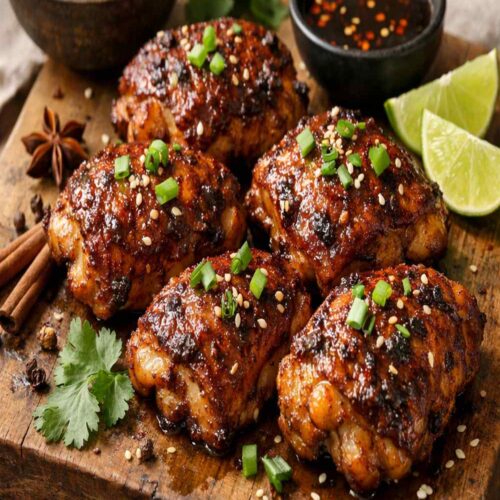
During roasting, the marinade will caramelize on the skin, the fat will render out and create a golden crust, and the meat will cook through gently and evenly. Your kitchen will smell absolutely incredible—that five-spice aroma is unmistakable and utterly wonderful.
Step 6: Optional Crisp-Up Under the Broiler
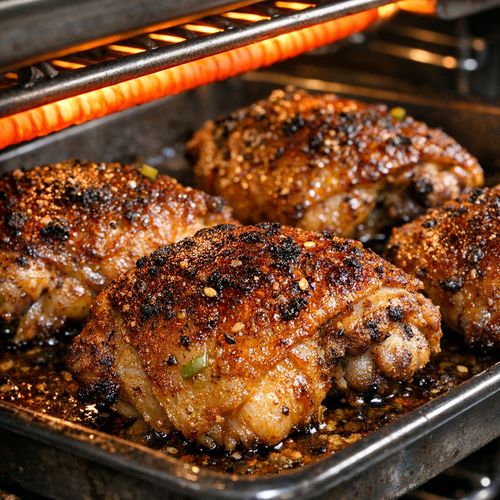
If after 40 minutes your chicken skin isn’t as golden and crispy as you’d like, turn on your broiler to high. Move the pan to the top rack and watch it very carefully—this is where things can go from golden to burned in about 2-3 minutes.
I’m serious about the watching part. Don’t leave the kitchen. Don’t answer your phone. Just stand there and watch those thighs transform. The broiler is intense, and you want the skin to reach deep golden-brown without actually charring. Once you see that color, pull it out immediately.
Step 7: Rest and Serve
Let your chicken rest for 5 minutes before serving. This allows the residual heat to finish the cooking process and the juices to redistribute throughout the meat. If you cut into it immediately, those juices run out onto the plate instead of staying in the meat where they belong.
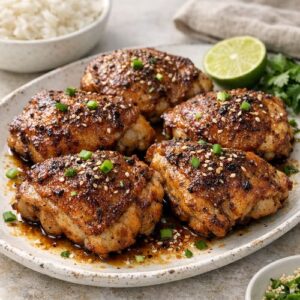
Transfer to a serving platter, drizzle any pan juices over the top, and serve immediately while the skin is still crispy.
Expert’s Nutritional Tip
As someone trained in culinary arts who’s spent years understanding how food functions in our bodies, I want to highlight something important about chicken thighs specifically. While thighs contain more fat than breasts—about 10 grams of fat per 3-ounce serving compared to 3 grams in breast meat—that’s not something to fear.
The fat in chicken thighs is primarily unsaturated fat, and it’s the carrier for fat-soluble vitamins like vitamin A and D. That fat is also what makes the meat stay moist and flavorful when cooking with dry heat like roasting. From a nutritional standpoint, the micronutrients in chicken thighs—particularly iron and B vitamins—are more bioavailable because of that fat content. You’re not just eating delicious food; you’re eating food that your body can actually use efficiently.
Tips and Tricks
- Room temperature matters – Always remove your marinated chicken from the refrigerator 30 minutes before roasting. Cold chicken will take longer to cook evenly, and the exterior will overcook before the interior reaches temperature. Room temperature chicken roasts beautifully and evenly.
- Don’t skip the skin-patting step – Truly dry skin is non-negotiable for crispiness. Use paper towels and be thorough. The moisture on the surface prevents browning, period.
- Invest in an instant-read thermometer – This is the most reliable way to know when your chicken is actually done. The color of the juices can be deceiving, but 165°F (74°C) at the thickest point never lies. I’ve had one in my kitchen for over a decade, and it’s one of my most-used tools.
- Save those pan drippings – After removing the chicken, place your sheet pan on the stovetop over medium heat. Add a splash of chicken broth or water and scrape up all those golden, caramelized bits. You’ve just created an incredible pan sauce with almost no effort. Strain it, season it lightly, and drizzle it over your finished dish.
- Batch marinade for the week – If you’re meal prepping, you can marinate four separate batches of two thighs each in individual containers or bags. This way, you can roast one batch at a time throughout the week, and every night feels like you’re cooking something fresh and intentional.
- Toast your five-spice powder first – This is optional but genuinely worthwhile. If you have time, toast your five-spice powder in a dry skillet for 30-45 seconds before adding it to the marinade. This blooms the essential oils and makes the entire dish more aromatic. It’s a small step that creates a noticeable difference.
Common Mistakes to Avoid
- Crowding the pan – I mentioned this in the roasting step, but it’s worth repeating because I see this constantly in home kitchens. If your chicken thighs are touching, they’ll steam rather than roast. This is one of the biggest reasons home cooks end up with pale, rubbery skin instead of crispy, golden skin. Space matters. Use two sheet pans if necessary.
- Oversalting the marinade – Five-spice powder and soy sauce both contribute saltiness, and so does the salt in the recipe. If you add extra salt thinking you’re enhancing the flavor, you’ll end up with chicken that tastes aggressively salty rather than beautifully seasoned. Trust the recipe amounts. You can always add salt at the table, but you can’t remove it once it’s in the meat.
- Marinating too long in acidic components – While overnight marinating is great, going longer than 24 hours with the soy sauce and Shaoxing wine can actually break down the muscle fibers too much, resulting in a mealy texture. This recipe is designed for overnight marinating or less. If you need to prep further in advance, marinate for 12-16 hours, then store the cooked chicken separately.
- Skipping the rest period – I know you’re excited to eat. I get it. But those 5 minutes of resting aren’t wasted time—they’re essential cooking time. The carryover heat continues cooking the meat slightly, and the juices redistribute. Cutting into chicken immediately after roasting causes all those flavorful juices to run out onto the plate.
Make-Ahead Guide
Preparing the marinade in advance: You can prepare the complete marinade up to 3 days ahead of time. Store it in an airtight container in the refrigerator. The flavors will actually develop and deepen slightly over time, which is a bonus. Just give it a quick stir before using.
Marinating the chicken: The chicken can marinate for up to 24 hours. I don’t recommend going longer than this because the salt and soy sauce will eventually over-penetrate the meat and change the texture in ways you don’t want. However, anywhere from 20 minutes to 24 hours works beautifully.
Roasting and storing: You can absolutely roast this chicken up to 2 days ahead of time. Cool it completely, then store it in an airtight container in the refrigerator. Reheat gently in a 325°F (163°C) oven for about 15 minutes until warmed through. The skin won’t be quite as crispy as fresh (nothing reheated ever is), but the meat will be tender and the flavors will still be vibrant.
Freezing for later: You can freeze the marinated chicken (before roasting) for up to 3 months. Marinate as directed, then freeze in individual portions in freezer bags or containers. Thaw overnight in the refrigerator before roasting—don’t try to roast from frozen, as it will take significantly longer and cook unevenly.
Can I Store 5 Spice Chicken Thighs Recipe?
Absolutely. Cooked chicken thighs store beautifully for up to 4 days in an airtight container in the refrigerator. As I mentioned above, you can reheat them gently in a low oven. The skin won’t have the same crispness as fresh, but the meat stays tender and flavorful.
I don’t recommend microwave reheating because it tends to dry out chicken and makes the skin particularly rubbery. A low oven preserves the texture much better. Alternatively, you can shred the meat from the bones and use it in fried rice, grain bowls, or even cold noodle salads for something completely different the next day.
For freezing cooked chicken, store it in an airtight container or freezer bag for up to 3 months. Thaw overnight in the refrigerator before reheating.
Nutrition Information
Per serving (2 thighs), this recipe provides approximately 420 calories, 32 grams of protein, 28 grams of fat (with about 8 grams of saturated fat), and 3 grams of carbohydrates. There’s minimal sodium beyond what’s in the soy sauce because we’re using it judiciously—roughly 580mg of sodium per serving, which is reasonable for a prepared dish.
Chicken thighs are an excellent source of B vitamins, particularly niacin and B6, which support energy metabolism. They’re also rich in selenium and iron—nutrients that are particularly important if you don’t eat red meat regularly. The marinade ingredients add antioxidants from the garlic and ginger, and the five-spice powder contributes compounds like cinnamaldehyde from the cinnamon, which has been studied for anti-inflammatory properties.
These nutrition values align with USDA FoodData Central for bone-in, skin-on chicken thighs, and represent the chicken portion only—not including any sides you serve alongside.
What Can I Serve With 5 Spice Chicken Thighs Recipe?
This is where the beauty of this recipe really shines—it’s genuinely versatile. The aromatic five-spice flavors pair beautifully with so many sides, which means you can eat this same chicken four different ways during the week and have completely different meals.
- Steamed white or brown rice – This is the classic pairing. Plain steamed rice lets the chicken be the star while absorbing those incredible pan juices. I prefer jasmine rice for the subtle floral note it brings, but any rice works beautifully.
- Bok choy or gai lan – Quick-steamed or stir-fried with just a touch of garlic and sesame oil. The tender-crisp texture and mild flavor complement the chicken without competing with the spice profile.
- Crispy roasted vegetables – Try roasting broccoli, bell peppers, or snap peas alongside the chicken (on a separate pan). Toss them with a bit of the pan juices at the end. The charred edges play beautifully against the aromatic chicken.
- Creamy side dishes – The richness of French fried mashed potatoes or foiled baked potatoes provides an interesting contrast to the bold Asian flavors. It’s unconventional, but it genuinely works.
- Fresh salad with acidic dressing – A crisp salad with lime juice or rice vinegar dressing cuts through the richness of the chicken skin and refreshes your palate between bites.
- Noodles and broth – Shred the cooked chicken and serve it over fresh ramen noodles or rice noodles in a simple broth. The warm, comforting elements complement the aromatic seasoning.
- Grain bowls – Layer quinoa or farro with roasted vegetables, shredded chicken, and a drizzle of sesame oil. Add a soft-boiled egg if you’d like. This becomes a complete, satisfying meal.
Seasonal Variations
Spring version: Add fresh lemon zest to the marinade and serve with asparagus and peas. The brightness of lemon complements the five-spice beautifully while keeping the dish light as the weather warms up.
Summer version: Serve the chicken at room temperature alongside fresh pineapple salsa and a crisp cucumber salad. The tropical elements and acidity feel perfect when it’s warm outside, and you can prepare everything ahead for entertaining.
Fall version: Add a teaspoon of freshly grated ginger to the marinade for extra warmth, and serve alongside roasted root vegetables like carrots and parsnips. Consider trying French fried parsnips as a creative side. The earthiness of the vegetables echoes the warmth of the five-spice blend.
Winter version: Keep everything the same but serve the chicken over creamy polenta or with a rich mushroom sauce made from the pan drippings. The comfort-food approach feels appropriate for cold months, and the aromatic spices provide warmth and brightness when fresh produce is limited.
Substitutes
- For five-spice powder: If you can’t find it, you can make a rough version by combining ½ teaspoon ground cinnamon, ¼ teaspoon ground clove, ¼ teaspoon ground star anise (or fennel seed), ¼ teaspoon Sichuan pepper (or black pepper), and a pinch of ground ginger. It won’t be identical, but it captures the general flavor profile.
- For Shaoxing wine: Dry sherry, dry vermouth, or even a splash of dry white wine works. I’d avoid anything sweet or fortified like regular cooking sherry (which often has added sugar). The goal is that slight tannin and alcohol to help penetrate the meat.
- For sesame oil: If you don’t have it, you can omit it and add a tiny bit more of your neutral cooking oil. You’ll lose some of the nutty, aromatic quality, but the dish will still be delicious. Don’t substitute regular sesame seed oil or refined sesame oil—these aren’t the same as toasted sesame oil and won’t provide the flavor you’re looking for.
- For bone-in, skin-on thighs: Boneless, skinless thighs will work in a pinch, but you’ll lose that crispy texture and incredible rendered fat. If you must use them, reduce the roasting time to 25-30 minutes and be careful not to overcook them as they’ll dry out faster.
- For soy sauce: You can use tamari (gluten-free soy sauce) or coconut aminos if you need a gluten-free option. Both are slightly different in flavor—tamari is deeper and less salty, while coconut aminos is slightly sweeter—but both work.
- For red onion: Yellow onion or even shallots work beautifully. Avoid white onions as they’re sharper and less sweet. You want that mild sweetness to balance the saltiness of the soy sauce.
5 Spice Chicken Thighs Recipe

Ingredients
- 1 tablespoon reduced-sodium soy sauce the umami backbone that ties everything together
- 1 tablespoon Shaoxing wine (Chinese rice wine
- 1 teaspoon freshly grated ginger (optional but highly recommended
- 8 bone-in, skin-on chicken thighs (or 4 chicken leg quarters if you prefer
- 1 teaspoon neutral cooking oil canola or vegetable oil helps everything emulsify
- 2 clove garlic minced finely so the pieces distribute throughout the marinade evenly
- 1 medium red onion minced small, adds natural sweetness that balances the salty and umami elements
- 1 teaspoon Chinese five-spice powder (star anise, clove, cinnamon, Sichuan pepper, and fennel
- 1 teaspoon fine sea salt kosher salt works too, but use slightly less since it measures differently
- 2 whole star anise pods (optional garnish, toasted and crushed
- 1 teaspoon roasted sesame oil (toasted, not raw
Instructions
Step 1: Build Your Marinade
- In a medium mixing bowl, combine your minced garlic, minced red onion, soy sauce, five-spice powder, salt, Shaoxing wine, sesame oil, and neutral cooking oil. Stir everything together until well combined—you want the salt to dissolve into the liquid and all the aromatics to be evenly distributed. This shouldn't take more than a minute of stirring. Here's what's happening: the soy sauce and Shaoxing wine are your liquid components, and they're carrying flavors into the meat. The oils are emulsifying slightly, creating a cohesive marinade rather than separated components. The garlic and onion are releasing their natural sugars and sulfur compounds, which will caramelize slightly when the chicken roasts.
Step 2: Prepare Your Chicken
- Pat your chicken thighs completely dry using paper towels. This step matters more than people realize—wet skin will steam rather than roast, and you'll lose that precious crispiness we're working toward. Don't skip this. Once the thighs are dry, add them to your marinade bowl. Using your hands (this is what cooking is about—getting in there), work the marinade onto the meat, making absolutely sure to work it under the skin. That's where the magic happens. The marinade will penetrate the meat through the underside, and when the skin roasts, it will have absorbed all these incredible flavors from beneath.
Step 3: Marinate With Intention
- Cover your bowl with plastic wrap and refrigerate. Now, here's where flexibility becomes your friend. You can marinate for as little as 20 minutes if you're in a time crunch, but overnight is genuinely better. If you're marinating overnight, pull the chicken from the fridge 30 minutes before you plan to roast it—this brings it closer to room temperature, which ensures more even cooking. The longer marinade allows the five-spice powder to fully bloom and the soy sauce to penetrate deeper into the muscle fibers. The salt in the marinade also begins the process of breaking down proteins, which results in more tender meat. This is science working in your favor.

Step 4: Prepare Your Oven and Pan
- Preheat your oven to 375°F (190°C). While it's heating, line a sturdy sheet pan with either parchment paper or non-stick foil. This step prevents sticking and makes cleanup infinitely easier—and honestly, cleanup is part of cooking too. I prefer parchment paper because it allows slightly better air circulation under the chicken, which helps with that skin crispiness. Non-stick foil works perfectly fine if that's what you have.
Step 5: Arrange and Roast
- Arrange your marinated chicken thighs on the prepared pan, skin-side up. Make sure they're not touching each other—they need space for air to circulate around them. If they're crowded together, you'll end up steaming instead of roasting. Place the pan in your preheated oven and roast for 35 to 40 minutes. The chicken is done when you pierce the thickest part of a thigh with a fork and the juices run completely clear with no pink tinge. The internal temperature should reach 165°F (74°C) when measured with an instant-read thermometer at the thickest point without touching bone. During roasting, the marinade will caramelize on the skin, the fat will render out and create a golden crust, and the meat will cook through gently and evenly. Your kitchen will smell absolutely incredible—that five-spice aroma is unmistakable and utterly wonderful.

Step 6: Optional Crisp-Up Under the Broiler
- If after 40 minutes your chicken skin isn't as golden and crispy as you'd like, turn on your broiler to high. Move the pan to the top rack and watch it very carefully—this is where things can go from golden to burned in about 2-3 minutes. I'm serious about the watching part. Don't leave the kitchen. Don't answer your phone. Just stand there and watch those thighs transform. The broiler is intense, and you want the skin to reach deep golden-brown without actually charring. Once you see that color, pull it out immediately.
Step 7: Rest and Serve
- Let your chicken rest for 5 minutes before serving. This allows the residual heat to finish the cooking process and the juices to redistribute throughout the meat. If you cut into it immediately, those juices run out onto the plate instead of staying in the meat where they belong. Transfer to a serving platter, drizzle any pan juices over the top, and serve immediately while the skin is still crispy.
Notes
Nutrition
FAQs
Can I use chicken breasts instead of thighs?
Technically yes, but I genuinely don’t recommend it. Chicken breasts are much leaner, which means they’ll dry out during roasting, especially at 375°F. The entire appeal of this recipe is the rendered fat creating that crispy, golden skin while the meat stays juicy underneath. Thighs have enough fat content to stay tender even with the longer roasting time. If you really prefer breasts, reduce the roasting time to 25-30 minutes and monitor them carefully with an instant-read thermometer—breast meat dries out quickly.
What if I don’t have a sheet pan? Can I use a baking dish?
You can use a baking dish, but the results will be slightly different. A sheet pan allows air to circulate on all sides of the chicken, which promotes even browning and crispiness. A baking dish is more enclosed, which can trap steam and result in slightly softer skin. If you use a baking dish, place it in the upper third of your oven to get more direct heat on the skin, and consider broiling briefly at the end to crisp things up.
Why is my chicken skin not crispy even after the broiler step?
This usually comes down to either moisture on the skin before roasting or overcrowding on the pan. I can’t stress the patting-dry step enough—truly dry skin is essential for crispiness. Additionally, if your thighs were touching during roasting, steam built up around them and prevented browning. Try increasing the oven temperature to 400°F (204°C) next time, spacing the thighs further apart, and making sure to pat them extremely dry before roasting.
Can I double this recipe?
Absolutely. The marinade doubles beautifully, and you can roast up to 16 thighs on two sheet pans (8 per pan). Just make sure they’re not touching. The roasting time might increase slightly—maybe 40-45 minutes instead of 35-40—because the oven is working harder. Check for doneness with your instant-read thermometer rather than relying on timing alone.
What’s the difference between five-spice powder and Chinese five-spice powder?
They’re the same thing. Some brands label it “five spice powder,” others say “Chinese five spice,” and still others simply call it “five spice.” The blend should contain star anise, cloves, cinnamon, Sichuan pepper, and fennel. Check the ingredient list to make sure you’re getting the real blend, as some grocery stores sell inferior versions with lots of filler or missing key components.
More Recipes You’ll Love
- Filipino Chicken Asado – Another chicken thigh preparation with Asian influences but a completely different flavor profile centered around soy, vinegar, and aromatics.
- Food Faith Fitness – An article about the philosophy of building balanced, nutritious meals that celebrate flavor without compromise.
Final Thoughts
This five-spice chicken thighs recipe has been part of my cooking repertoire since that day in my grandmother’s kitchen, and every time I make it, I think about her. About how food isn’t just about feeding people—it’s about connecting them to moments, to memories, to the care you put into preparation.
What I love most about this recipe is its flexibility. It works for a quiet Tuesday dinner, meal prep for the week, or entertaining guests on a weekend. The marinade is forgiving, the technique is straightforward, and the results feel genuinely impressive without requiring advanced skill.
The next time you make this, pay attention to the little moments—the aroma of five-spice blooming as the chicken roasts, the sound of that crispy skin crunching under your knife, the way the pan juices glisten with rendered fat. These sensory experiences are what cooking is about. They’re what transform a simple dinner into something memorable.
Happy Cooking!