
Roasted Habanero Mango Salsa Recipe
I grew up in my grandmother’s kitchen in New Hampshire, where she’d teach me that the best meals always start with something alive on your plate. Fresh ingredients, bold flavors, real warmth. This roasted habanero mango salsa embodies exactly that philosophy—it’s the kind of condiment that transforms ordinary grilled chicken into something memorable, pairs beautifully with crispy tortilla chips, and makes your guests ask for the recipe before they’ve even finished their first bite. Whether you’re planning a casual weeknight dinner or hosting friends for a backyard gathering, this salsa brings the kind of vibrant, smoky-sweet energy that makes people linger at the table just a little longer. It’s also fantastic alongside Filipino Chicken Asado if you’re feeling adventurous with your global flavors.
How This Roasted Salsa Changed My Understanding of Heat and Sweetness
The first time I roasted habaneros intentionally—rather than just throwing them raw into a blender—I realized I’d been missing something fundamental about pepper cooking. The heat doesn’t disappear when you roast them; it transforms. It becomes smoother, almost velvety, with undertones of caramel and complexity that raw peppers simply can’t deliver. Combined with caramelized mango and charred tomatoes, something almost magical happens on that sheet pan in your oven.
I remember standing in front of my oven at 400 degrees, watching the edges of those tomatoes blacken just slightly, the mango’s natural sugars intensifying, and thinking: “This is why people love authentic Mexican cuisine.” It’s not just about throwing ingredients together. It’s about understanding how heat and time unlock flavors that raw ingredients keep locked away.
That moment sparked what became my signature approach to salsa-making, and honestly, it’s changed how I cook peppers entirely. Let me walk you through exactly how to capture that magic in your own kitchen.
What is Roasted Habanero Mango Salsa?
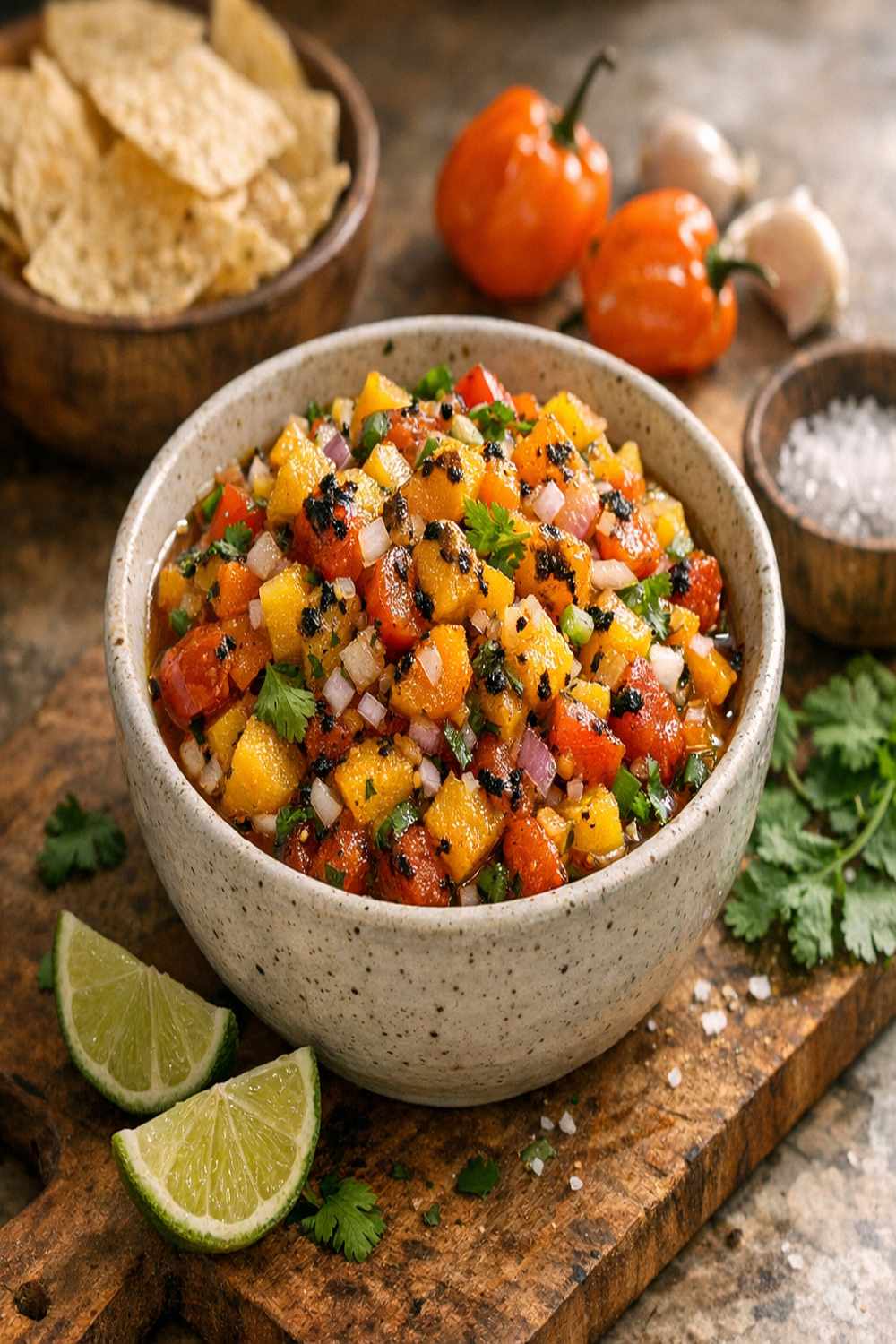
This is a vibrant, modern take on traditional Mexican salsa that trades the purely raw approach for a roasted method that deepens and mellows every ingredient. Unlike Qdoba’s Black Bean and Corn Salsa, which celebrates freshness and crunch, this version embraces caramelization—letting your oven do the heavy lifting before you even blend a single ingredient.
The magic lies in the habanero pepper itself. These aren’t your everyday jalapeños. Habaneros pack a serious punch (60,000 to 350,000 Scoville Heat Units, compared to jalapeños at 2,500 to 8,000), but they bring fruity, slightly smoky notes that go absolutely stellar with tropical mango. When you roast everything together—the habaneros, fresh tomatoes, white onion, and mango—the natural sugars caramelize and the peppers’ intensity becomes rounded and sophisticated rather than aggressive.
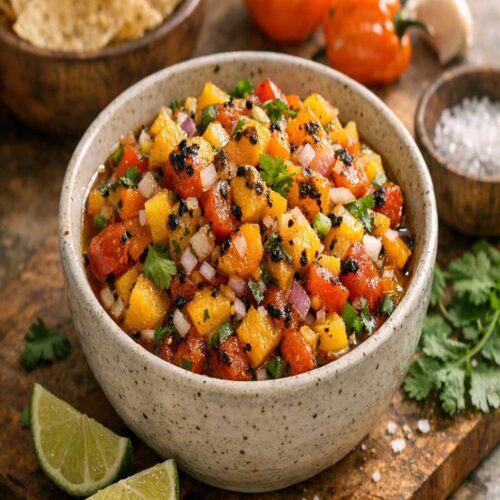
The finished salsa sits somewhere between a traditional salsa roja and something you’d find at a high-end taco restaurant. It’s chunky enough to scoop with a chip, smooth enough to spoon over grilled fish, and complex enough that people genuinely wonder what makes it taste so good. The answer? Time in the oven, a squeeze of fresh lime, and a handful of cilantro added at the very end for brightness.
Why You’ll Love This Roasted Habanero Mango Salsa Recipe
- Smoky-Sweet Complexity – The roasting process creates caramelized depths you simply can’t achieve with raw ingredients. Your taste buds get the hit of heat from the habanero, the tropical sweetness of mango, and an underlying smokiness that makes you pause and say, “Wow, what is that?”
- Surprisingly Versatile – This works on tacos, grilled fish, roasted chicken, rice bowls, alongside avocado toast, or honestly just eaten with quality tortilla chips. I’ve spooned it over cream cheese and crackers at dinner parties, and it disappears within minutes.
- Make-Ahead Friendly – Unlike fresh salsas that can get watery or oxidized, this holds beautifully in the fridge for days. The roasted flavors actually deepen and meld together, making it better the next day.
- Customizable Heat Level – Since you’re controlling the roasting yourself, you can adjust the habanero quantity based on your crowd. One pepper for milder eaters, two for those who love heat. And you can always remove the seeds and veins to dial back the intensity.
- Better Than Store-Bought – Once you taste homemade roasted salsa, the jarred versions just don’t compare. This recipe teaches you that restaurant-quality results are absolutely within reach of your home kitchen.
The Ingredients
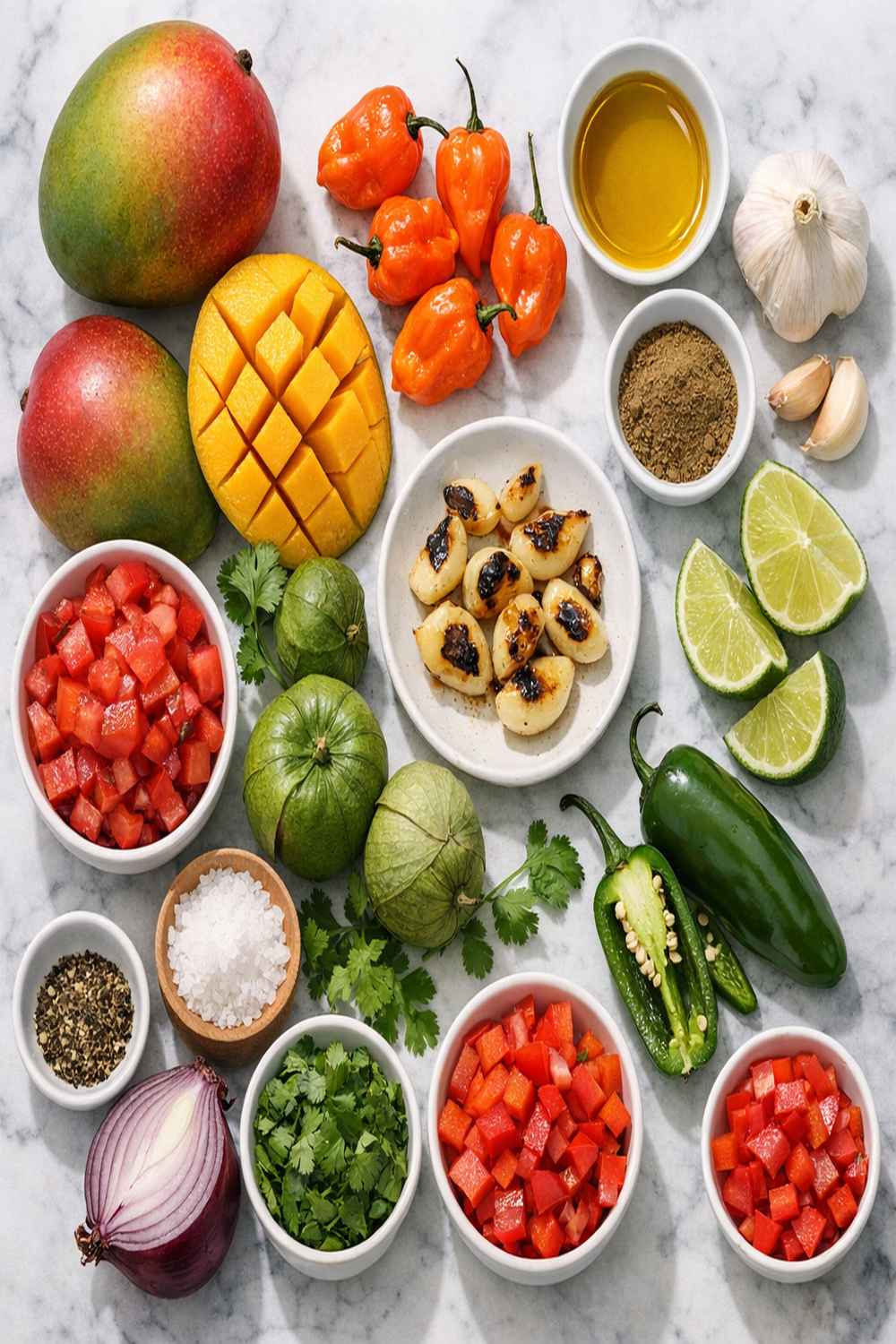
I’ve arranged these in a way that makes sense for the roasting process first, then the finishing touches. One note before we dive in: the beauty of this recipe is that it’s forgiving. If your mango is slightly underripe, the roasting mellows any tartness. If your tomatoes are especially juicy, the oven helps concentrate their flavor instead of creating excess liquid.
- ½ teaspoon cumin (ground, optional but highly recommended for extra depth)
- ¾ teaspoon kosher salt (adjust to your taste; I always start with less and add more if needed)
- 2 cups chopped fresh mango (about one 20-ounce fruit, peeled and roughly cubed; frozen mango works if fresh isn’t available)
- 1 tablespoon extra-virgin olive oil (optional, for brushing or lightly misting before roasting)
- 1 to 2 habanero peppers (depending on your heat preference; I recommend starting with one if you’re unsure and adding more next time)
- ½ white onion (peeled and quartered; this creates larger pieces that caramelize beautifully)
- 4 roma tomatoes (medium-sized, about 1.5 pounds total; these are firmer than beefsteak and roast more evenly)
- 2 to 3 tablespoons fresh lime juice (about 1 to 2 limes; fresh-squeezed is absolutely worth it here)
- 1 clove garlic (left unpeeled so it doesn’t burn, then popped out after roasting)
- 1 cup fresh cilantro leaves (lightly packed; use this to brighten the finished salsa at the very end)
Yield: Makes approximately 3 cups of salsa, enough to serve 6 to 8 people as an appetizer, or 4 as a main course topping.
How to Make Roasted Habanero Mango Salsa?
The entire process takes about 45 minutes from start to finish, with most of that time being hands-off oven time. I’ve broken this into clear, manageable steps that build logically from prep to finished dish. The key is not to overthink it—roasting is forgiving, and the flavors meld beautifully without you needing to be a professional chef.
Step 1: Prepare Your Ingredients and Preheat Your Oven
Start by positioning your oven rack to the middle position and preheating to 400 degrees Fahrenheit. This temperature is the sweet spot—hot enough to create caramelization and char edges, but not so intense that everything burns before it softens.
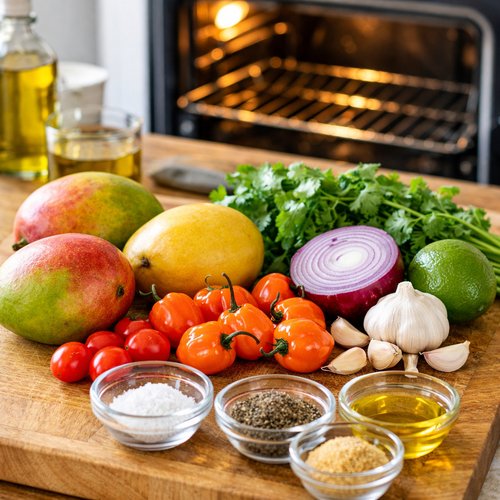
While the oven warms, prep your ingredients. Rinse your tomatoes and pat them dry. Slice your habaneros in half lengthwise, then use a small spoon to remove the seeds and white veins inside—this is where most of the intense heat lives. (I keep my hands away from my face while doing this. If you want to be extra careful, wear disposable gloves.) Peel your half onion and cut it into roughly four equal quarters. Leave your garlic clove unpeeled; it’ll roast whole and soften beautifully.
Cut your fresh mango into roughly 1-inch cubes. You want pieces substantial enough that they won’t disappear during roasting but small enough that they’ll roast evenly.
Step 2: Arrange Everything on Your Sheet Pan
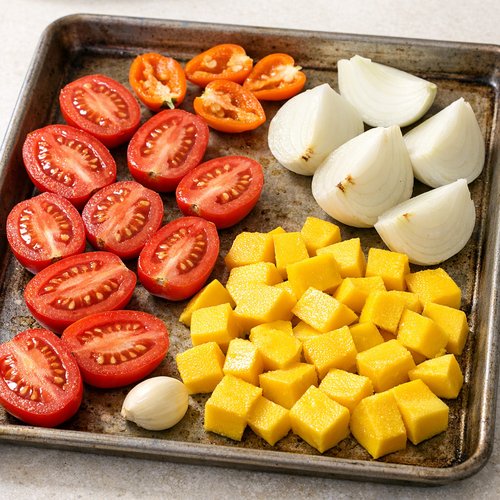
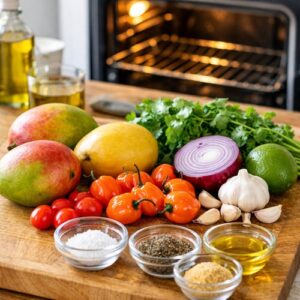
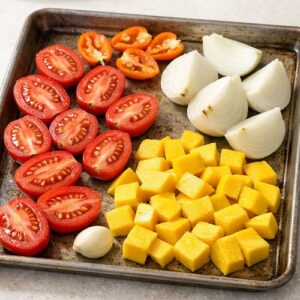
Place your sheet pan on the counter and arrange your tomatoes, habanero halves, onion quarters, mango cubes, and whole garlic clove on it. Try to space them out so they’re not crowded—this helps them roast rather than steam.
If you’re using olive oil, lightly brush or mist the pan and ingredients. I typically use about a tablespoon total, just enough to help with browning and prevent sticking. Season everything lightly with your kosher salt.
Step 3: Roast Until the Edges Darken (About 30 Minutes)
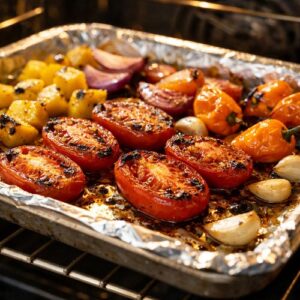
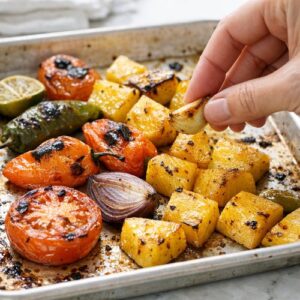
Place your sheet pan in the preheated oven and set a timer for 30 minutes. You’re looking for the edges of the tomatoes to darken (not blacken completely, but definitely caramelized), the mango to take on golden-brown patches, the onion to soften and char slightly at the edges, and the garlic to feel soft when you press it gently.
Don’t stir or fuss with anything during this time. Let the oven work its magic. The hands-off approach is what creates those beautiful caramelized flavors. At around the 20-minute mark, if things seem to be browning faster than softening, you can give the pan a quarter turn or loosely cover it with foil, but this is rarely necessary.
You’ll know it’s ready when the tomato edges look blistered and darkened, the mango’s surface shows golden-brown patches, and the garlic feels completely tender. If you poke the tomatoes, they should yield easily to pressure.
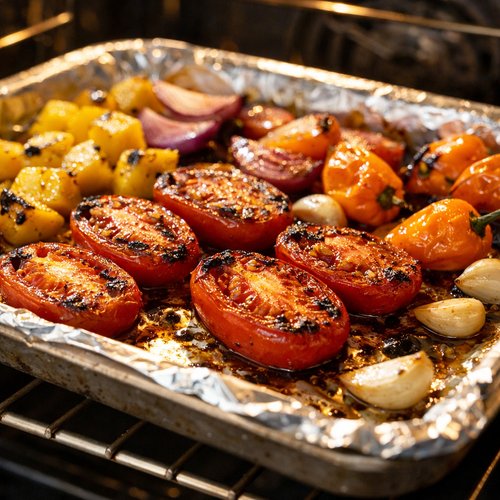
Step 4: Cool Briefly and Remove the Garlic Clove
Remove your sheet pan from the oven and let everything cool for about 5 to 10 minutes until it’s cool enough to handle. Once it’s cooled slightly, pop that roasted garlic clove out of its papery skin—the flesh inside should be soft and creamy. Discard the skin.
This resting period also helps the flavors set slightly and prevents the finished salsa from being too hot when you blend it, which actually helps preserve the brightness of the cilantro you’ll add next.
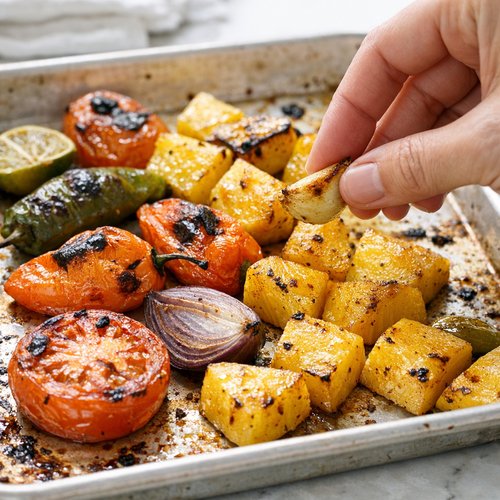
Step 5: Blend to Your Preferred Consistency
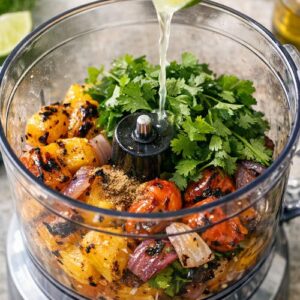
Transfer all your roasted ingredients to a food processor or high-speed blender. Add your lime juice, the optional cumin, and most of your cilantro (save a small handful for garnish, which sounds fancy but honestly just makes it look beautiful).
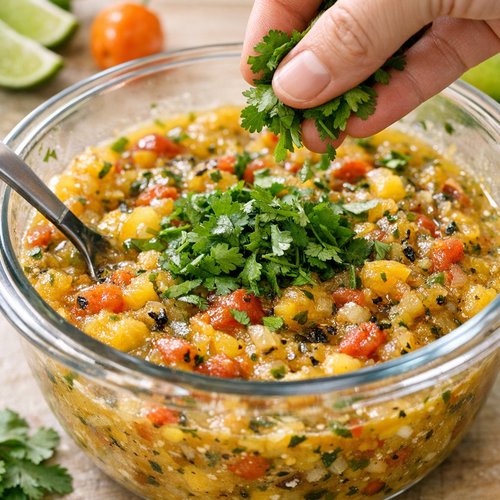
Pulse or blend until you reach your preferred consistency. I like mine slightly chunky—you can still see pieces of mango and tomato—rather than completely smooth. This gives the salsa texture and makes it more visually appealing. If you prefer silkier texture, blend longer. If you like it chunkier, pulse fewer times.
Taste as you go. Add your salt gradually, tasting between additions, until it hits that perfect balance where the sweetness of the mango and the heat of the habanero are both prominent but neither overwhelms the other.
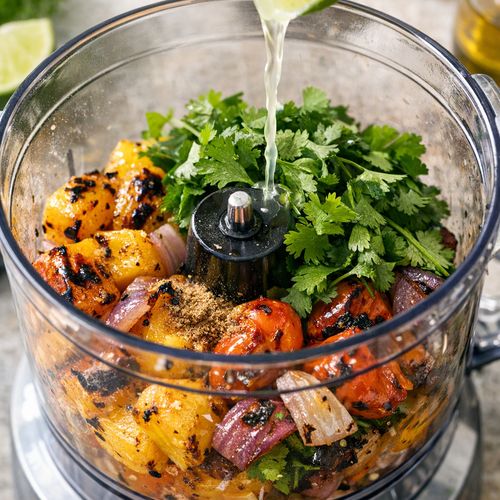
Step 6: Finish with Fresh Cilantro and Final Seasoning
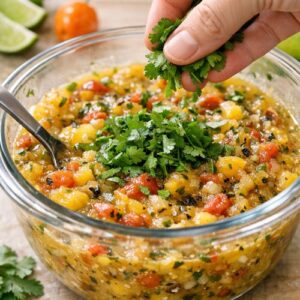
Fold in your remaining fresh cilantro by hand after blending. This preserves its brightness and prevents it from becoming bitter from the heat of the blender. Taste one final time and adjust salt or lime juice if needed.
Transfer to a serving bowl and if you’re serving it right away, you’re done. If you’re making it ahead (which I highly recommend), cover and refrigerate until serving time.
Dietitian’s Nutritional Tip: Understanding the Habanero’s Hidden Benefits
As someone with culinary training who works closely with nutritionists, I want to highlight something most people don’t realize about habanero peppers: they’re packed with capsaicin, the compound that creates heat, but also has documented anti-inflammatory properties. According to research referenced by the USDA, capsaicin may support metabolism and help your body process food more efficiently. The roasting process doesn’t eliminate these benefits—in fact, it may enhance your body’s ability to absorb them because you’re consuming them with fat (from the olive oil) and other nutrients. This isn’t a magic bullet, but it’s nice to know your salsa is doing more than just tasting amazing.
Common Mistakes to Avoid (So You Don’t Learn the Hard Way)
- Overcrowding the Sheet Pan – If your ingredients are piled on top of each other, they steam instead of roast. You want space around each piece so the oven heat can do its job. Use two pans if necessary.
- Skipping the Garlic Skin Removal – This might sound obvious, but I’ve seen people try to blend whole roasted garlic cloves skin and all. It creates a bitter, papery texture. Always pop that skin off after roasting.
- Not Removing Habanero Seeds and Veins First – If you want to control the heat level, you must remove these before roasting. Roasting them makes them even more intense, and you can’t remove them afterward without affecting texture.
- Blending Everything When It’s Still Piping Hot – This wilts the cilantro and can actually mute the brightness you want at the finish. Cool for 5 to 10 minutes first, then blend. Your finished salsa will taste noticeably better.
- Making It a Day Too Far in Advance – While this keeps great for several days, the cilantro’s brightness fades if you make it more than 3 days ahead. For best results, either make it within 24 hours of serving, or add the cilantro fresh right before serving if you’re making it further in advance.
Tips and Tricks From My Kitchen to Yours
- Frozen Mango Works Beautifully – If fresh mango isn’t in season or budget, frozen mango (thawed and drained) delivers the same roasted flavor. Sometimes frozen is actually better because it’s picked at peak ripeness and immediately frozen.
- Double the Batch and Freeze Half – This salsa freezes exceptionally well for up to 3 months. Make a double batch, freeze half in an airtight container, and you’ve got restaurant-quality salsa ready whenever you need it. Just thaw overnight in the fridge.
- Use This on Everything – Scrambled eggs, roasted sweet potatoes, black beans and rice, grilled shrimp, avocado toast—I’ve found almost nothing this salsa doesn’t improve. It’s become my secret weapon for making simple meals feel special.
- Char Those Tomato Edges – Don’t be afraid of a little blackening on the tomato edges. That’s where the depth comes from. Some of my best batches have looked slightly burnt halfway through cooking.
- Taste Before You Salt – The salt should enhance the roasted flavors, not dominate them. Start conservatively and build from there. You can always add more salt, but you can’t remove it.
Make-Ahead Guide: Planning Your Salsa Strategy
Same Day Preparation: Prep all your ingredients in the morning (wash tomatoes, cut mango, prepare habaneros), store them in separate containers in the fridge, then roast and blend just before serving. This takes about 45 minutes total and gives you the freshest possible cilantro brightness.
The Night Before: You can roast everything and let it cool completely, then store it covered in the fridge overnight. Blend and finish with fresh cilantro about 2 hours before serving. This is my preferred method for entertaining because it removes stress from your day-of timeline.
Three Days Ahead: Complete the entire recipe through blending, but don’t add the cilantro. Store covered in an airtight container. When ready to serve, fold in fresh cilantro and adjust seasoning if needed. The roasted flavors actually intensify over 2 to 3 days.
Freezing Instructions: Let the blended salsa cool completely, transfer to freezer-safe containers, and freeze for up to 3 months. Thaw overnight in the refrigerator before serving, then fold in fresh cilantro and taste for seasoning adjustment. Some liquid may separate—just stir it back in.
Can I Store Roasted Habanero Mango Salsa?
This salsa is genuinely one of the most storage-friendly condiments I know. In the refrigerator, covered in an airtight container, it keeps beautifully for up to 5 days. The roasted flavors actually deepen and meld during this time, making it arguably better on day two or three than the day you make it.
The key to longevity is storing it properly—transfer it to a glass container with an airtight lid rather than leaving it in the sheet pan, and make sure it’s completely cooled before covering it. If you leave hot salsa uncovered, condensation builds up and can affect flavor and texture.
For freezing, transfer cooled salsa to a freezer-safe container or even a zip-top bag (lay it flat so it takes up less space), and it will keep for up to 3 months. Thaw overnight in the refrigerator before serving. You may notice some liquid separation—this is completely normal. Just stir it back together.
One final note: if you’re freezing, I’d recommend freezing before you add the cilantro. Fresh herbs don’t freeze particularly well and can turn dark and mushy. Instead, add fresh cilantro after thawing and before serving.
Seasonal Variations: Adapting the Recipe Year-Round
Summer (June-August): This is peak mango and habanero season. Use the ripest, sweetest mangoes you can find, and consider adding a splash of fresh orange juice for extra tropical brightness. Everything is at its best, so stick closely to the base recipe.
Fall (September-November): As habaneros start fading, maintain what you can, but if they’re getting harder to find, you can substitute with one poblano pepper (milder, slightly smoky) plus a pinch of cayenne. Add ½ teaspoon of cinnamon to the blend for seasonal warmth that plays beautifully with roasted mango.
Winter (December-February): This is when I might use frozen or canned mango without hesitation—fresh options are limited and usually expensive. Add roasted red bell pepper (about ½ cup) for volume and sweetness. The peppers won’t be as vibrant, but the flavors deepen beautifully with warming spices like a pinch of cumin and coriander.
Spring (March-May): As fresh ingredients start appearing again, consider adding a handful of fresh pineapple chunks to the roasting pan (about ½ cup diced), which adds brightness and complexity. This version works beautifully with lighter proteins like fish and shrimp.
Nutrition Information
According to USDA nutritional database analysis, a ¼ cup serving (approximately 60 grams) of this roasted habanero mango salsa contains approximately 35 calories, 8 grams of carbohydrates, 1.5 grams of fiber, 0.7 grams of protein, and less than 0.5 grams of fat (primarily from the minimal olive oil used in roasting). The habanero provides capsaicin and vitamin C, while the mango contributes beta-carotene and additional vitamin C. The tomatoes bring lycopene, a powerful antioxidant.
The roasting process is worth noting from a nutritional perspective: while some heat-sensitive vitamins (like some B vitamins) may be reduced slightly, the bioavailability of carotenoids like beta-carotene and lycopene actually increases during roasting. Your body can absorb more of these beneficial compounds from roasted produce than raw. For someone following Food Faith Fitness principles, this is an excellent condiment—it adds massive flavor and excitement with minimal calories and adds nutritional density to whatever you serve it with.
What Can I Serve With Roasted Habanero Mango Salsa?
This is where the magic of versatility comes in. I’ve found that this salsa genuinely improves almost everything it touches, and I mean that sincerely. Here are my favorite applications, but honestly, let this inspire you to experiment in your own kitchen.
- Grilled Fish and Seafood – This is where roasted habanero mango salsa absolutely shines. I spoon it over grilled mahi-mahi, seared scallops, or even ceviche. The sweetness complements the delicate fish flavors, while the heat and lime cut through richness.
- Tacos and Tostadas – Whether you’re using carnitas, grilled chicken, blackened shrimp, or even roasted cauliflower, this salsa is the perfect finisher. It’s chunky enough to stay on top, flavorful enough to be the star, and complex enough to make people wonder what they’re tasting.
- Grilled Chicken – A simple grilled chicken breast becomes memorable when you top it with this salsa. The roasted depth plays beautifully against the clean, mild protein.
- Rice and Grain Bowls – Spoon this over cilantro lime rice, quinoa, or farro for instant excitement. It transforms bowl meals from serviceable to spectacular.
- Appetizers and Entertaining – Serve with quality tortilla chips, or get fancy and spoon it over cream cheese with scallions for an impressive appetizer. I’ve also dolloped it on crostini, mixed it into black beans as a side dish, and used it as a taco filling ingredient.
- Breakfast and Brunch – Spoon this over scrambled eggs or avocado toast for a brunch that tastes restaurant-quality. The heat wakes up your palate early in the day.
- Alongside Qdoba Lime Cilantro Dressing – If you’re building a Mexican-inspired meal, pair this salsa with lime cilantro dressing for complementary bright flavors that work beautifully together.
Substitutes and Adaptations
- Different Peppers – If habaneros intimidate you, substitute with one to two poblano peppers (milder, earthier) or one serrano pepper (similar heat, slightly more grassy flavor). Jalapeños work too but are considerably milder. The roasting method remains exactly the same.
- Different Fruit – While mango is spectacular, I’ve made this with peaches (slightly less tropical sweetness, more subtle), pineapple (brighter, more tropical), and even diced apple (for a completely different but interesting direction). The roasting time might vary by fruit, so watch carefully.
- Cilantro Alternative – If cilantro isn’t your thing (I know some people find it soapy), substitute with mint or basil for brightness. Both add different character—mint becomes slightly cooling, basil adds Italian notes that work beautifully with the roasted flavors.
- Without Olive Oil – If you prefer to skip the oil, the salsa still works beautifully. Your vegetables might not brown quite as dramatically, but they’ll still roast and caramelize. Add a touch of water to prevent sticking.
- Extra Texture – After blending, fold in diced fresh corn (about ½ cup) or fresh diced pineapple for added texture and brightness. This is especially nice when serving alongside grilled fish.
Roasted Habanero Mango Salsa Recipe

Ingredients
- ½ teaspoon cumin ground, optional but highly recommended for extra depth
- ¾ teaspoon kosher salt adjust to your taste; I always start with less and add more if needed
- 2 cup chopped fresh mango about one 20-ounce fruit, peeled and roughly cubed; frozen mango works if fresh isn't available
- 1 tablespoon extra-virgin olive oil optional, for brushing or lightly misting before roasting
- 1 to 2 habanero peppers depending on your heat preference; I recommend starting with one if you're unsure and adding more next time
- ½ white onion peeled and quartered; this creates larger pieces that caramelize beautifully
- 4 roma tomatoes medium-sized, about 1.5 pounds total; these are firmer than beefsteak and roast more evenly
- 2 to 3 tablespoons fresh lime juice about 1 to 2 limes; fresh-squeezed is absolutely worth it here
- 1 clove garlic left unpeeled so it doesn't burn, then popped out after roasting
- 1 cup fresh cilantro leaves lightly packed; use this to brighten the finished salsa at the very end
Instructions
Step 1: Prepare Your Ingredients and Preheat Your Oven
- Start by positioning your oven rack to the middle position and preheating to 400 degrees Fahrenheit. This temperature is the sweet spot—hot enough to create caramelization and char edges, but not so intense that everything burns before it softens. While the oven warms, prep your ingredients. Rinse your tomatoes and pat them dry. Slice your habaneros in half lengthwise, then use a small spoon to remove the seeds and white veins inside—this is where most of the intense heat lives. (I keep my hands away from my face while doing this. If you want to be extra careful, wear disposable gloves.) Peel your half onion and cut it into roughly four equal quarters. Leave your garlic clove unpeeled; it'll roast whole and soften beautifully. Cut your fresh mango into roughly 1-inch cubes. You want pieces substantial enough that they won't disappear during roasting but small enough that they'll roast evenly.
Step 2: Arrange Everything on Your Sheet Pan
- Place your sheet pan on the counter and arrange your tomatoes, habanero halves, onion quarters, mango cubes, and whole garlic clove on it. Try to space them out so they're not crowded—this helps them roast rather than steam. If you're using olive oil, lightly brush or mist the pan and ingredients. I typically use about a tablespoon total, just enough to help with browning and prevent sticking. Season everything lightly with your kosher salt.
Step 3: Roast Until the Edges Darken (About 30 Minutes)
- Place your sheet pan in the preheated oven and set a timer for 30 minutes. You're looking for the edges of the tomatoes to darken (not blacken completely, but definitely caramelized), the mango to take on golden-brown patches, the onion to soften and char slightly at the edges, and the garlic to feel soft when you press it gently. Don't stir or fuss with anything during this time. Let the oven work its magic. The hands-off approach is what creates those beautiful caramelized flavors. At around the 20-minute mark, if things seem to be browning faster than softening, you can give the pan a quarter turn or loosely cover it with foil, but this is rarely necessary. You'll know it's ready when the tomato edges look blistered and darkened, the mango's surface shows golden-brown patches, and the garlic feels completely tender. If you poke the tomatoes, they should yield easily to pressure.
Step 4: Cool Briefly and Remove the Garlic Clove
- Remove your sheet pan from the oven and let everything cool for about 5 to 10 minutes until it's cool enough to handle. Once it's cooled slightly, pop that roasted garlic clove out of its papery skin—the flesh inside should be soft and creamy. Discard the skin. This resting period also helps the flavors set slightly and prevents the finished salsa from being too hot when you blend it, which actually helps preserve the brightness of the cilantro you'll add next.
Step 5: Blend to Your Preferred Consistency
- Transfer all your roasted ingredients to a food processor or high-speed blender. Add your lime juice, the optional cumin, and most of your cilantro (save a small handful for garnish, which sounds fancy but honestly just makes it look beautiful). Pulse or blend until you reach your preferred consistency. I like mine slightly chunky—you can still see pieces of mango and tomato—rather than completely smooth. This gives the salsa texture and makes it more visually appealing. If you prefer silkier texture, blend longer. If you like it chunkier, pulse fewer times. Taste as you go. Add your salt gradually, tasting between additions, until it hits that perfect balance where the sweetness of the mango and the heat of the habanero are both prominent but neither overwhelms the other.
Step 6: Finish with Fresh Cilantro and Final Seasoning
- Fold in your remaining fresh cilantro by hand after blending. This preserves its brightness and prevents it from becoming bitter from the heat of the blender. Taste one final time and adjust salt or lime juice if needed. Transfer to a serving bowl and if you're serving it right away, you're done. If you're making it ahead (which I highly recommend), cover and refrigerate until serving time.
Notes
Nutrition
FAQs
How Spicy Is This Salsa Really?
This depends entirely on how many habaneros you use and how thoroughly you remove the seeds and veins. One habanero with seeds and veins fully removed makes a salsa that’s noticeably warm but not overwhelming—I’d rate it a solid 6 out of 10 on a heat scale. Two habaneros prepared the same way brings it to about 8 out of 10. If you leave the seeds and veins in, you’re looking at 9 to 10 out of 10—genuinely fiery. I recommend starting with one pepper and removing all seeds and veins, then tasting before deciding if you want to add more heat next time. You can always increase heat, but you can’t remove it once it’s blended in.
Can I Make This Without a Food Processor or High-Speed Blender?
Absolutely, though the texture will be different. You can mash everything together using a fork and a bowl, which will give you a chunkier, more rustic salsa. It’ll take more elbow grease, but it’s completely doable. You could also finely dice everything by hand after roasting and stir it together—this actually creates a beautiful texture that some people prefer to blended salsa. The flavor remains exactly the same; only the presentation and texture changes.
What If My Mango Isn’t Very Sweet?
Roasting actually concentrates fruit’s natural sugars, so even a slightly underripe or less-sweet mango will taste better after roasting than it would raw. If you’re concerned, you can add a pinch of honey or agave after blending—just a teaspoon or two to taste. I usually taste before adding any sweetener because most people are pleasantly surprised by how sweet the salsa becomes after roasting.
Can I Make This Salsa Without Roasting (Raw Version)?
Technically yes, but you’d be creating something quite different. A raw version would be brighter, fresher, and more intensely peppery (since raw habaneros pack more punch). You’d skip the oven entirely, simply blend or finely dice your raw ingredients, and add lime and cilantro. It would keep for only 1 to 2 days because raw ingredients oxidize faster. I’d strongly recommend trying the roasted version first—the transformation is genuinely worth the 45 minutes. But if you prefer raw salsas, this adaptation works fine.
Is This Salsa Good for Meal Prep?
Yes, this is one of my favorite make-ahead condiments. Make a batch on Sunday, and you’ve got a flavorful element for six different meals throughout the week. Spoon it over different proteins, grains, or vegetables for instant variety. Just store it in an airtight container and add fresh cilantro shortly before serving if you’re making it more than a day in advance. The roasted flavors hold beautifully and honestly taste better on day two or three than the day you make them.
More Recipes You’ll Love
- Flowerchild Cauliflower Risotto – If you love roasted vegetables and global flavors, this creamy risotto showcases how roasting transforms vegetables into something luxurious.
- Qdoba Mexican Gumbo Recipe – For a heartier dish that pairs beautifully with this salsa, this gumbo brings together Mexican and Creole influences in one warming bowl.
- Filo Pizza Recipe – This is a creative appetizer that would be spectacular topped with a dollop of roasted habanero mango salsa for an unexpected flavor combination.
I genuinely hope you make this salsa soon and discover what I discovered standing in front of my oven—that the most memorable flavors often come from slowing down, understanding why each step matters, and trusting the process. This isn’t complicated food. It’s just good ingredients, a little time, and the respect they deserve.
Whether you’re serving this at a casual weeknight dinner or impressing guests at your next gathering, this salsa will make you look like you’ve been secretly attending culinary school. The secret? You have been—you’re learning right now, and every batch teaches you something about heat, flavor, and the magic of roasting.
Happy cooking!