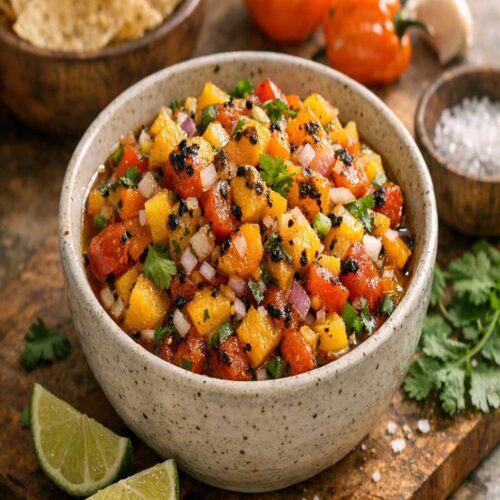
Roasted Habanero Mango Salsa Recipe

I grew up in my grandmother's kitchen in New Hampshire, where she'd teach me that the best meals always start with something alive on your plate. Fresh ingredients, bold flavors, real warmth. This roasted habanero mango salsa embodies exactly that philosophy—it's the kind of condiment that transforms ordinary grilled chicken into something memorable, pairs beautifully with crispy tortilla chips, and makes your guests ask for the recipe before they've even finished their first bite. Whether you're planning a casual weeknight dinner or hosting friends for a backyard gathering, this salsa brings the kind of vibrant, smoky-sweet energy that makes people linger at the table just a little longer. It's also fantastic alongside Filipino Chicken Asado if you're feeling adventurous with your global flavors.
Ingredients
- ½ teaspoon cumin ground, optional but highly recommended for extra depth
- ¾ teaspoon kosher salt adjust to your taste; I always start with less and add more if needed
- 2 cup chopped fresh mango about one 20-ounce fruit, peeled and roughly cubed; frozen mango works if fresh isn't available
- 1 tablespoon extra-virgin olive oil optional, for brushing or lightly misting before roasting
- 1 to 2 habanero peppers depending on your heat preference; I recommend starting with one if you're unsure and adding more next time
- ½ white onion peeled and quartered; this creates larger pieces that caramelize beautifully
- 4 roma tomatoes medium-sized, about 1.5 pounds total; these are firmer than beefsteak and roast more evenly
- 2 to 3 tablespoons fresh lime juice about 1 to 2 limes; fresh-squeezed is absolutely worth it here
- 1 clove garlic left unpeeled so it doesn't burn, then popped out after roasting
- 1 cup fresh cilantro leaves lightly packed; use this to brighten the finished salsa at the very end
Instructions
Step 1: Prepare Your Ingredients and Preheat Your Oven
- Start by positioning your oven rack to the middle position and preheating to 400 degrees Fahrenheit. This temperature is the sweet spot—hot enough to create caramelization and char edges, but not so intense that everything burns before it softens. While the oven warms, prep your ingredients. Rinse your tomatoes and pat them dry. Slice your habaneros in half lengthwise, then use a small spoon to remove the seeds and white veins inside—this is where most of the intense heat lives. (I keep my hands away from my face while doing this. If you want to be extra careful, wear disposable gloves.) Peel your half onion and cut it into roughly four equal quarters. Leave your garlic clove unpeeled; it'll roast whole and soften beautifully. Cut your fresh mango into roughly 1-inch cubes. You want pieces substantial enough that they won't disappear during roasting but small enough that they'll roast evenly.
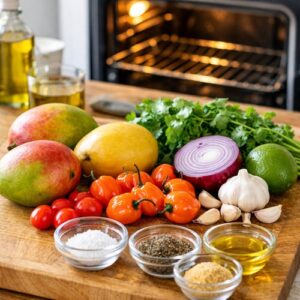
Step 2: Arrange Everything on Your Sheet Pan
- Place your sheet pan on the counter and arrange your tomatoes, habanero halves, onion quarters, mango cubes, and whole garlic clove on it. Try to space them out so they're not crowded—this helps them roast rather than steam. If you're using olive oil, lightly brush or mist the pan and ingredients. I typically use about a tablespoon total, just enough to help with browning and prevent sticking. Season everything lightly with your kosher salt.
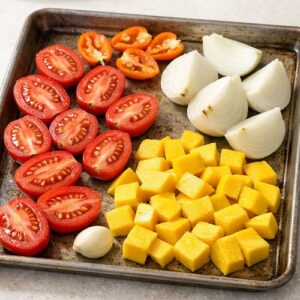
Step 3: Roast Until the Edges Darken (About 30 Minutes)
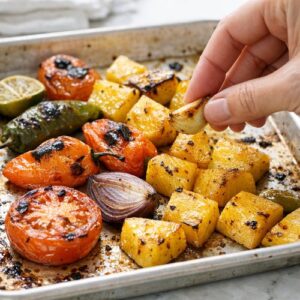
- Place your sheet pan in the preheated oven and set a timer for 30 minutes. You're looking for the edges of the tomatoes to darken (not blacken completely, but definitely caramelized), the mango to take on golden-brown patches, the onion to soften and char slightly at the edges, and the garlic to feel soft when you press it gently. Don't stir or fuss with anything during this time. Let the oven work its magic. The hands-off approach is what creates those beautiful caramelized flavors. At around the 20-minute mark, if things seem to be browning faster than softening, you can give the pan a quarter turn or loosely cover it with foil, but this is rarely necessary. You'll know it's ready when the tomato edges look blistered and darkened, the mango's surface shows golden-brown patches, and the garlic feels completely tender. If you poke the tomatoes, they should yield easily to pressure.
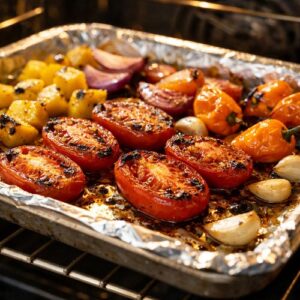
Step 4: Cool Briefly and Remove the Garlic Clove
- Remove your sheet pan from the oven and let everything cool for about 5 to 10 minutes until it's cool enough to handle. Once it's cooled slightly, pop that roasted garlic clove out of its papery skin—the flesh inside should be soft and creamy. Discard the skin. This resting period also helps the flavors set slightly and prevents the finished salsa from being too hot when you blend it, which actually helps preserve the brightness of the cilantro you'll add next.
Step 5: Blend to Your Preferred Consistency
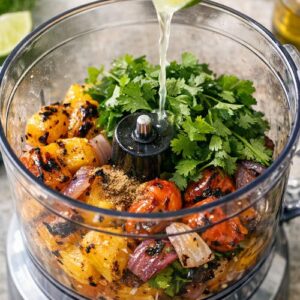
- Transfer all your roasted ingredients to a food processor or high-speed blender. Add your lime juice, the optional cumin, and most of your cilantro (save a small handful for garnish, which sounds fancy but honestly just makes it look beautiful). Pulse or blend until you reach your preferred consistency. I like mine slightly chunky—you can still see pieces of mango and tomato—rather than completely smooth. This gives the salsa texture and makes it more visually appealing. If you prefer silkier texture, blend longer. If you like it chunkier, pulse fewer times. Taste as you go. Add your salt gradually, tasting between additions, until it hits that perfect balance where the sweetness of the mango and the heat of the habanero are both prominent but neither overwhelms the other.
Step 6: Finish with Fresh Cilantro and Final Seasoning
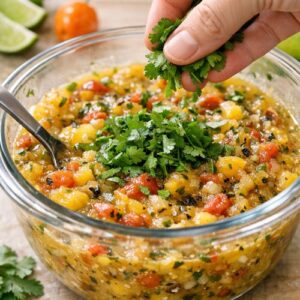
- Fold in your remaining fresh cilantro by hand after blending. This preserves its brightness and prevents it from becoming bitter from the heat of the blender. Taste one final time and adjust salt or lime juice if needed. Transfer to a serving bowl and if you're serving it right away, you're done. If you're making it ahead (which I highly recommend), cover and refrigerate until serving time.
Notes
- Frozen Mango Works Beautifully - If fresh mango isn't in season or budget, frozen mango (thawed and drained) delivers the same roasted flavor. Sometimes frozen is actually better because it's picked at peak ripeness and immediately frozen.
- Double the Batch and Freeze Half - This salsa freezes exceptionally well for up to 3 months. Make a double batch, freeze half in an airtight container, and you've got restaurant-quality salsa ready whenever you need it. Just thaw overnight in the fridge.
- Use This on Everything - Scrambled eggs, roasted sweet potatoes, black beans and rice, grilled shrimp, avocado toast—I've found almost nothing this salsa doesn't improve. It's become my secret weapon for making simple meals feel special.
- Char Those Tomato Edges - Don't be afraid of a little blackening on the tomato edges. That's where the depth comes from. Some of my best batches have looked slightly burnt halfway through cooking.
- Taste Before You Salt - The salt should enhance the roasted flavors, not dominate them. Start conservatively and build from there. You can always add more salt, but you can't remove it.
Nutrition
Calories: 37kcalCarbohydrates: 9gProtein: 1gSodium: 4mgFiber: 1gSugar: 7g
Tried this recipe?Let us know how it was!